Committee debates tighter rules for voter‑registration challenges
February 16, 2026 | Legislative Sessions, Washington
This article was created by AI summarizing key points discussed. AI makes mistakes, so for full details and context, please refer to the video of the full meeting. Please report any errors so we can fix them. Report an error »
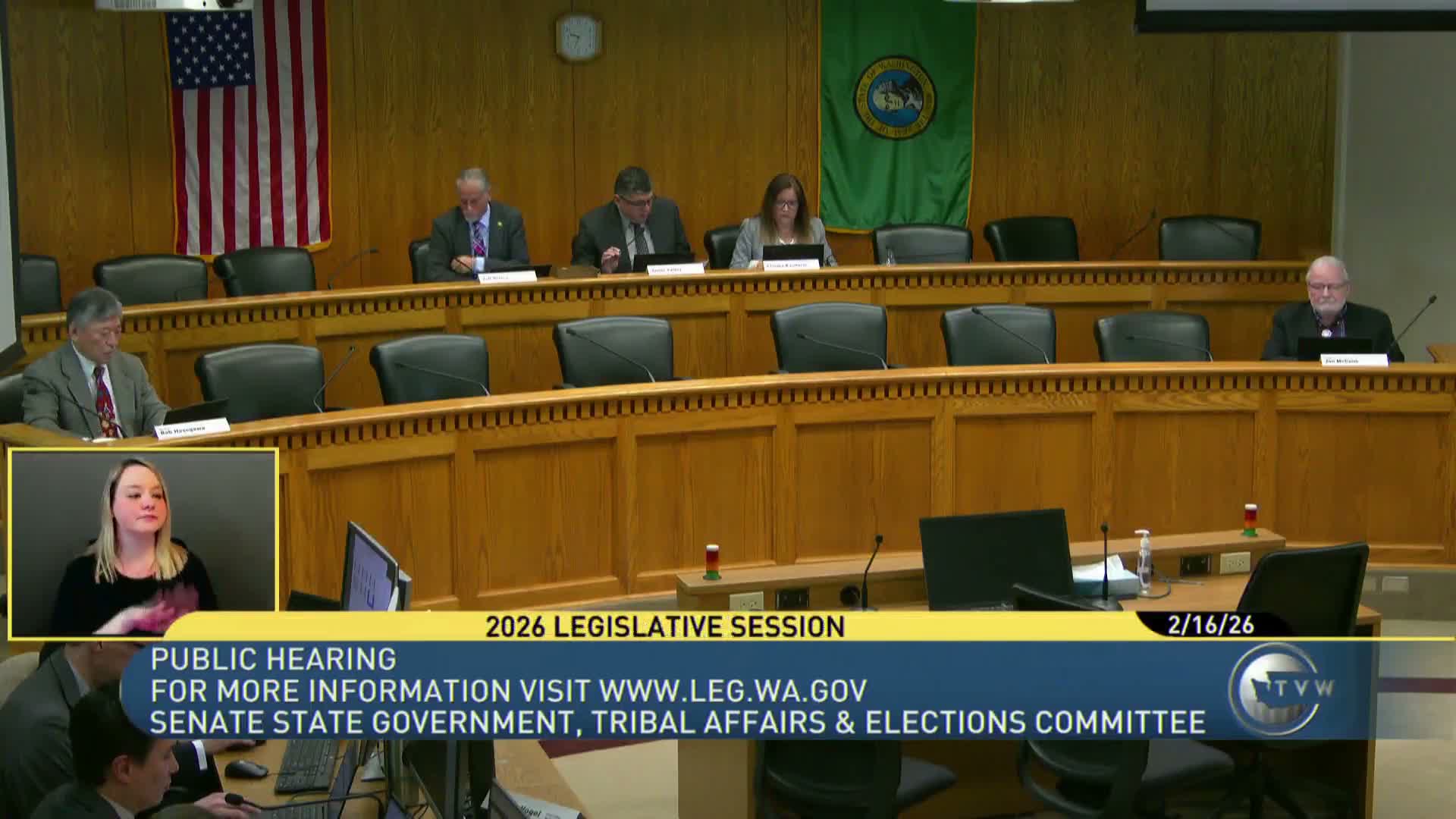
Engrossed Substitute House Bill 1916, heard before the committee on Feb. 16, would change how a challenger may contest a voter’s registration by tightening the required evidence, mandating a separate signed affidavit for each challenged registrant and creating penalties for knowingly filing false challenges.
Danielle Creech summarized three main changes: higher standards of proof for challenges, procedural requirements including individualized affidavits, and a clarified process for removal or cancellation of registrations. Sean Merchant, policy director for Secretary of State Steve Hobbs, told the committee the Secretary’s office is concerned about a House‑floor amendment that removed a residency nexus (county requirement) and asked the Legislature to add clarity so challengers have an appropriate geographic connection to the voters they challenge.
County auditors raised operational concerns about ambiguous language in the bill, especially a new “confirmed” requirement for removing deceased voters and the insertion of criminal‑law standards such as probable cause and proof beyond a reasonable doubt into administrative practice. Voting‑rights organizations and civic groups urged passage to protect voters—especially naturalized citizens, students and people in nontraditional housing—from mass, AI‑driven challenges that have proliferated since 2020. Opponents warned the bill could create burdensome procedures and increase official discretion in ways that might chill legitimate challenges.
The committee took substantial public testimony from both sides, logged hundreds of portal signatures, and closed the hearing for committee consideration.
Danielle Creech summarized three main changes: higher standards of proof for challenges, procedural requirements including individualized affidavits, and a clarified process for removal or cancellation of registrations. Sean Merchant, policy director for Secretary of State Steve Hobbs, told the committee the Secretary’s office is concerned about a House‑floor amendment that removed a residency nexus (county requirement) and asked the Legislature to add clarity so challengers have an appropriate geographic connection to the voters they challenge.
County auditors raised operational concerns about ambiguous language in the bill, especially a new “confirmed” requirement for removing deceased voters and the insertion of criminal‑law standards such as probable cause and proof beyond a reasonable doubt into administrative practice. Voting‑rights organizations and civic groups urged passage to protect voters—especially naturalized citizens, students and people in nontraditional housing—from mass, AI‑driven challenges that have proliferated since 2020. Opponents warned the bill could create burdensome procedures and increase official discretion in ways that might chill legitimate challenges.
The committee took substantial public testimony from both sides, logged hundreds of portal signatures, and closed the hearing for committee consideration.
View the Full Meeting & All Its Details
This article offers just a summary. Unlock complete video, transcripts, and insights as a Founder Member.
✓
Watch full, unedited meeting videos
✓
Search every word spoken in unlimited transcripts
✓
AI summaries & real-time alerts (all government levels)
✓
Permanent access to expanding government content
30-day money-back guarantee
