Committee hears wide testimony on proposed kratom rules as cities, health advocates and consumers disagree
February 06, 2026 | Legislative Sessions, Washington
This article was created by AI summarizing key points discussed. AI makes mistakes, so for full details and context, please refer to the video of the full meeting. Please report any errors so we can fix them. Report an error »
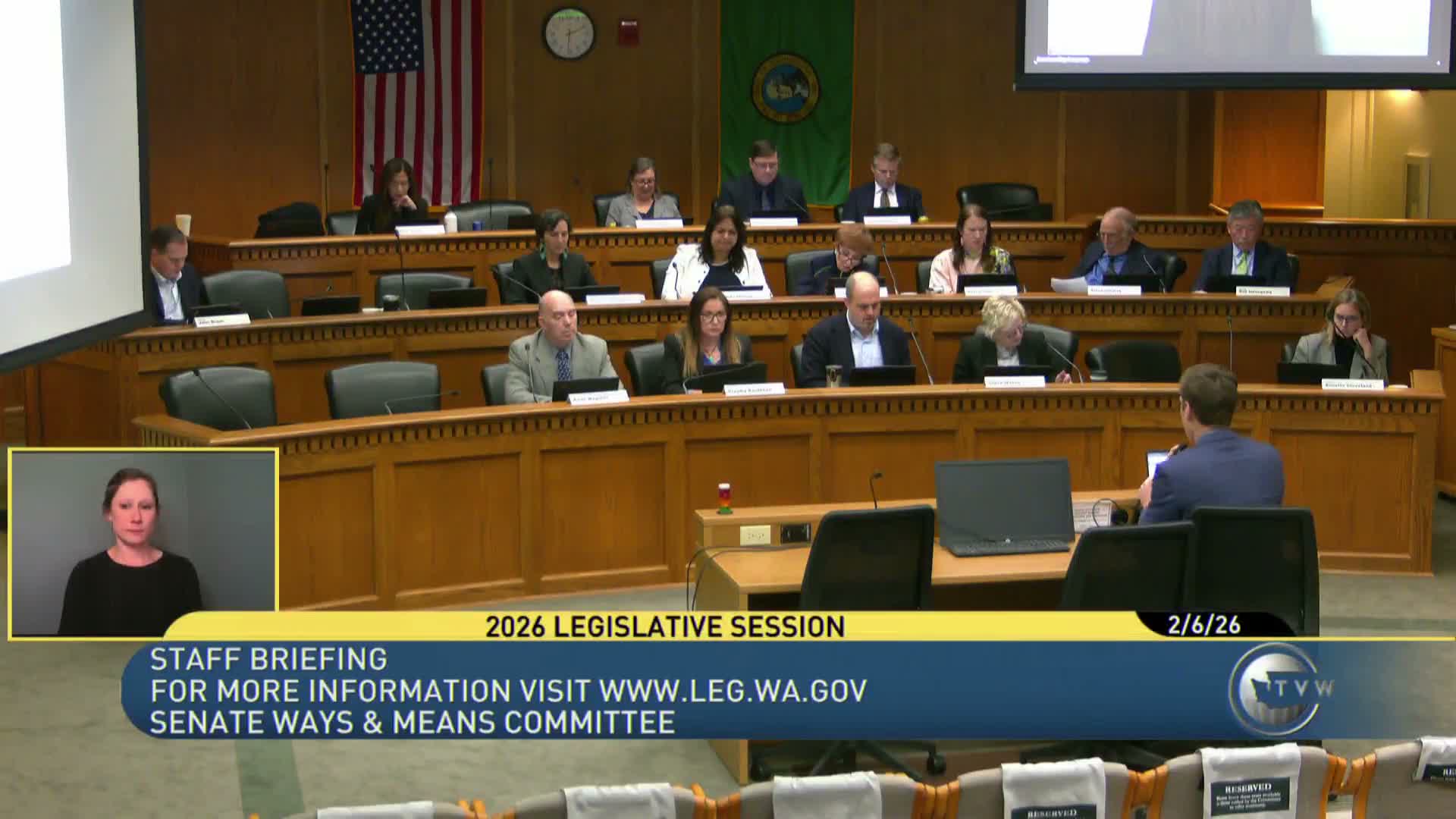
The committee heard substitute Senate Bill 6,287, a proposal to regulate kratom processors and retailers. The substitute would prohibit adulterated or synthesized kratom products, require ingredient and labeling disclosures, cap certain alkaloid concentrations, and restrict retail sales to persons 21 and older. Violations would be a gross misdemeanor and the bill creates a private civil right of action; it also allows local governments to adopt more stringent rules.
Municipal officials and public‑health organizations detailed local experiences with youth exposure and emergency responses. Cassie Beechall Curtis, deputy mayor of Cle Elum, described a municipal moratorium and subsequent local ordinance restricting sales, and county health and public safety officials testified about overdoses and youth incidents. Several public‑health witnesses emphasized that the main harms in some jurisdictions derive from synthetically augmented products, not traditional leaf powder.
Kratom consumers and advocacy groups urged careful drafting to preserve access for adults who use whole‑leaf kratom for chronic pain or as a harm‑reduction tool, and asked the committee to target synthetic adulterants (such as 7‑OH analogs) rather than banning all forms. Industry representatives and the Global Kratom Coalition recommended replacing overly broad adulteration language with the federal adulteration standard (21 USC §342) and cautioned against provisions that would capture common food additives or create an enforcement bureaucracy.
Retail associations urged state preemption of local patchworks but supported age limits and safety testing. Several witnesses who said they had been helped by natural kratom described it as life‑changing and asked that outright bans not cut off access for vulnerable adults. Law enforcement and some public‑health witnesses pushed for stronger enforcement power against synthetic products sold in gas stations and convenience stores.
The bill drew bipartisan attention and a recommendation that the sponsors continue stakeholder negotiations to tighten lab testing protocols, narrow adulteration language, clarify enforcement authority, and consider a limited regulatory pathway that focuses on adulterated and synthetic products while preserving regulated access to natural kratom.
Municipal officials and public‑health organizations detailed local experiences with youth exposure and emergency responses. Cassie Beechall Curtis, deputy mayor of Cle Elum, described a municipal moratorium and subsequent local ordinance restricting sales, and county health and public safety officials testified about overdoses and youth incidents. Several public‑health witnesses emphasized that the main harms in some jurisdictions derive from synthetically augmented products, not traditional leaf powder.
Kratom consumers and advocacy groups urged careful drafting to preserve access for adults who use whole‑leaf kratom for chronic pain or as a harm‑reduction tool, and asked the committee to target synthetic adulterants (such as 7‑OH analogs) rather than banning all forms. Industry representatives and the Global Kratom Coalition recommended replacing overly broad adulteration language with the federal adulteration standard (21 USC §342) and cautioned against provisions that would capture common food additives or create an enforcement bureaucracy.
Retail associations urged state preemption of local patchworks but supported age limits and safety testing. Several witnesses who said they had been helped by natural kratom described it as life‑changing and asked that outright bans not cut off access for vulnerable adults. Law enforcement and some public‑health witnesses pushed for stronger enforcement power against synthetic products sold in gas stations and convenience stores.
The bill drew bipartisan attention and a recommendation that the sponsors continue stakeholder negotiations to tighten lab testing protocols, narrow adulteration language, clarify enforcement authority, and consider a limited regulatory pathway that focuses on adulterated and synthetic products while preserving regulated access to natural kratom.
View the Full Meeting & All Its Details
This article offers just a summary. Unlock complete video, transcripts, and insights as a Founder Member.
✓
Watch full, unedited meeting videos
✓
Search every word spoken in unlimited transcripts
✓
AI summaries & real-time alerts (all government levels)
✓
Permanent access to expanding government content
30-day money-back guarantee
