Committee considers AI consumer‑protection bill that targets high‑risk systems and mandates disclosure
February 06, 2026 | Legislative Sessions, Washington
This article was created by AI summarizing key points discussed. AI makes mistakes, so for full details and context, please refer to the video of the full meeting. Please report any errors so we can fix them. Report an error »
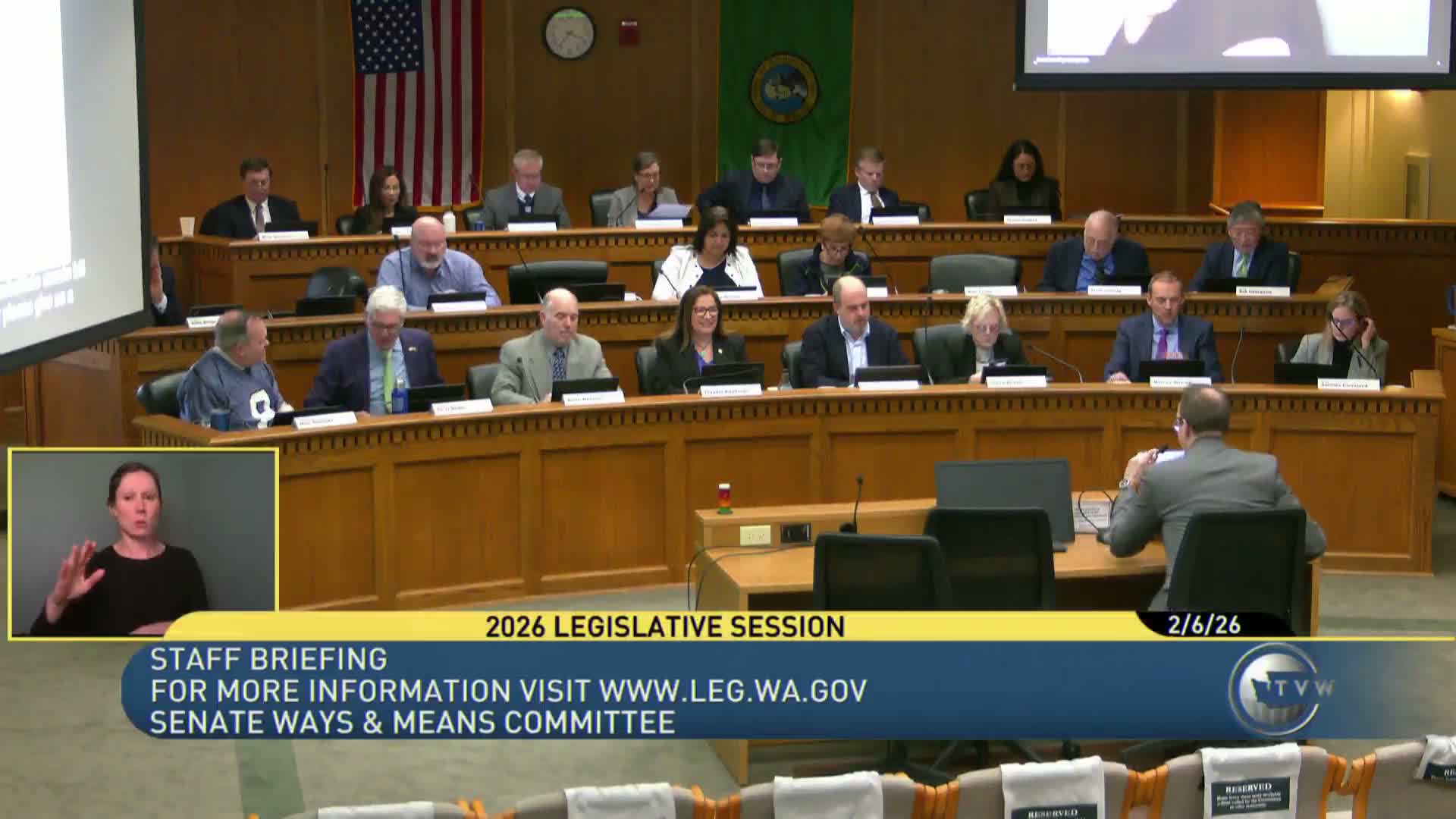
The committee received a staff briefing and public testimony on substitute Senate Bill 6,284, a measure designed to create consumer protections for high‑risk artificial intelligence systems. The substitute focuses on three areas: (1) planning and risk‑management requirements for developers and deployers of high‑risk systems (including impact assessments and adherence to NIST or equivalent frameworks); (2) required consumer disclosure when a public agency or private deployer uses an AI system to interact with consumers; and (3) extension of the state AI task force and creation of a workplace subgroup to examine impacts in employment contexts.
The bill defines "high‑risk" AI systems as those intended to autonomously make or be a substantial factor in consequential decisions without meaningful human consideration. Deployers must complete impact assessments, update risk management plans after substantial changes, and notify the attorney general and consumers in certain circumstances. Limited exceptions are included for small businesses (fewer than 50 FTEs), certain federal agencies and entities already regulated under HIPAA or sectoral rules, and banking/insurance entities.
Industry witnesses (WTIA, TechNet, AHAM) expressed support for the bill’s goals but pressed for clearer drafting, predictable compliance obligations and workable definitions for "high‑risk" and for the scope of exemptions. Researchers and civil‑society witnesses welcomed risk assessments and transparency but urged narrowing exemptions (especially in health and finance) and reconsidering employee‑size carveouts because small teams can deploy impactful models.
Committee members asked for additional examples, rulemaking guidance and drafting changes to ensure enforceability and to avoid unintended coverage gaps. Staff indicated the substitute text was modeled on legislation considered in other states (Virginia, Colorado) and that fiscal impacts to the Attorney General would cover enforcement and task‑force support.
The bill defines "high‑risk" AI systems as those intended to autonomously make or be a substantial factor in consequential decisions without meaningful human consideration. Deployers must complete impact assessments, update risk management plans after substantial changes, and notify the attorney general and consumers in certain circumstances. Limited exceptions are included for small businesses (fewer than 50 FTEs), certain federal agencies and entities already regulated under HIPAA or sectoral rules, and banking/insurance entities.
Industry witnesses (WTIA, TechNet, AHAM) expressed support for the bill’s goals but pressed for clearer drafting, predictable compliance obligations and workable definitions for "high‑risk" and for the scope of exemptions. Researchers and civil‑society witnesses welcomed risk assessments and transparency but urged narrowing exemptions (especially in health and finance) and reconsidering employee‑size carveouts because small teams can deploy impactful models.
Committee members asked for additional examples, rulemaking guidance and drafting changes to ensure enforceability and to avoid unintended coverage gaps. Staff indicated the substitute text was modeled on legislation considered in other states (Virginia, Colorado) and that fiscal impacts to the Attorney General would cover enforcement and task‑force support.
Don't Miss a Word: See the Full Meeting!
Go beyond summaries. Unlock every video, transcript, and key insight with a Founder Membership.
✓
Get instant access to full meeting videos
✓
Search and clip any phrase from complete transcripts
✓
Receive AI-powered summaries & custom alerts
✓
Enjoy lifetime, unrestricted access to government data
30-day money-back guarantee
