Grant County opioid panel hears drug‑court evaluation showing lower recidivism for graduates; approves data‑request letters
February 19, 2026 | Grant County, Indiana
This article was created by AI summarizing key points discussed. AI makes mistakes, so for full details and context, please refer to the video of the full meeting. Please report any errors so we can fix them. Report an error »
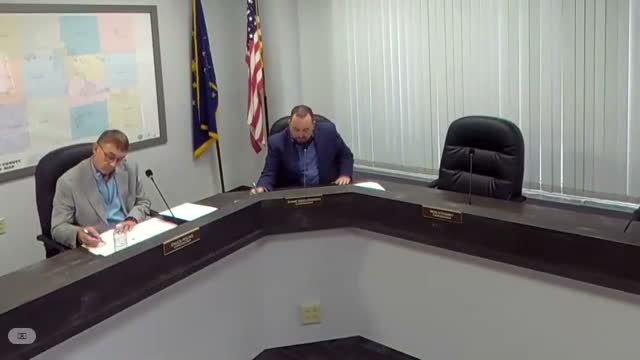
The Grant County Opioid Committee on Dec. 15 approved sending draft letters to local agencies requesting data and heard a presentation on the county drug court’s formal evaluation, which the presenter said shows significantly lower recidivism among graduates.
The committee voted to send letters to several local organizations, including the Hancock County Sheriff’s Office, Marion Health/Marion Hospital, the Community Foundation, Premier Care of Indiana and county probation, after committee member “Mister Harker” recommended that the chair sign the requests on behalf of the committee. The motion to send the letters was moved and seconded and carried on a verbal roll call of “aye.”
Why it matters: the evaluation provides the committee with program performance data the group will use when advising on opioid‑related spending and strategies. Committee members asked for additional subgroup and mental‑health co‑occurrence data to better target services.
Presenter’s findings and context
The presenter (recorded as a drug‑court staff member) described a 2020–2022 cohort and said the report shows a 19.5% rearrest rate for any participant during the period covered and a 10.9% rearrest rate for participants who graduated. The presenter contrasted those figures with a stated 64% recidivism rate for a comparison group, calling the cohort’s result a roughly 69.6% reduction relative to that comparison. The presenter emphasized the county’s conservative definition of recidivism as any new arrest and noted cohorts require a three‑year measurement window.
The presenter attributed program gains to several operational changes, including a 2020 Bureau of Justice Assistance (BJA) grant that funded an additional probation officer and treatment coordination. "So, that was a big change," the presenter said, describing how treatment coordination shortened time to inpatient or residential care and facilitated placements that bypassed jail.
Program scale, selection and outcomes
Committee members pressed on capacity and selection. The presenter said program capacity is about 70 participants and that cohort retention and graduation rates run roughly half (the report cites a 53% graduation figure for the cohort referenced). He described the program’s four mandatory phases, staggered graduations (the program holds three graduations per year and recently added a third when graduations increased) and the entry pathway, which generally requires prosecutor approval because many participants enter under plea agreements.
Eligibility is assessed with state‑normed tools: the presenter said the program uses the IRAS risk assessment (developed with academic partners and normed for Indiana) to identify moderate‑ or high‑risk candidates appropriate for problem‑solving court. "We tend to target the appropriate population, not based on who we think will be successful," he said.
Measures and new data collection
The presenter described validated screening instruments used in the evaluation (for example, SASSI for substance‑use indicators and anxiety/depression scales shown in the report) and highlighted improvements in housing, employment and family functioning. He noted an incentives‑to‑sanctions ratio averaging about 6.4:1 since 2019, a figure the presenter presented as consistent with emerging research favoring higher incentives ratios.
The report includes new qualitative survey work to capture participants’ experiences at multiple phases so staff can identify barriers before they lead to dropout. The presenter said the program coordinated dozens of residential placements and transitional‑housing referrals in recent years and that care‑coordination outputs increased between reporting years; he also said the coordinator has tracked multiple cognitive‑behavioral skill‑building interventions used across court services.
Requests and next steps
Committee members requested additional details on mental‑health co‑occurrence and several performance measures; the presenter said some state performance measures are submitted annually and agreed to follow up with the requested breakdowns. The committee set a goal to collect data for review by roughly April 1 and discussed inviting outside partners to share information at a future meeting.
Votes at a glance
- Approval of Dec. 15, 2025 meeting minutes: motion recorded as made by the sheriff and seconded; the committee voted verbally and the motion carried.
- Approval to send draft letters to local agencies requesting data and inviting organizations to present: motion recorded as made and seconded; the committee voted verbally and the motion carried.
What the committee flagged for follow‑up: committee members asked staff to provide (1) subgroup breakdowns by gender and race, (2) additional mental‑health co‑occurrence figures for drug‑court participants, (3) confirmation of counts for care‑coordination and cognitive‑behavioral interventions, and (4) copies of state performance measures referenced in the evaluation.
Committee speakers who appear in the record include "Mister Harker" (presenter of the letters and liaison for data requests), Greg Maynard (executive director, Bridges to Health, who offered to provide core program data), and members identified as the sheriff and commissioners (including Commissioner Pulling and Commissioner Middlesworth). The committee adjourned after opening public comment (no public commenters were recorded onsite or online).
The committee voted to send letters to several local organizations, including the Hancock County Sheriff’s Office, Marion Health/Marion Hospital, the Community Foundation, Premier Care of Indiana and county probation, after committee member “Mister Harker” recommended that the chair sign the requests on behalf of the committee. The motion to send the letters was moved and seconded and carried on a verbal roll call of “aye.”
Why it matters: the evaluation provides the committee with program performance data the group will use when advising on opioid‑related spending and strategies. Committee members asked for additional subgroup and mental‑health co‑occurrence data to better target services.
Presenter’s findings and context
The presenter (recorded as a drug‑court staff member) described a 2020–2022 cohort and said the report shows a 19.5% rearrest rate for any participant during the period covered and a 10.9% rearrest rate for participants who graduated. The presenter contrasted those figures with a stated 64% recidivism rate for a comparison group, calling the cohort’s result a roughly 69.6% reduction relative to that comparison. The presenter emphasized the county’s conservative definition of recidivism as any new arrest and noted cohorts require a three‑year measurement window.
The presenter attributed program gains to several operational changes, including a 2020 Bureau of Justice Assistance (BJA) grant that funded an additional probation officer and treatment coordination. "So, that was a big change," the presenter said, describing how treatment coordination shortened time to inpatient or residential care and facilitated placements that bypassed jail.
Program scale, selection and outcomes
Committee members pressed on capacity and selection. The presenter said program capacity is about 70 participants and that cohort retention and graduation rates run roughly half (the report cites a 53% graduation figure for the cohort referenced). He described the program’s four mandatory phases, staggered graduations (the program holds three graduations per year and recently added a third when graduations increased) and the entry pathway, which generally requires prosecutor approval because many participants enter under plea agreements.
Eligibility is assessed with state‑normed tools: the presenter said the program uses the IRAS risk assessment (developed with academic partners and normed for Indiana) to identify moderate‑ or high‑risk candidates appropriate for problem‑solving court. "We tend to target the appropriate population, not based on who we think will be successful," he said.
Measures and new data collection
The presenter described validated screening instruments used in the evaluation (for example, SASSI for substance‑use indicators and anxiety/depression scales shown in the report) and highlighted improvements in housing, employment and family functioning. He noted an incentives‑to‑sanctions ratio averaging about 6.4:1 since 2019, a figure the presenter presented as consistent with emerging research favoring higher incentives ratios.
The report includes new qualitative survey work to capture participants’ experiences at multiple phases so staff can identify barriers before they lead to dropout. The presenter said the program coordinated dozens of residential placements and transitional‑housing referrals in recent years and that care‑coordination outputs increased between reporting years; he also said the coordinator has tracked multiple cognitive‑behavioral skill‑building interventions used across court services.
Requests and next steps
Committee members requested additional details on mental‑health co‑occurrence and several performance measures; the presenter said some state performance measures are submitted annually and agreed to follow up with the requested breakdowns. The committee set a goal to collect data for review by roughly April 1 and discussed inviting outside partners to share information at a future meeting.
Votes at a glance
- Approval of Dec. 15, 2025 meeting minutes: motion recorded as made by the sheriff and seconded; the committee voted verbally and the motion carried.
- Approval to send draft letters to local agencies requesting data and inviting organizations to present: motion recorded as made and seconded; the committee voted verbally and the motion carried.
What the committee flagged for follow‑up: committee members asked staff to provide (1) subgroup breakdowns by gender and race, (2) additional mental‑health co‑occurrence figures for drug‑court participants, (3) confirmation of counts for care‑coordination and cognitive‑behavioral interventions, and (4) copies of state performance measures referenced in the evaluation.
Committee speakers who appear in the record include "Mister Harker" (presenter of the letters and liaison for data requests), Greg Maynard (executive director, Bridges to Health, who offered to provide core program data), and members identified as the sheriff and commissioners (including Commissioner Pulling and Commissioner Middlesworth). The committee adjourned after opening public comment (no public commenters were recorded onsite or online).
View the Full Meeting & All Its Details
This article offers just a summary. Unlock complete video, transcripts, and insights as a Founder Member.
✓
Watch full, unedited meeting videos
✓
Search every word spoken in unlimited transcripts
✓
AI summaries & real-time alerts (all government levels)
✓
Permanent access to expanding government content
30-day money-back guarantee
