State charter rules clarify replication and amendment appeals; committee divisions keep some items from a unanimous recommendation
February 19, 2026 | 2026 Legislature TN, Tennessee
This article was created by AI summarizing key points discussed. AI makes mistakes, so for full details and context, please refer to the video of the full meeting. Please report any errors so we can fix them. Report an error »
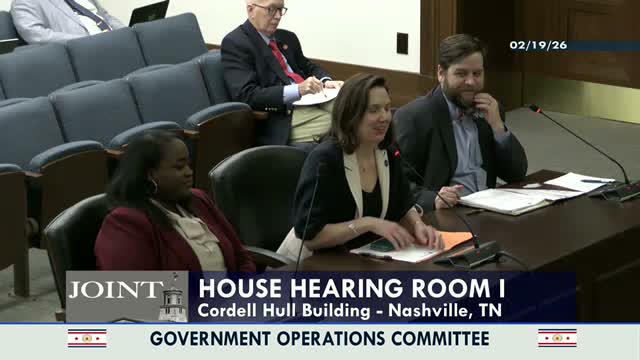
The Tennessee Public Charter School Commission told lawmakers it has adopted rules to govern charter school replication applications and to set procedures for amendments and amendment appeals, reflecting statutory changes from the 2025 session.
At the earlier presentation (identified on the record as Tess Doval) the commission said Public Chapter 275 allowed a sponsor that already has at least one school under the commission for one calendar year to apply directly to the Commission for a replication in the same geographic district. The replication application mirrors the commission’s NewStart rubric and includes a capacity interview with the governing board and a local public hearing to receive comment.
Committee members probed how the commission weighs local board denials, whether academic performance and local school improvements factor into the evaluation, and whether replication can proceed repeatedly (the commission said there is no statutory cap). The commission explained that applications seek enrollment projections and community demand, and the rubric asks applicants to describe local academic performance and schools in the area so the authorizer can evaluate market demand.
On amendment and appeal rules presented later in the session (record shows an executive identified as Tess Stovall), the commission said the rules lay out how schools petition to amend material charter terms and the appeals process for amendment denials. Counsel confirmed that appeals to the commission are de novo and that the commission evaluates the full record; there is no statutory rubric that prescribes specific weights for local board votes.
Votes and disposition: On replication rules the Senate produced a negative recommendation (record reflects more 'no' than 'aye' votes in the Senate roll), and legal counsel explained the disapproval will be reflected in the 2026 rules process and considered by full committees and the floors. For the amendment rules the committee recorded mixed results in the Senate (insufficient votes for a positive recommendation) and a positive recommendation in the House.
Why it matters: The changes implement statutory pathways for replication and clarify appeal procedures that can allow a sponsor to seek state authorization after local denial. Lawmakers interested in local control pressed the commission about whether greater deference to local boards could or should be institutionalized and whether rubrics should weight local board opposition more heavily.
What to watch next: As the items progress through full committees and the floors, differences between the Senate and House recommendations could determine whether the rules stand as drafted, are adjusted by the commission, or become a focus for follow-up legislation.
At the earlier presentation (identified on the record as Tess Doval) the commission said Public Chapter 275 allowed a sponsor that already has at least one school under the commission for one calendar year to apply directly to the Commission for a replication in the same geographic district. The replication application mirrors the commission’s NewStart rubric and includes a capacity interview with the governing board and a local public hearing to receive comment.
Committee members probed how the commission weighs local board denials, whether academic performance and local school improvements factor into the evaluation, and whether replication can proceed repeatedly (the commission said there is no statutory cap). The commission explained that applications seek enrollment projections and community demand, and the rubric asks applicants to describe local academic performance and schools in the area so the authorizer can evaluate market demand.
On amendment and appeal rules presented later in the session (record shows an executive identified as Tess Stovall), the commission said the rules lay out how schools petition to amend material charter terms and the appeals process for amendment denials. Counsel confirmed that appeals to the commission are de novo and that the commission evaluates the full record; there is no statutory rubric that prescribes specific weights for local board votes.
Votes and disposition: On replication rules the Senate produced a negative recommendation (record reflects more 'no' than 'aye' votes in the Senate roll), and legal counsel explained the disapproval will be reflected in the 2026 rules process and considered by full committees and the floors. For the amendment rules the committee recorded mixed results in the Senate (insufficient votes for a positive recommendation) and a positive recommendation in the House.
Why it matters: The changes implement statutory pathways for replication and clarify appeal procedures that can allow a sponsor to seek state authorization after local denial. Lawmakers interested in local control pressed the commission about whether greater deference to local boards could or should be institutionalized and whether rubrics should weight local board opposition more heavily.
What to watch next: As the items progress through full committees and the floors, differences between the Senate and House recommendations could determine whether the rules stand as drafted, are adjusted by the commission, or become a focus for follow-up legislation.
View the Full Meeting & All Its Details
This article offers just a summary. Unlock complete video, transcripts, and insights as a Founder Member.
✓
Watch full, unedited meeting videos
✓
Search every word spoken in unlimited transcripts
✓
AI summaries & real-time alerts (all government levels)
✓
Permanent access to expanding government content
30-day money-back guarantee
