House Health Committee Advances Bill to Add 'Pause' in Organ‑donation Process; Advocates Say It Restores Choice
February 19, 2026 | 2026 Legislature KY, Kentucky
This article was created by AI summarizing key points discussed. AI makes mistakes, so for full details and context, please refer to the video of the full meeting. Please report any errors so we can fix them. Report an error »
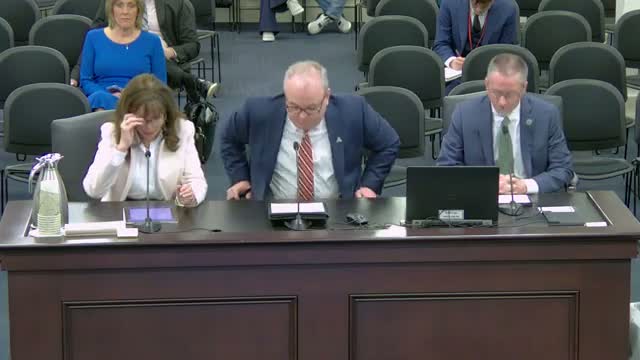
The House Standing Committee on Health Services voted to advance House Bill 510 after witnesses told the committee the measure would create a procedural pause to protect donor choice and help rebuild public confidence in organ, tissue and eye donation.
A testifier speaking to the committee said, "We believe that every life is a gift," and argued the bill "assures that every Kentuckian is given that choice." The witness urged that "where there is uncertainty, there is a pause," so "when death is confirmed with certainty, the donation may proceed." (Speaker 4, testifier.)
Another supporter said the actions in the bill are already incorporated into Network for Hope's organ-donation process and that the organization supports the measure "because we want to rebuild public trust in the organ, tissue and eye donation system." (Speaker 3, testifier.)
The committee chair thanked the witnesses for their testimony and directed the clerk (DJ) to take a roll call. The clerk called the roll and most named representatives answered "Yes" or "Aye." The transcript records recorded affirmative responses for 17 members and does not record responses for two representatives called during the roll (Representative Bray and Representative Raymer). The chair then announced, "House Bill 510 passes with favorable expressions" and said the measure "should pass on the House floor." (Committee chair, not named in transcript.)
Motion and vote details: The transcript records that there "was a motion and a second on the bill," but does not include the text of the motion or identify the mover and seconder. The roll call was performed by the clerk (identified in the transcript as DJ). The committee's stated outcome was recorded as "passes with favorable expressions." (Action recorded in committee minutes.)
What the bill would do: Committee discussion and testimony in the record focused on procedural safeguards to ensure donations occur only after death is confirmed and on giving individuals and families a clear choice. Witnesses said the bill's practices are consistent with existing procedures used by Network for Hope. The transcript does not include the bill text, statutory citations, or specific operational details about how the pause would be implemented.
Next steps: The chair announced the committee's next scheduled meeting on Thursday, February 26 at noon in the same room and adjourned the committee.
Notes on transcript gaps: The record does not include the motion language, the names of the motion's mover and seconder, or a verbatim, itemized roll-call list tying each recorded "Yes" or "Aye" to a named representative in every case; two representatives called during roll call have no recorded response in the transcript. The body limits itself to what is recorded and does not infer missing procedural details.
A testifier speaking to the committee said, "We believe that every life is a gift," and argued the bill "assures that every Kentuckian is given that choice." The witness urged that "where there is uncertainty, there is a pause," so "when death is confirmed with certainty, the donation may proceed." (Speaker 4, testifier.)
Another supporter said the actions in the bill are already incorporated into Network for Hope's organ-donation process and that the organization supports the measure "because we want to rebuild public trust in the organ, tissue and eye donation system." (Speaker 3, testifier.)
The committee chair thanked the witnesses for their testimony and directed the clerk (DJ) to take a roll call. The clerk called the roll and most named representatives answered "Yes" or "Aye." The transcript records recorded affirmative responses for 17 members and does not record responses for two representatives called during the roll (Representative Bray and Representative Raymer). The chair then announced, "House Bill 510 passes with favorable expressions" and said the measure "should pass on the House floor." (Committee chair, not named in transcript.)
Motion and vote details: The transcript records that there "was a motion and a second on the bill," but does not include the text of the motion or identify the mover and seconder. The roll call was performed by the clerk (identified in the transcript as DJ). The committee's stated outcome was recorded as "passes with favorable expressions." (Action recorded in committee minutes.)
What the bill would do: Committee discussion and testimony in the record focused on procedural safeguards to ensure donations occur only after death is confirmed and on giving individuals and families a clear choice. Witnesses said the bill's practices are consistent with existing procedures used by Network for Hope. The transcript does not include the bill text, statutory citations, or specific operational details about how the pause would be implemented.
Next steps: The chair announced the committee's next scheduled meeting on Thursday, February 26 at noon in the same room and adjourned the committee.
Notes on transcript gaps: The record does not include the motion language, the names of the motion's mover and seconder, or a verbatim, itemized roll-call list tying each recorded "Yes" or "Aye" to a named representative in every case; two representatives called during roll call have no recorded response in the transcript. The body limits itself to what is recorded and does not infer missing procedural details.
View the Full Meeting & All Its Details
This article offers just a summary. Unlock complete video, transcripts, and insights as a Founder Member.
✓
Watch full, unedited meeting videos
✓
Search every word spoken in unlimited transcripts
✓
AI summaries & real-time alerts (all government levels)
✓
Permanent access to expanding government content
30-day money-back guarantee
