House advances a package of bills including child care, community reinvestment and health efficiency measures
February 16, 2026 | Legislative Sessions, Washington
This article was created by AI summarizing key points discussed. AI makes mistakes, so for full details and context, please refer to the video of the full meeting. Please report any errors so we can fix them. Report an error »
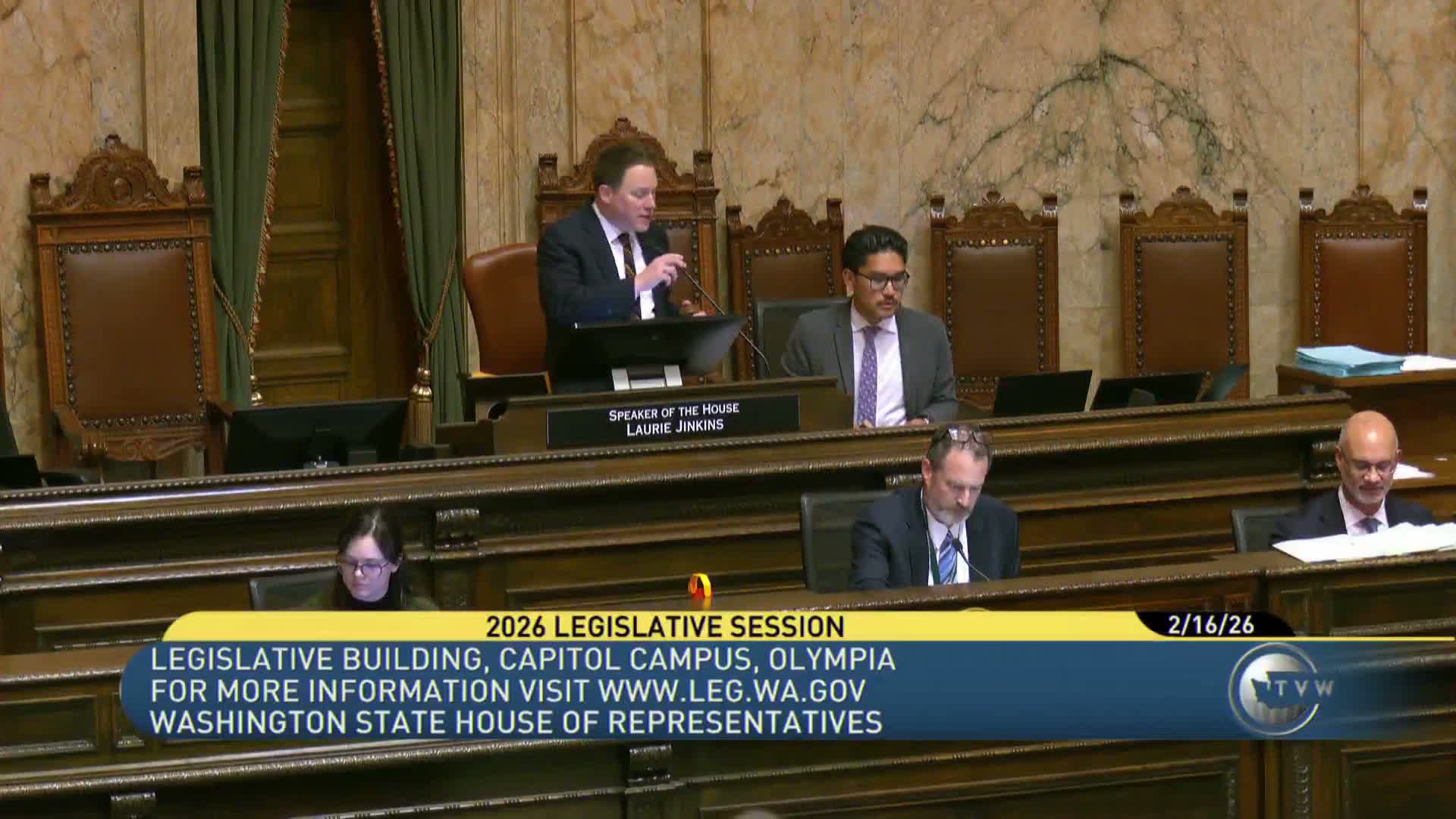
The House considered and passed a series of bills by consent and after amendment on the floor.
Child care: Substitute House Bill 22‑19, aimed at operational efficiencies for licensed child‑care settings, was substituted as recommended by committee. Members adopted amendments clarifying that licensed early‑learning settings must be free of high‑potency synthetic opioids, residue and paraphernalia; sponsors said the changes restated existing licensing standards and affirmed a zero‑tolerance position. The engrossed substitute passed; the clerk recorded 95 yeas, 1 nay, 2 excused.
Community reinvestment: Representative Reeves described codifying the community reinvestment program (House Bill 25‑23) and cited program results from a pilot ("more than 190,000 Washingtonians served; over 9,600 small businesses supported"). The engrossed second substitute passed by roll call (88 yays, 9 nays, 1 excused).
Health care efficiency: Second substitute House Bill 17‑84 (certified medical assistance and telemedicine) passed after adoption of cleanup amendments negotiated with hospitals. Sponsors said the bill will help medical assistants work at the top of their license and reduce redundancy in outpatient clinics. Final roll call showed unanimous support (96 yays, 0 nays, 2 excused).
Other bills passed on the floor included measures on retirement lump sums (HB 21‑24), modernization of statutory terminology (HB 26‑32), theater seating limits (HB 24‑76), and election procedures for deceased candidates (HB 25‑74). Several procedural motions to relieve committees of bills were rejected by roll call votes. The House adjourned and will reconvene Feb. 17.
Child care: Substitute House Bill 22‑19, aimed at operational efficiencies for licensed child‑care settings, was substituted as recommended by committee. Members adopted amendments clarifying that licensed early‑learning settings must be free of high‑potency synthetic opioids, residue and paraphernalia; sponsors said the changes restated existing licensing standards and affirmed a zero‑tolerance position. The engrossed substitute passed; the clerk recorded 95 yeas, 1 nay, 2 excused.
Community reinvestment: Representative Reeves described codifying the community reinvestment program (House Bill 25‑23) and cited program results from a pilot ("more than 190,000 Washingtonians served; over 9,600 small businesses supported"). The engrossed second substitute passed by roll call (88 yays, 9 nays, 1 excused).
Health care efficiency: Second substitute House Bill 17‑84 (certified medical assistance and telemedicine) passed after adoption of cleanup amendments negotiated with hospitals. Sponsors said the bill will help medical assistants work at the top of their license and reduce redundancy in outpatient clinics. Final roll call showed unanimous support (96 yays, 0 nays, 2 excused).
Other bills passed on the floor included measures on retirement lump sums (HB 21‑24), modernization of statutory terminology (HB 26‑32), theater seating limits (HB 24‑76), and election procedures for deceased candidates (HB 25‑74). Several procedural motions to relieve committees of bills were rejected by roll call votes. The House adjourned and will reconvene Feb. 17.
Don't Miss a Word: See the Full Meeting!
Go beyond summaries. Unlock every video, transcript, and key insight with a Founder Membership.
✓
Get instant access to full meeting videos
✓
Search and clip any phrase from complete transcripts
✓
Receive AI-powered summaries & custom alerts
✓
Enjoy lifetime, unrestricted access to government data
30-day money-back guarantee
