Appropriations hears push for statewide public defense funding formula in HB 1592
February 07, 2026 | Legislative Sessions, Washington
This article was created by AI summarizing key points discussed. AI makes mistakes, so for full details and context, please refer to the video of the full meeting. Please report any errors so we can fix them. Report an error »
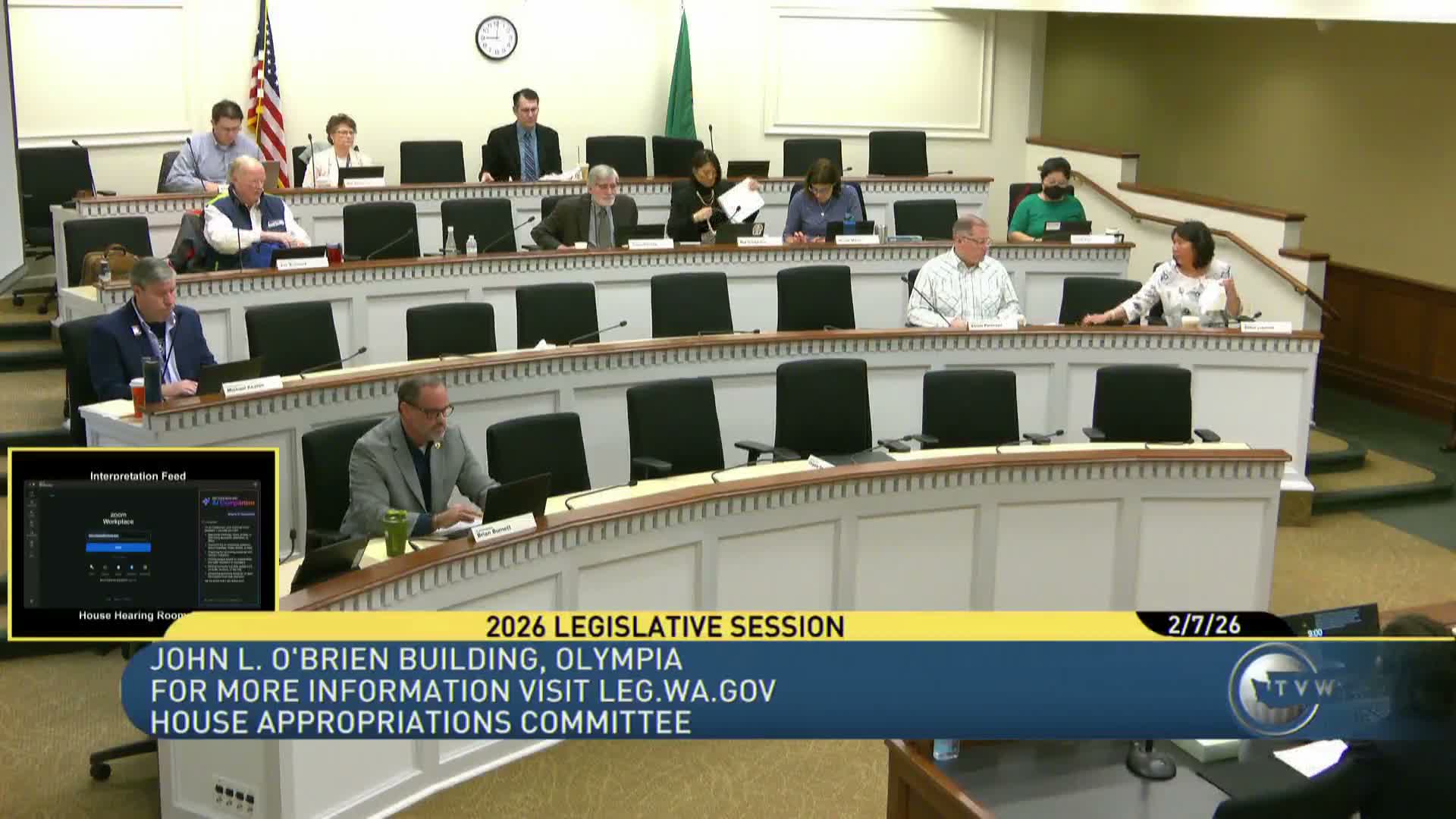
The House Appropriations Committee heard broad support Tuesday for substitute House Bill 1592, legislation that would change how Washington distributes state aid for trial-level indigent defense.
Committee staff and witnesses described a system now funded largely from local general funds despite being a state-mandated constitutional right. Yolanda Baker, staff to the Civil Rights and Judiciary Committee, explained the substitute would require the Office of Public Defense (OPD) to distribute county and city monies on a pro rata basis tied to cases where a public defender was assigned, replace some base allocations, and allow OPD to assume responsibility for public defense in sparsely populated counties that request it.
The bill also would require the Administrative Office of the Courts to collect data on public-defender assignments and direct OPD to recommend ways to reduce caseloads and increase retention in high-need counties.
Why it matters: Local governments and defender organizations told the committee they are facing a constitutional-scale shortfall. Derek Nunley of the Association of Washington Cities estimated cities collectively spend about $40 million a year on public defense and that costs are rising sharply; Larry Jefferson, director of the Office of Public Defense, called the bill a “historic undertaking” to address uneven access to counsel across the state.
What speakers said: Curtis Steinhauer, representing the Washington State Association of Counties, called the package “a vehicle to reform the current regulatory framework” so local and state resources can be aligned without imposing large new state costs immediately. Several rural city managers described administrative barriers to accessing OPD grants and estimated the staffing needs and budget increases they would face under new caseload standards (examples cited in testimony included hiring multiple full‑time defenders and seven-figure annual increases for small cities).
Fiscal and implementation notes: Committee staff cautioned several costs remain “indeterminate.” Yvonne Walker said the state provided $13.5 million for public defense in the prior biennium but that the substitute’s shift in distribution and the OPD’s potential new service role for low‑density counties will drive changes in fiscal exposure that require updated fiscal notes.
Next steps: The committee did not take a final vote on the measure during the public hearing portion. Committee members asked federal staff and local officials questions; HB 1592 remained on the agenda for later consideration in the committee’s executive session.
Ending: Supporters urged prompt legislative action to give OPD the tools and data the state needs to reduce caseloads and meet constitutional obligations, while staff and some members pressed for more precise fiscal estimates before a final committee recommendation.
Committee staff and witnesses described a system now funded largely from local general funds despite being a state-mandated constitutional right. Yolanda Baker, staff to the Civil Rights and Judiciary Committee, explained the substitute would require the Office of Public Defense (OPD) to distribute county and city monies on a pro rata basis tied to cases where a public defender was assigned, replace some base allocations, and allow OPD to assume responsibility for public defense in sparsely populated counties that request it.
The bill also would require the Administrative Office of the Courts to collect data on public-defender assignments and direct OPD to recommend ways to reduce caseloads and increase retention in high-need counties.
Why it matters: Local governments and defender organizations told the committee they are facing a constitutional-scale shortfall. Derek Nunley of the Association of Washington Cities estimated cities collectively spend about $40 million a year on public defense and that costs are rising sharply; Larry Jefferson, director of the Office of Public Defense, called the bill a “historic undertaking” to address uneven access to counsel across the state.
What speakers said: Curtis Steinhauer, representing the Washington State Association of Counties, called the package “a vehicle to reform the current regulatory framework” so local and state resources can be aligned without imposing large new state costs immediately. Several rural city managers described administrative barriers to accessing OPD grants and estimated the staffing needs and budget increases they would face under new caseload standards (examples cited in testimony included hiring multiple full‑time defenders and seven-figure annual increases for small cities).
Fiscal and implementation notes: Committee staff cautioned several costs remain “indeterminate.” Yvonne Walker said the state provided $13.5 million for public defense in the prior biennium but that the substitute’s shift in distribution and the OPD’s potential new service role for low‑density counties will drive changes in fiscal exposure that require updated fiscal notes.
Next steps: The committee did not take a final vote on the measure during the public hearing portion. Committee members asked federal staff and local officials questions; HB 1592 remained on the agenda for later consideration in the committee’s executive session.
Ending: Supporters urged prompt legislative action to give OPD the tools and data the state needs to reduce caseloads and meet constitutional obligations, while staff and some members pressed for more precise fiscal estimates before a final committee recommendation.
Don't Miss a Word: See the Full Meeting!
Go beyond summaries. Unlock every video, transcript, and key insight with a Founder Membership.
✓
Get instant access to full meeting videos
✓
Search and clip any phrase from complete transcripts
✓
Receive AI-powered summaries & custom alerts
✓
Enjoy lifetime, unrestricted access to government data
30-day money-back guarantee
