Appropriations hears sharp split over new rules and fees for big energy users including data centers
February 07, 2026 | Legislative Sessions, Washington
This article was created by AI summarizing key points discussed. AI makes mistakes, so for full details and context, please refer to the video of the full meeting. Please report any errors so we can fix them. Report an error »
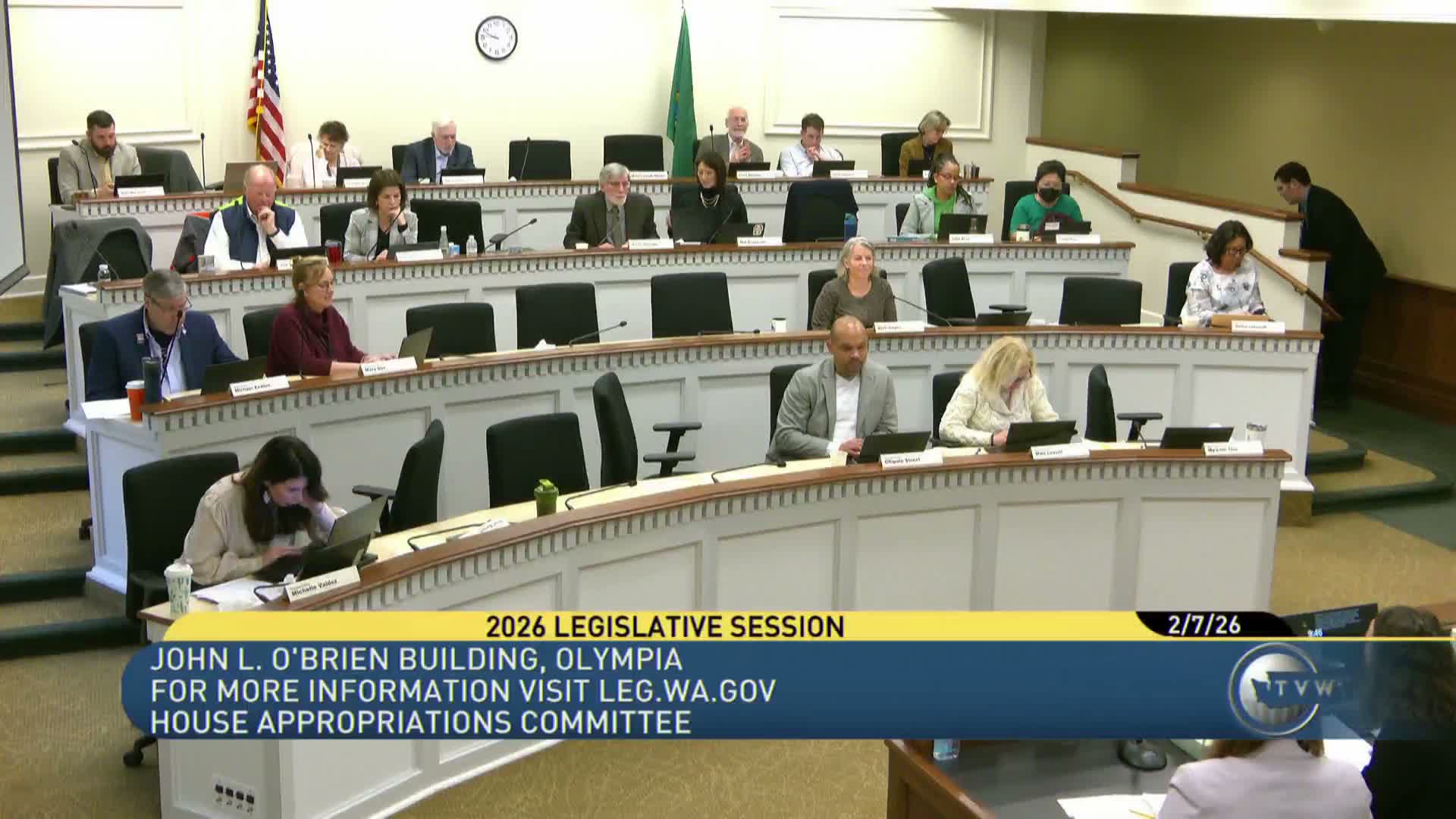
The committee heard intense, multi‑stakeholder testimony on substitute House Bill 2515, which would regulate "emerging large energy use facilities" (ELUFs) — a category the bill defines to include facilities of 20 megawatts or more, such as large data centers and some crypto-mining operations.
Laws and duties: Staff described provisions requiring utilities to adopt tariffs or policies that prevent cost shifts to other customers, create reporting requirements (including tri‑annual sustainability reports and annual reports to Ecology), and establish interconnection best practices. The bill also sets clean‑energy procurement thresholds for ELUFs (80% from new or non‑emitting sources by 2030; 100% by 2035) and directs the Department of Revenue to collect a per‑kilowatt‑hour fee (0.5¢/kWh) deposited into an emergent large energy use facilities account to fund energy assistance, weatherization, and higher‑education workforce programs.
Support and concerns: Environmental and consumer‑advocacy witnesses (e.g., Northwest Energy Coalition, Washington State Community Action Partnership) urged the committee to adopt the bill, arguing it offers consumer protections and funding for energy assistance as data centers bid up power costs in some regions. Local utilities (e.g., Tacoma Power, Grant County PUD) supported the growth‑pays‑for‑growth principle but sought clarification on existing contracts and interoperability with current rate structures.
Industry opposition: The Data Center Coalition and industry associations (Washington Technology Industry Association, Avista, Associated Builders and Contractors) opposed the bill’s new fees, reporting requirements, and some procurement and labor provisions, arguing those elements would raise costs, undermine Washington’s competitiveness for data center investment, and duplicate existing regulatory processes.
Why it matters: Witnesses gave sharply different estimates for the bill’s economic impact. Industry witnesses warned the measure could affect thousands of jobs and billions in local investment; proponents said modest fees would fund affordability programs and protect ratepayers.
Next steps: Committee members probed interconnection, bill language around project labor agreements, and how the bill interacts with the Climate Commitment Act (CCA) and existing utility rulemaking. The bill proceeded to executive consideration with the record of competing testimony.
Laws and duties: Staff described provisions requiring utilities to adopt tariffs or policies that prevent cost shifts to other customers, create reporting requirements (including tri‑annual sustainability reports and annual reports to Ecology), and establish interconnection best practices. The bill also sets clean‑energy procurement thresholds for ELUFs (80% from new or non‑emitting sources by 2030; 100% by 2035) and directs the Department of Revenue to collect a per‑kilowatt‑hour fee (0.5¢/kWh) deposited into an emergent large energy use facilities account to fund energy assistance, weatherization, and higher‑education workforce programs.
Support and concerns: Environmental and consumer‑advocacy witnesses (e.g., Northwest Energy Coalition, Washington State Community Action Partnership) urged the committee to adopt the bill, arguing it offers consumer protections and funding for energy assistance as data centers bid up power costs in some regions. Local utilities (e.g., Tacoma Power, Grant County PUD) supported the growth‑pays‑for‑growth principle but sought clarification on existing contracts and interoperability with current rate structures.
Industry opposition: The Data Center Coalition and industry associations (Washington Technology Industry Association, Avista, Associated Builders and Contractors) opposed the bill’s new fees, reporting requirements, and some procurement and labor provisions, arguing those elements would raise costs, undermine Washington’s competitiveness for data center investment, and duplicate existing regulatory processes.
Why it matters: Witnesses gave sharply different estimates for the bill’s economic impact. Industry witnesses warned the measure could affect thousands of jobs and billions in local investment; proponents said modest fees would fund affordability programs and protect ratepayers.
Next steps: Committee members probed interconnection, bill language around project labor agreements, and how the bill interacts with the Climate Commitment Act (CCA) and existing utility rulemaking. The bill proceeded to executive consideration with the record of competing testimony.
Don't Miss a Word: See the Full Meeting!
Go beyond summaries. Unlock every video, transcript, and key insight with a Founder Membership.
✓
Get instant access to full meeting videos
✓
Search and clip any phrase from complete transcripts
✓
Receive AI-powered summaries & custom alerts
✓
Enjoy lifetime, unrestricted access to government data
30-day money-back guarantee
