Community groups and workforce boards press Appropriations to make Community Reinvestment Program permanent
February 07, 2026 | Legislative Sessions, Washington
This article was created by AI summarizing key points discussed. AI makes mistakes, so for full details and context, please refer to the video of the full meeting. Please report any errors so we can fix them. Report an error »
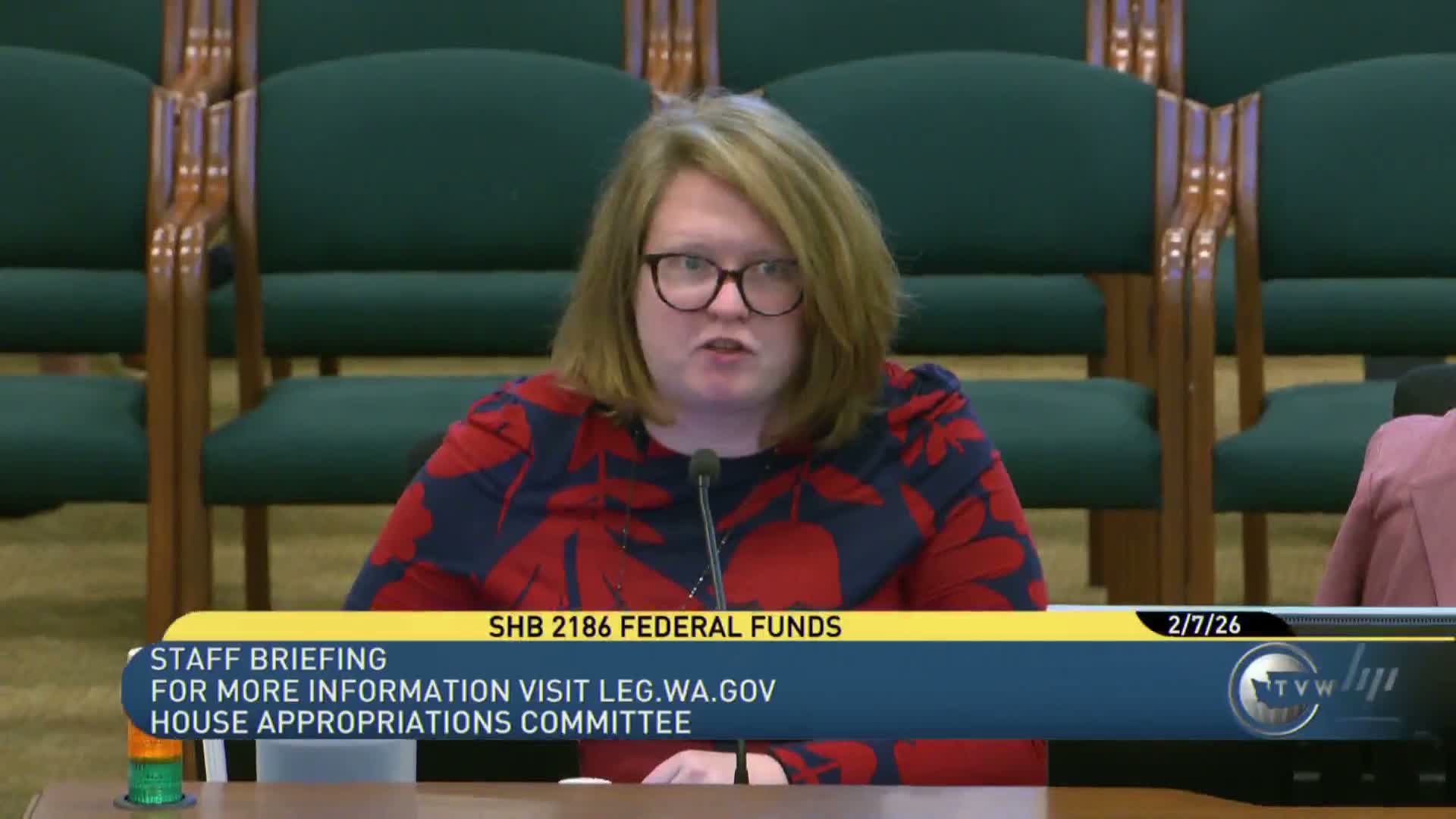
The committee heard sustained testimony in support of substitute House Bill 2523 (Community Reinvestment Program), which would set long‑term direction for distributing funds to communities most harmed by past drug‑enforcement policies.
Program overview: Staff briefers described an existing program with a $25 million per‑fiscal‑year base; the proposed substitute includes directions to Commerce for updates and reporting, a requirement for community input, and an intent language to fund the program at $100 million annually (subject to appropriation). The bill also tasks the Washington State Institute for Public Policy with a study of program outcomes.
Witness testimony: Dozens of organizations and small business recipients described CRP outcomes: employment training, small business grants, behavioral‑health investments and violence prevention programs. Testifiers included the Washington Cannabis Alliance, Washington Workforce Association, small‑business recipients (e.g., food and service businesses), and coalition groups representing community‑based organizations. Many witnesses said CRP funds leverage federal and other resources and urged continuing and predictable funding.
Why it matters: Witnesses cited performance metrics — jobs placed, businesses sustained, and behavioral‑health supports — and argued stable funding enables partner organizations to plan staffing and preserve outcomes. The testimony argued that stable CRP funding yields long‑term fiscal and social returns, including reduced future public costs.
Next step: The committee moved the bill forward for executive consideration. Members asked for clarifications on reporting cadence, dashboarding, and the study budget and timeline.
Program overview: Staff briefers described an existing program with a $25 million per‑fiscal‑year base; the proposed substitute includes directions to Commerce for updates and reporting, a requirement for community input, and an intent language to fund the program at $100 million annually (subject to appropriation). The bill also tasks the Washington State Institute for Public Policy with a study of program outcomes.
Witness testimony: Dozens of organizations and small business recipients described CRP outcomes: employment training, small business grants, behavioral‑health investments and violence prevention programs. Testifiers included the Washington Cannabis Alliance, Washington Workforce Association, small‑business recipients (e.g., food and service businesses), and coalition groups representing community‑based organizations. Many witnesses said CRP funds leverage federal and other resources and urged continuing and predictable funding.
Why it matters: Witnesses cited performance metrics — jobs placed, businesses sustained, and behavioral‑health supports — and argued stable funding enables partner organizations to plan staffing and preserve outcomes. The testimony argued that stable CRP funding yields long‑term fiscal and social returns, including reduced future public costs.
Next step: The committee moved the bill forward for executive consideration. Members asked for clarifications on reporting cadence, dashboarding, and the study budget and timeline.
Don't Miss a Word: See the Full Meeting!
Go beyond summaries. Unlock every video, transcript, and key insight with a Founder Membership.
✓
Get instant access to full meeting videos
✓
Search and clip any phrase from complete transcripts
✓
Receive AI-powered summaries & custom alerts
✓
Enjoy lifetime, unrestricted access to government data
30-day money-back guarantee
