Appropriations executive session: committee advances multiple bills, including public defense, juvenile justice and energy measures
February 07, 2026 | Legislative Sessions, Washington
This article was created by AI summarizing key points discussed. AI makes mistakes, so for full details and context, please refer to the video of the full meeting. Please report any errors so we can fix them. Report an error »
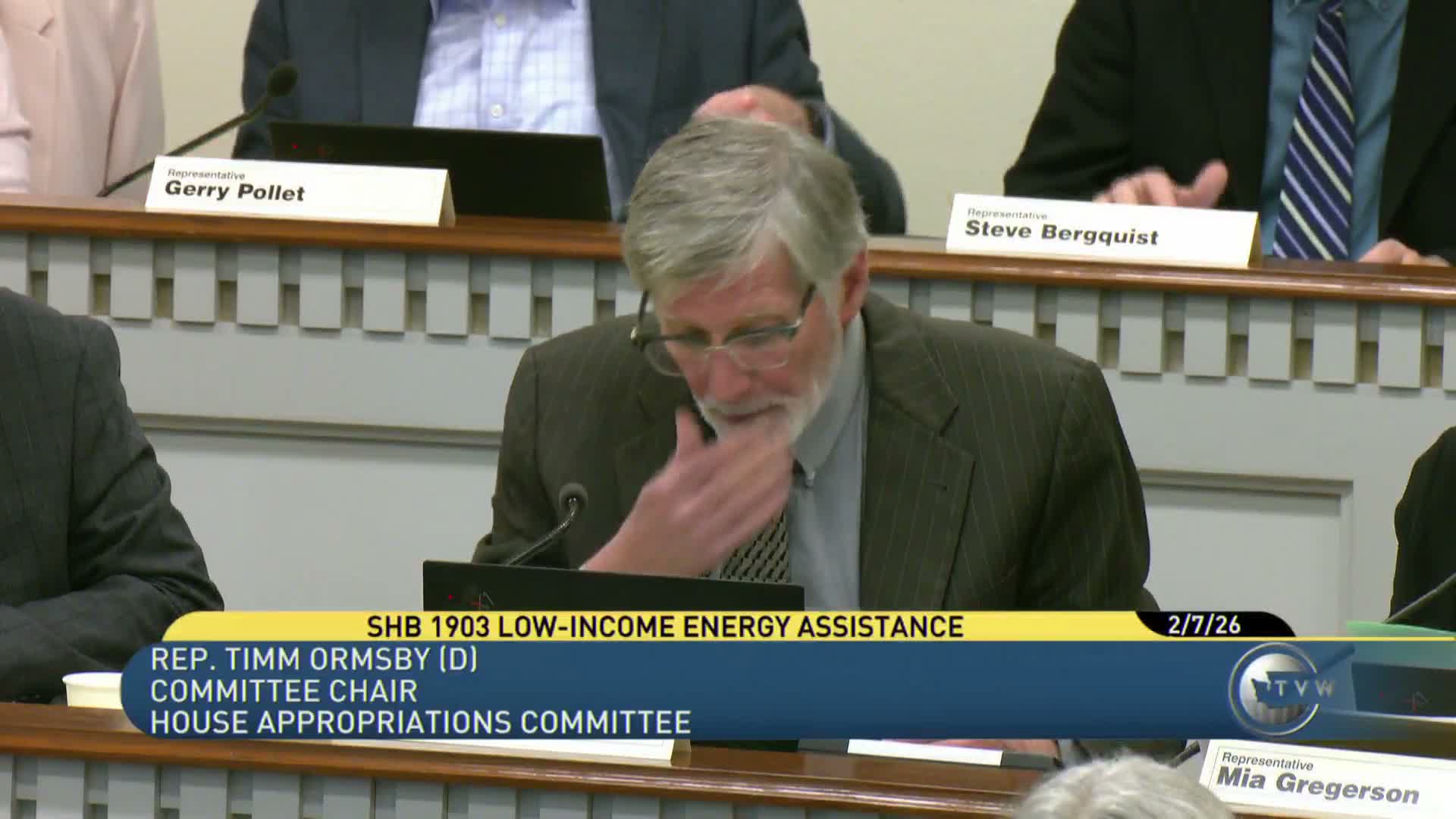
After public hearings the committee moved to an extended executive session and considered amendments and votes on a large group of bills across policy areas.
Key committee actions: multiple second‑substitute bills were reported out of committee with due‑pass recommendations after amendment votes and roll‑call tallies. Examples include (committee shorthand shown in the transcript):
- Second substitute HB 19‑03 (statewide low‑income energy assistance/regulatory implementation): reported out 21 ayes, 7 nays, 3 excused (motion moved by Vice Chair Gregersen). (See transcript roll call.)
- Second substitute HB 19‑09 (court unification task force changes): reported out 18 ayes, 10 nays, 3 excused.
- Second substitute HB 19‑82 (vacating convictions for treaty rights): reported out 28 ayes, 0 nays, 3 excused after adopting an amendment to remove a tribal‑liaison position funding requirement.
- Second substitute HB 25‑15 (Emergent Large Energy Use Facilities): amendments considered on PLA and language; later reported out with a due‑pass recommendation and multiple recorded amendments.
- A long list of other bills (HB 23‑97, HB 24‑29, HB 24‑42, HB 24‑79, HB 26‑81, HB 26‑88, HB 27‑14, etc.) received amendment consideration and many were reported out; the transcript contains the roll‑call tallies and adopted amendments for each.
Why it matters: Committee action moves bills from committee to the floor with recommended amendments and associated fiscal notes. The record includes roll‑call tallies, adopted amendments, and requests for updated fiscal analyses where costs were indeterminate.
Next steps: Each reported bill proceeds to the next stage in the House process (committee report to the floor). The committee record includes adopted amendments and tallies that will accompany bills to the floor.
Key committee actions: multiple second‑substitute bills were reported out of committee with due‑pass recommendations after amendment votes and roll‑call tallies. Examples include (committee shorthand shown in the transcript):
- Second substitute HB 19‑03 (statewide low‑income energy assistance/regulatory implementation): reported out 21 ayes, 7 nays, 3 excused (motion moved by Vice Chair Gregersen). (See transcript roll call.)
- Second substitute HB 19‑09 (court unification task force changes): reported out 18 ayes, 10 nays, 3 excused.
- Second substitute HB 19‑82 (vacating convictions for treaty rights): reported out 28 ayes, 0 nays, 3 excused after adopting an amendment to remove a tribal‑liaison position funding requirement.
- Second substitute HB 25‑15 (Emergent Large Energy Use Facilities): amendments considered on PLA and language; later reported out with a due‑pass recommendation and multiple recorded amendments.
- A long list of other bills (HB 23‑97, HB 24‑29, HB 24‑42, HB 24‑79, HB 26‑81, HB 26‑88, HB 27‑14, etc.) received amendment consideration and many were reported out; the transcript contains the roll‑call tallies and adopted amendments for each.
Why it matters: Committee action moves bills from committee to the floor with recommended amendments and associated fiscal notes. The record includes roll‑call tallies, adopted amendments, and requests for updated fiscal analyses where costs were indeterminate.
Next steps: Each reported bill proceeds to the next stage in the House process (committee report to the floor). The committee record includes adopted amendments and tallies that will accompany bills to the floor.
View the Full Meeting & All Its Details
This article offers just a summary. Unlock complete video, transcripts, and insights as a Founder Member.
✓
Watch full, unedited meeting videos
✓
Search every word spoken in unlimited transcripts
✓
AI summaries & real-time alerts (all government levels)
✓
Permanent access to expanding government content
30-day money-back guarantee
