Senate approves bill to allow housing in commercial and mixed‑use zones after heated debate over local control
February 13, 2026 | Legislative Sessions, Washington
This article was created by AI summarizing key points discussed. AI makes mistakes, so for full details and context, please refer to the video of the full meeting. Please report any errors so we can fix them. Report an error »
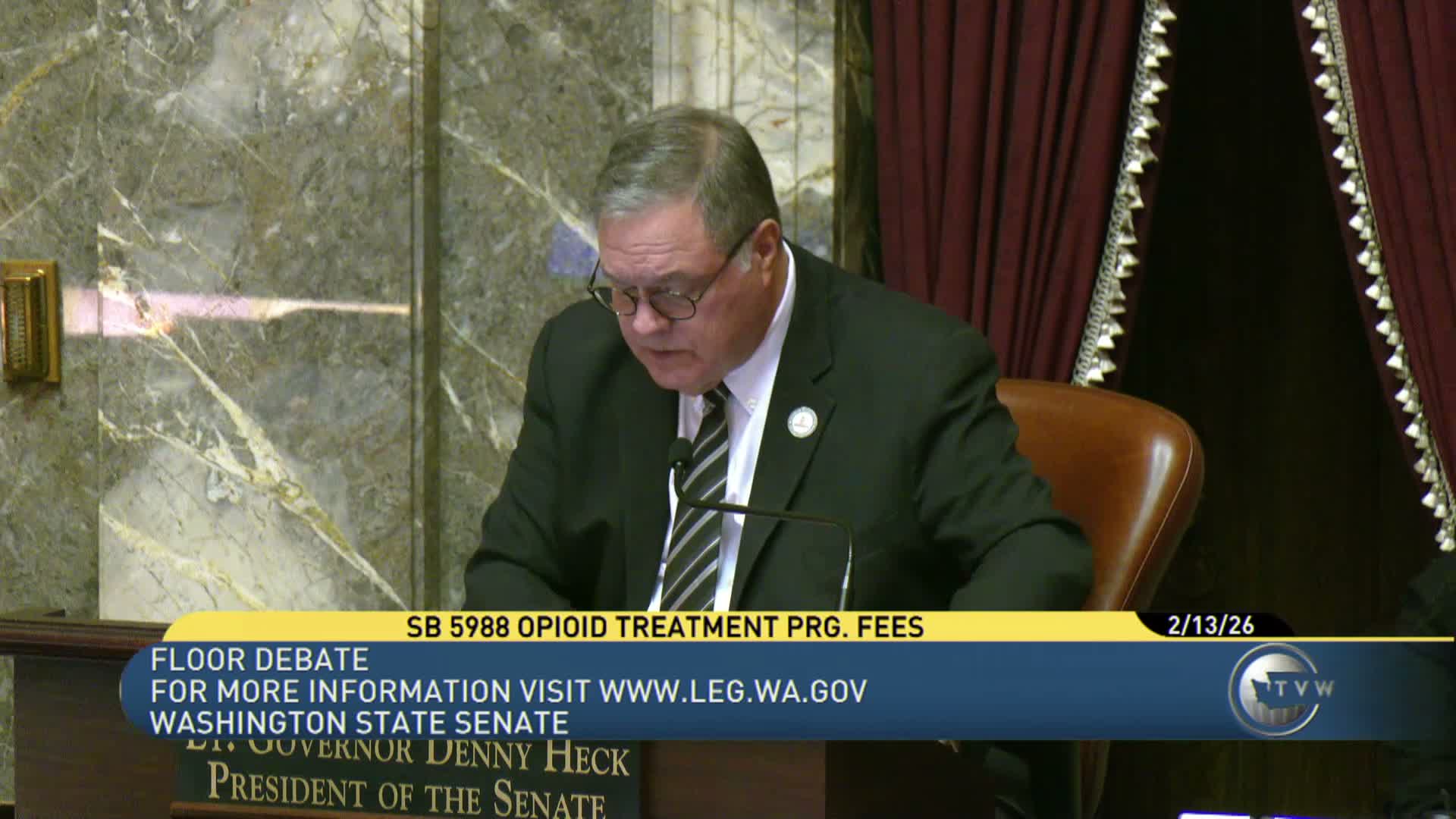
Senate Bill 6026, a measure to legalize housing in specified commercial and mixed‑use zones, passed the Washington State Senate after extended debate and multiple amendments.
Senator T. Alvarado urged colleagues to approve the measure, saying it would "unlock" underused parcels — vacant strip malls and empty storefronts — for housing and ease cost pressures on families and the economy. Alvarado said the bill preserves pedestrian‑friendly areas through targeted exemptions for business improvement areas, transit areas, main streets and historic properties.
Opponents framed the bill as an erosion of local control. Senator S. Christian said the Senate "keeps changing the rules" midstream and warned that shifting mandates make long‑range local planning harder and more costly. Senator J. Fortunato argued the state should give cities flexibility rather than impose one‑size‑fits‑all changes. Senator Wellman said the bill withdraws negotiated compromises and urged colleagues to protect comprehensive local planning efforts in cities such as Bellevue, Kirkland and Redmond.
Lawmakers debated multiple amendments on the floor. Amendment 0624, which clarifies the areas affected and confines the measure to commercial and mixed‑use development, was adopted after supporters said it provided workable sideboards. An amendment to count required amenity spaces (gyms, leasing offices, common areas) as commercial space was rejected. A proposed exemption tied to local historic districts was discussed at length and ultimately was not adopted after a division vote. A technical amendment (0626) was adopted to avoid changing existing law as it relates to critical areas.
Supporters, including Senator Solomon (a former city council member), acknowledged the bill was not finished and urged the House to continue refining details, noting the need for city‑level data to gauge impacts. Senator Gildan, a member of the Senate housing committee, argued the measure increases housing supply — the primary lever to reduce housing cost — by allowing denser use of urban commercial parcels.
On final passage the Senate recorded 36 ayes, 12 nays and 1 excused; the bill was declared passed by constitutional majority. The measure now moves to the House (or the next procedural step specified by legislative process).
Senator T. Alvarado urged colleagues to approve the measure, saying it would "unlock" underused parcels — vacant strip malls and empty storefronts — for housing and ease cost pressures on families and the economy. Alvarado said the bill preserves pedestrian‑friendly areas through targeted exemptions for business improvement areas, transit areas, main streets and historic properties.
Opponents framed the bill as an erosion of local control. Senator S. Christian said the Senate "keeps changing the rules" midstream and warned that shifting mandates make long‑range local planning harder and more costly. Senator J. Fortunato argued the state should give cities flexibility rather than impose one‑size‑fits‑all changes. Senator Wellman said the bill withdraws negotiated compromises and urged colleagues to protect comprehensive local planning efforts in cities such as Bellevue, Kirkland and Redmond.
Lawmakers debated multiple amendments on the floor. Amendment 0624, which clarifies the areas affected and confines the measure to commercial and mixed‑use development, was adopted after supporters said it provided workable sideboards. An amendment to count required amenity spaces (gyms, leasing offices, common areas) as commercial space was rejected. A proposed exemption tied to local historic districts was discussed at length and ultimately was not adopted after a division vote. A technical amendment (0626) was adopted to avoid changing existing law as it relates to critical areas.
Supporters, including Senator Solomon (a former city council member), acknowledged the bill was not finished and urged the House to continue refining details, noting the need for city‑level data to gauge impacts. Senator Gildan, a member of the Senate housing committee, argued the measure increases housing supply — the primary lever to reduce housing cost — by allowing denser use of urban commercial parcels.
On final passage the Senate recorded 36 ayes, 12 nays and 1 excused; the bill was declared passed by constitutional majority. The measure now moves to the House (or the next procedural step specified by legislative process).
Don't Miss a Word: See the Full Meeting!
Go beyond summaries. Unlock every video, transcript, and key insight with a Founder Membership.
✓
Get instant access to full meeting videos
✓
Search and clip any phrase from complete transcripts
✓
Receive AI-powered summaries & custom alerts
✓
Enjoy lifetime, unrestricted access to government data
30-day money-back guarantee
