U.S. official urges International Energy Agency to refocus on energy security and warns of possible withdrawal
February 19, 2026 | Department of Energy (DOE), Executive, Federal
This article was created by AI summarizing key points discussed. AI makes mistakes, so for full details and context, please refer to the video of the full meeting. Please report any errors so we can fix them. Report an error »
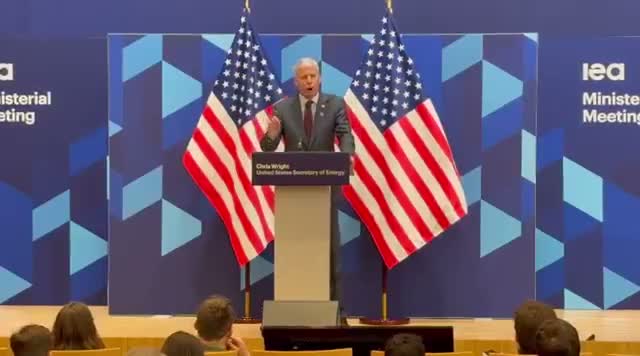
An unidentified U.S. official criticized the International Energy Agency (IEA) on the grounds that the agency has adopted a climate-focused agenda that prioritizes reducing energy production, and said the United States is pressing the IEA to return to its original mission of energy security.
"We want the IEA to return to its original mission ... of carefully recording energy data across the planet and coordinating among the major energy consumers," the official said, adding that if the IEA "is not able to bring itself back" the United States "would become an ex member of the IEA." The official said that the U.S. has delivered that message recently and is using diplomatic pressure to pursue change.
Why it matters: the IEA—founded to coordinate responses to energy shocks and to collect data—plays a coordinating role among major energy consumers. A U.S. pullback or public confrontation over the agency's direction could affect international data-sharing, joint contingency planning and multilateral responses to energy disruptions.
During the briefing the official characterized recent IEA work as aligned with a "climate agenda" adopted about a decade ago and said that agenda emphasizes "energy subtraction," which he argued raises costs and shrinks energy availability. The official cited data when criticizing European energy policy, saying Europe now consumes and produces less energy than a decade ago and linking those policy choices to the relocation of energy-intensive manufacturing.
Reporters pressed on specific implications. When asked whether U.S. withdrawal could create space for Beijing to assume a larger role, the official acknowledged the risk but said the goal is not to withdraw and that the United States "desperately do[es] not want to withdraw." When asked about ties to Venezuela and whether a recent surprise visit by General Francis Donovan signaled a presidential visit, the official called recent developments in Venezuela "tremendous progress," citing improved security, prisoner releases and a loosening of press restrictions.
On U.S. reliability as an energy supplier, the official rejected the suggestion that the United States uses energy as a political weapon and said: "We've never used energy as a political weapon. Never. ... The United States is a rock solid supplier of energy." He also said that U.S. businesses "live by our contracts" and that the country can be a dependable partner.
The official criticized the net-zero 2050 framing, calling aggressive pursuit of such targets an "impoverishment program" for countries that cannot afford rapid transitions, and argued the only practical approach is to base policy on empirical cost and benefit analysis.
No formal withdrawal was announced. The official repeatedly said the United States prefers to push the IEA to refocus on energy security and data-driven analysis rather than leave the organization, while reserving the option to consider membership if the agency's direction remains unchanged.
The briefing ended with the official reiterating the U.S. objective of promoting energy "addition" and human development while encouraging the IEA to return to its founding purpose.
"We want the IEA to return to its original mission ... of carefully recording energy data across the planet and coordinating among the major energy consumers," the official said, adding that if the IEA "is not able to bring itself back" the United States "would become an ex member of the IEA." The official said that the U.S. has delivered that message recently and is using diplomatic pressure to pursue change.
Why it matters: the IEA—founded to coordinate responses to energy shocks and to collect data—plays a coordinating role among major energy consumers. A U.S. pullback or public confrontation over the agency's direction could affect international data-sharing, joint contingency planning and multilateral responses to energy disruptions.
During the briefing the official characterized recent IEA work as aligned with a "climate agenda" adopted about a decade ago and said that agenda emphasizes "energy subtraction," which he argued raises costs and shrinks energy availability. The official cited data when criticizing European energy policy, saying Europe now consumes and produces less energy than a decade ago and linking those policy choices to the relocation of energy-intensive manufacturing.
Reporters pressed on specific implications. When asked whether U.S. withdrawal could create space for Beijing to assume a larger role, the official acknowledged the risk but said the goal is not to withdraw and that the United States "desperately do[es] not want to withdraw." When asked about ties to Venezuela and whether a recent surprise visit by General Francis Donovan signaled a presidential visit, the official called recent developments in Venezuela "tremendous progress," citing improved security, prisoner releases and a loosening of press restrictions.
On U.S. reliability as an energy supplier, the official rejected the suggestion that the United States uses energy as a political weapon and said: "We've never used energy as a political weapon. Never. ... The United States is a rock solid supplier of energy." He also said that U.S. businesses "live by our contracts" and that the country can be a dependable partner.
The official criticized the net-zero 2050 framing, calling aggressive pursuit of such targets an "impoverishment program" for countries that cannot afford rapid transitions, and argued the only practical approach is to base policy on empirical cost and benefit analysis.
No formal withdrawal was announced. The official repeatedly said the United States prefers to push the IEA to refocus on energy security and data-driven analysis rather than leave the organization, while reserving the option to consider membership if the agency's direction remains unchanged.
The briefing ended with the official reiterating the U.S. objective of promoting energy "addition" and human development while encouraging the IEA to return to its founding purpose.
View the Full Meeting & All Its Details
This article offers just a summary. Unlock complete video, transcripts, and insights as a Founder Member.
✓
Watch full, unedited meeting videos
✓
Search every word spoken in unlimited transcripts
✓
AI summaries & real-time alerts (all government levels)
✓
Permanent access to expanding government content
30-day money-back guarantee
