Senate panel hears broad support for bill directing WSDA to craft statewide food-security strategy
February 19, 2026 | Legislative Sessions, Washington
This article was created by AI summarizing key points discussed. AI makes mistakes, so for full details and context, please refer to the video of the full meeting. Please report any errors so we can fix them. Report an error »
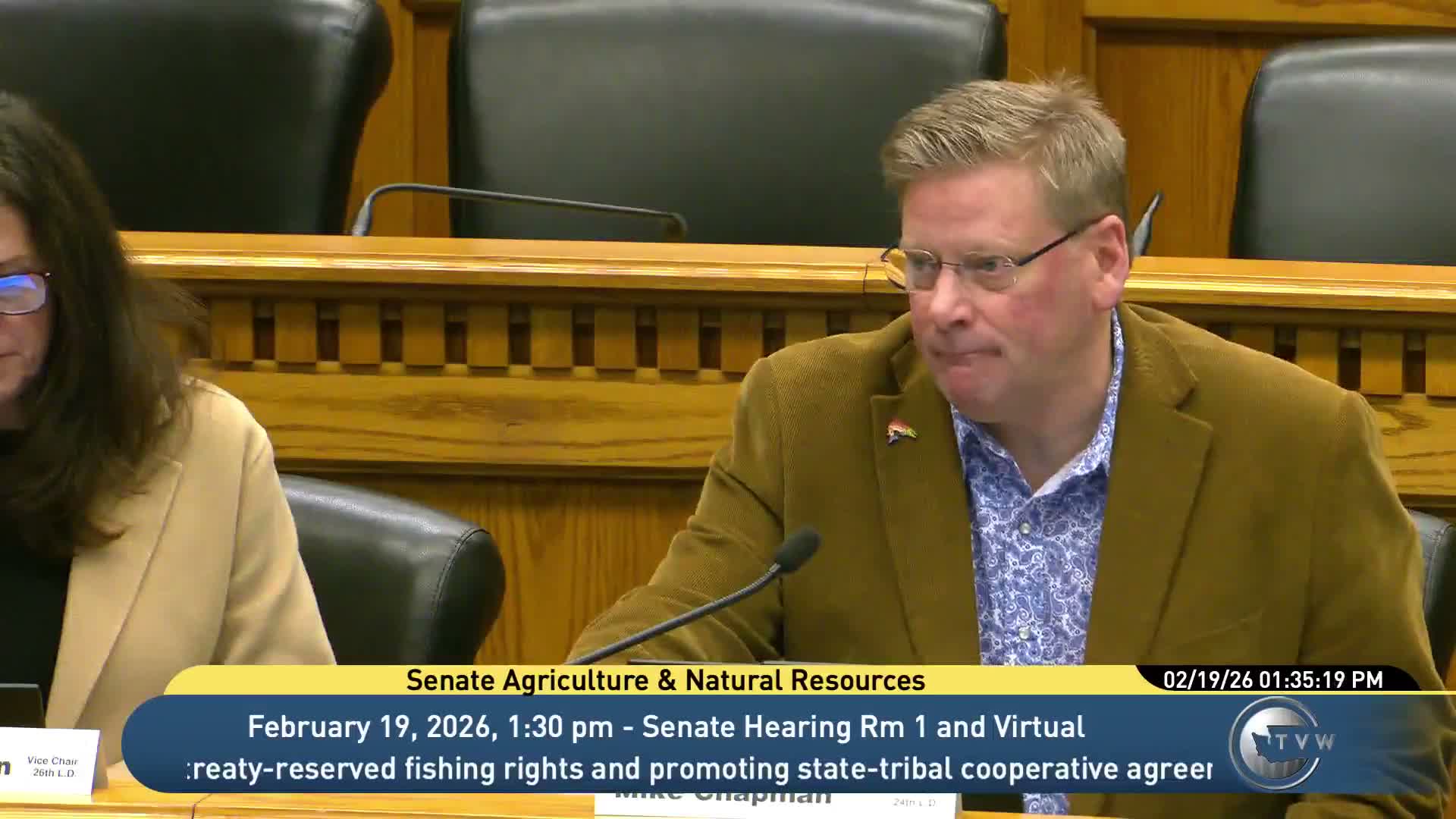
The Senate Agriculture & Natural Resources Committee on Feb. 20 heard extensive testimony in favor of Engrossed Substitute House Bill 2238, which would require the Washington State Department of Agriculture to lead a statewide food-security strategy covering food access, agricultural viability and supply-chain resilience.
Representative Christine Reeves, the bill’s prime sponsor, told the committee the state is facing “an unprecedented food crisis,” saying “over 3,700 farms have closed in the state of Washington over the last 5 years” and that “1 in 4 families right now in Washington are experiencing food insecurity.” She said the bill would codify the coordinating role WSDA played during the COVID emergency so the state can plan year-round rather than reactively.
Elena Becker, committee staff, summarized a proposed striking amendment and said the measure directs WSDA to develop monitoring metrics — including quantifying regulatory costs for fuel, packaging and labor — and to engage federally recognized tribes, experts and impacted individuals. The strategy must be submitted to the Legislature by Dec. 1, 2027; the bill also requires the agriculture director to begin periodic reporting on regulatory competitiveness beginning in June 2030. Becker noted the substitute bill’s fiscal note showed about $309,000 in costs over a four‑year outlook.
Stakeholder witnesses testified in support across multiple panels. Katie Raines, director of the WSDA Food Systems Initiative, said the department can implement the statute and called the legislation “a coordinated effort” to align existing programs while leaving operating programs (such as OSPI school meals and DSHS safety‑net programs) in place. Harvest Against Hunger, Food Lifeline, Second Harvest, Northwest Harvest, local ports, farmers, county officials and school nutrition directors described how coordination would help distribute locally produced food, reduce duplication and help food banks and school meal programs plan.
Supporters emphasized that the bill is designed to strengthen linkages between producers and hunger‑relief partners so locally grown food can reach households more reliably. Andrew Stout, a first‑generation farmer, said the problem is “a food system problem, a gap between the food that exists and the people who need it,” and urged the committee to pass the bill.
Opposition and suggested technical edits were limited in the hearing record; one stakeholder requested adding medium or large donating farmers to the convener list to ensure experience with large‑scale donations is represented. Becker and representatives indicated amendments remain an option in executive session.
The committee did not vote on the bill at the hearing; the chair said the six House bills heard that day would be listed for possible executive session at the committee’s next meeting. The most recent actionable deadline in the bill text is the Dec. 1, 2027 strategy submission date.
Representative Christine Reeves, the bill’s prime sponsor, told the committee the state is facing “an unprecedented food crisis,” saying “over 3,700 farms have closed in the state of Washington over the last 5 years” and that “1 in 4 families right now in Washington are experiencing food insecurity.” She said the bill would codify the coordinating role WSDA played during the COVID emergency so the state can plan year-round rather than reactively.
Elena Becker, committee staff, summarized a proposed striking amendment and said the measure directs WSDA to develop monitoring metrics — including quantifying regulatory costs for fuel, packaging and labor — and to engage federally recognized tribes, experts and impacted individuals. The strategy must be submitted to the Legislature by Dec. 1, 2027; the bill also requires the agriculture director to begin periodic reporting on regulatory competitiveness beginning in June 2030. Becker noted the substitute bill’s fiscal note showed about $309,000 in costs over a four‑year outlook.
Stakeholder witnesses testified in support across multiple panels. Katie Raines, director of the WSDA Food Systems Initiative, said the department can implement the statute and called the legislation “a coordinated effort” to align existing programs while leaving operating programs (such as OSPI school meals and DSHS safety‑net programs) in place. Harvest Against Hunger, Food Lifeline, Second Harvest, Northwest Harvest, local ports, farmers, county officials and school nutrition directors described how coordination would help distribute locally produced food, reduce duplication and help food banks and school meal programs plan.
Supporters emphasized that the bill is designed to strengthen linkages between producers and hunger‑relief partners so locally grown food can reach households more reliably. Andrew Stout, a first‑generation farmer, said the problem is “a food system problem, a gap between the food that exists and the people who need it,” and urged the committee to pass the bill.
Opposition and suggested technical edits were limited in the hearing record; one stakeholder requested adding medium or large donating farmers to the convener list to ensure experience with large‑scale donations is represented. Becker and representatives indicated amendments remain an option in executive session.
The committee did not vote on the bill at the hearing; the chair said the six House bills heard that day would be listed for possible executive session at the committee’s next meeting. The most recent actionable deadline in the bill text is the Dec. 1, 2027 strategy submission date.
View the Full Meeting & All Its Details
This article offers just a summary. Unlock complete video, transcripts, and insights as a Founder Member.
✓
Watch full, unedited meeting videos
✓
Search every word spoken in unlimited transcripts
✓
AI summaries & real-time alerts (all government levels)
✓
Permanent access to expanding government content
30-day money-back guarantee
