Senate advances low‑carbon materials bill after hours of debate over costs, verification and market value
February 18, 2026 | Senate, Committees, Legislative, New Mexico
This article was created by AI summarizing key points discussed. AI makes mistakes, so for full details and context, please refer to the video of the full meeting. Please report any errors so we can fix them. Report an error »
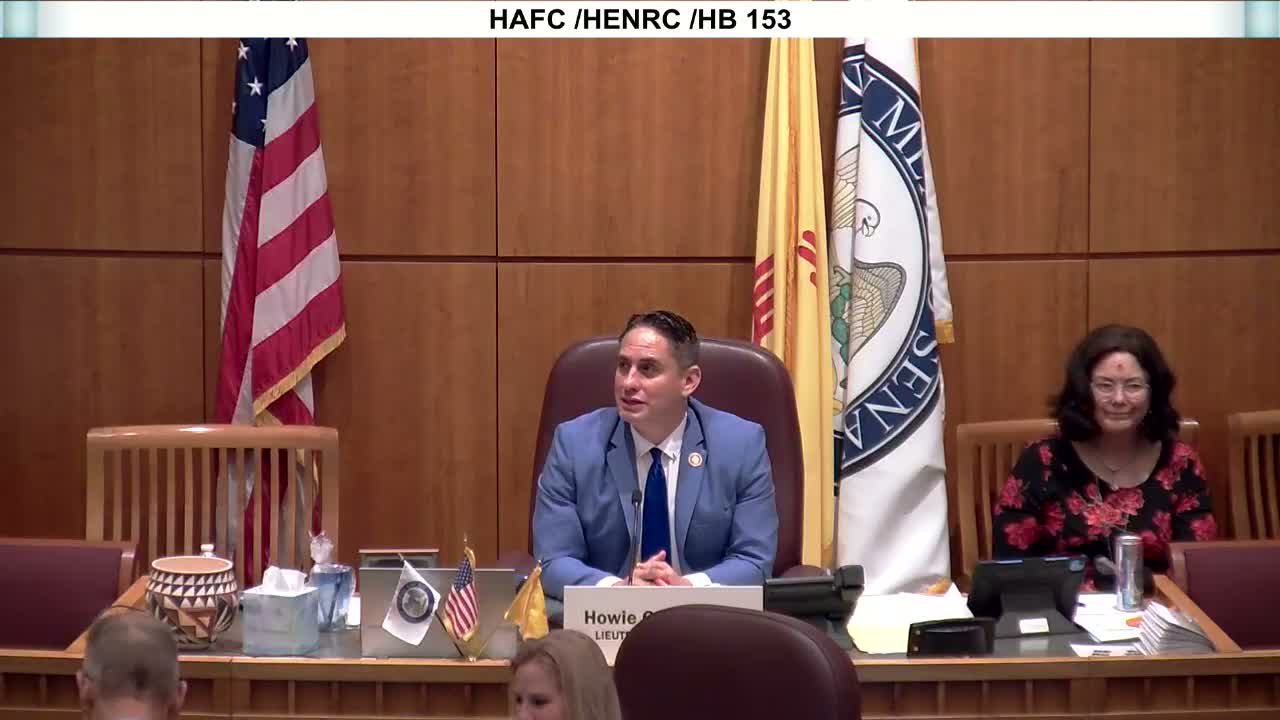
The Senate passed the House Appropriations and Finance Committee substitute for House Bill 153 after extended floor debate over how the state would measure and incent low‑carbon construction materials.
Sponsor Senator Heather Bergman described three components of the bill: an Environmental Product Declaration program to measure and certify manufacturers' product carbon footprints, an Industrial Carbon Reduction incentive paying $85 per metric ton of CO2 reduced, and a Low‑Carbon Materials Rebate to help bring low‑carbon construction products to market. Bergman said there is an appropriation of $25,000,000 "which can be used for administration" and that eligible products would be manufactured in New Mexico.
Supporters framed the measure as an economic‑development opportunity to capture demand from firms that require low‑carbon materials. Senator Thomason said, "I cosponsored this bill because as a capitalist, I see the opportunity," and described a multi‑stage local supply chain from forest thinning to manufacturing.
Critics raised practical and fiscal questions. Senator Steinborn cited the fiscal report and said NMED and Economic Development noted duplication with existing green building programs, and that standing up the program may cost about $1,900,000. Senator Scott pressed on market value, arguing that "a ton of CO2 in the atmosphere is worth nothing to anybody without a mandate to reduce it," warning that mandated credit purchases can increase consumer fuel prices and that putting a value on CO2 can ultimately pass costs to consumers.
Other senators asked about eligibility, whether the bill would primarily benefit existing in‑state firms or create new manufacturing, baseline and regional benchmark calculations, and whether the anti‑donation clause or fraud provisions could create legal risk. Sponsors said NMED would set baselines and benchmarks using publicly available national and international databases and would work with industry experts on verification. The bill includes verification and reporting requirements to the environmental department and legislature.
The chamber adopted the substitute and recorded final passage. Why it matters: HB153 attempts to create a market‑facing incentive and verification pathway for low‑carbon building materials with state support; proponents say it will grow in‑state manufacturing and jobs, while critics warn about cost, duplication, administrative needs, and the risk of subsidizing firms already operating in the state.
What comes next: Implementation details — particularly NMED's baselines and verification process, and how rebates and incentives are awarded — will be critical to outcomes and will be matters for administrative rulemaking and oversight.
Sponsor Senator Heather Bergman described three components of the bill: an Environmental Product Declaration program to measure and certify manufacturers' product carbon footprints, an Industrial Carbon Reduction incentive paying $85 per metric ton of CO2 reduced, and a Low‑Carbon Materials Rebate to help bring low‑carbon construction products to market. Bergman said there is an appropriation of $25,000,000 "which can be used for administration" and that eligible products would be manufactured in New Mexico.
Supporters framed the measure as an economic‑development opportunity to capture demand from firms that require low‑carbon materials. Senator Thomason said, "I cosponsored this bill because as a capitalist, I see the opportunity," and described a multi‑stage local supply chain from forest thinning to manufacturing.
Critics raised practical and fiscal questions. Senator Steinborn cited the fiscal report and said NMED and Economic Development noted duplication with existing green building programs, and that standing up the program may cost about $1,900,000. Senator Scott pressed on market value, arguing that "a ton of CO2 in the atmosphere is worth nothing to anybody without a mandate to reduce it," warning that mandated credit purchases can increase consumer fuel prices and that putting a value on CO2 can ultimately pass costs to consumers.
Other senators asked about eligibility, whether the bill would primarily benefit existing in‑state firms or create new manufacturing, baseline and regional benchmark calculations, and whether the anti‑donation clause or fraud provisions could create legal risk. Sponsors said NMED would set baselines and benchmarks using publicly available national and international databases and would work with industry experts on verification. The bill includes verification and reporting requirements to the environmental department and legislature.
The chamber adopted the substitute and recorded final passage. Why it matters: HB153 attempts to create a market‑facing incentive and verification pathway for low‑carbon building materials with state support; proponents say it will grow in‑state manufacturing and jobs, while critics warn about cost, duplication, administrative needs, and the risk of subsidizing firms already operating in the state.
What comes next: Implementation details — particularly NMED's baselines and verification process, and how rebates and incentives are awarded — will be critical to outcomes and will be matters for administrative rulemaking and oversight.
Don't Miss a Word: See the Full Meeting!
Go beyond summaries. Unlock every video, transcript, and key insight with a Founder Membership.
✓
Get instant access to full meeting videos
✓
Search and clip any phrase from complete transcripts
✓
Receive AI-powered summaries & custom alerts
✓
Enjoy lifetime, unrestricted access to government data
30-day money-back guarantee
