Senate committee hears emotional testimony for bill to require DOC supervision of stalkers sentenced to community custody
February 18, 2026 | Legislative Sessions, Washington
This article was created by AI summarizing key points discussed. AI makes mistakes, so for full details and context, please refer to the video of the full meeting. Please report any errors so we can fix them. Report an error »
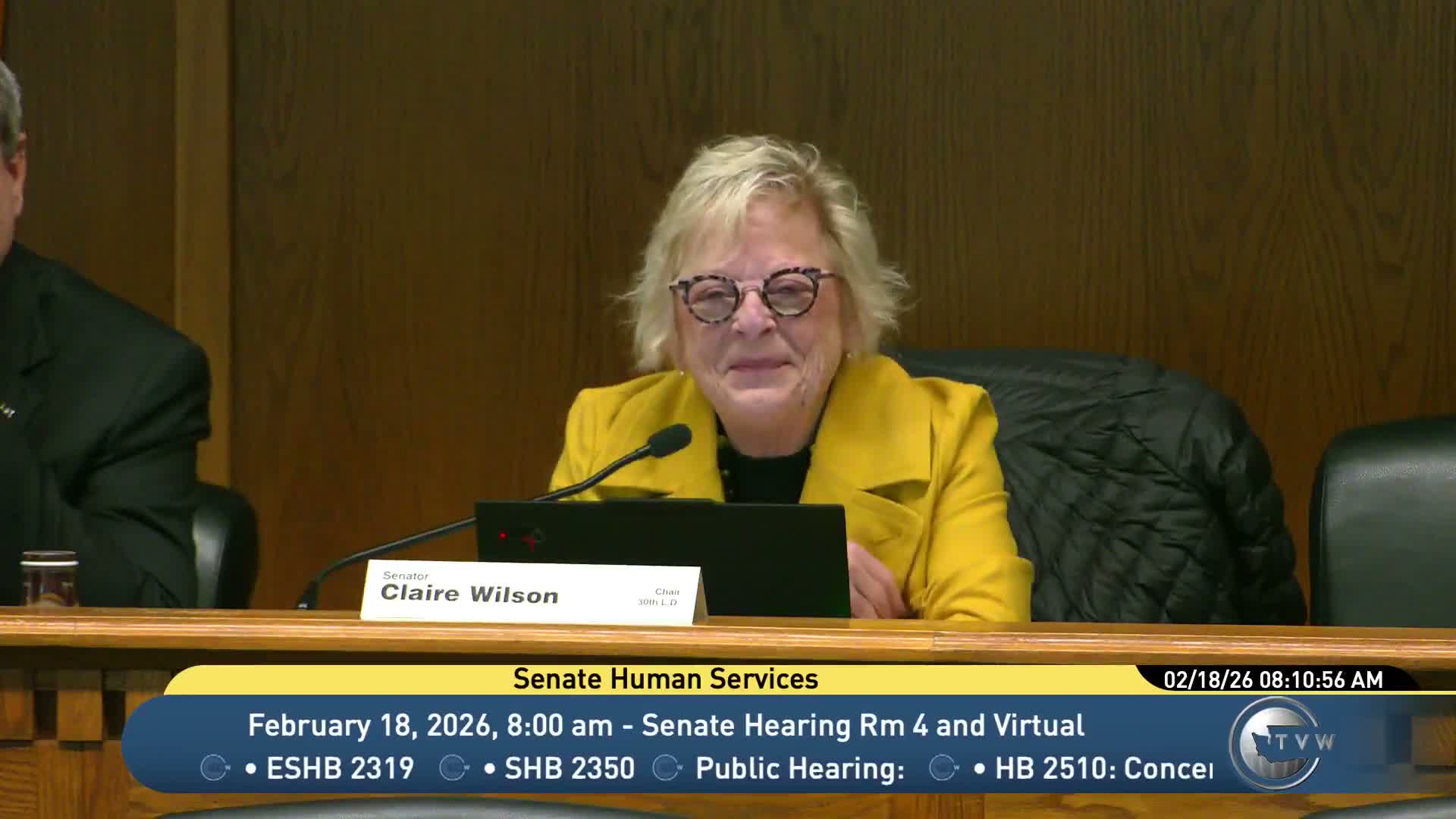
The Senate Human Services Committee heard emotional testimony Feb. 18 on House Bill 2510, which would require the Department of Corrections to supervise anyone sentenced to community custody for stalking, regardless of their risk classification.
Representative Brian Burnett, the bill sponsor, told the committee the measure ‘‘will save lives’’ and give victims ‘‘peace of mind’’ by ensuring supervision does not depend on procedural technicalities. Will Tronson, staff for the committee, said the bill passed the House 96-0 and that the Department of Corrections expects only minimal additional supervision costs.
The bill’s supporters included victim advocates and multiple stalking survivors who described threats, sustained harassment and violent episodes. Chris Bonnington, a victim advocate, said stalking convictions are rare but high risk and cited 34 felony stalking convictions in 2024, arguing the current system leaves victims unprotected. Linden Rhodes, who described being stalked by a person diverted into mental-health proceedings, said the diversion removed the criminal conviction that would have triggered guaranteed DOC supervision: "Stalking is stalking. Stalkers should be supervised by the DOC regardless of whether their cases went through mental health court," Rhodes said.
Anna Nasset, an instructor at the Washington State Criminal Justice Training Center and a survivor, described long-term stalking that led to an aggravated felony stalking conviction and a decade-long sentence, and urged passage so other families would not "fall into this gap." Cheyenne Ross and Desiree Doane recounted repeated harassment, doxxing and threats, with Doane saying an assailant armed with a crowbar and a knife forced her to rely on timely law enforcement response.
Senators asked clarifying questions about the bill’s scope. Senator Warnick asked whether the measure included specific electronic-monitoring technologies such as GPS ankle monitors; Representative Burnett said the bill does not mandate a particular technology, only that the Department of Corrections provide supervision when someone is sentenced to community custody for stalking. Staff clarified that Washington has no parole system and that community custody is the state’s supervision model for people living in the community with check-ins and conditions enforced by DOC.
The committee did not take a vote during the Feb. 18 meeting. Supporters emphasized the bill’s intent to remove an outcome-based gap—where diversion to mental-health court or certain procedural pathways can leave a person unsupervised despite dangerous behavior—and to make supervision automatic when the court sentences someone to community custody for stalking. The hearing was closed without final committee action; no committee vote was recorded in the transcript.
Representative Brian Burnett, the bill sponsor, told the committee the measure ‘‘will save lives’’ and give victims ‘‘peace of mind’’ by ensuring supervision does not depend on procedural technicalities. Will Tronson, staff for the committee, said the bill passed the House 96-0 and that the Department of Corrections expects only minimal additional supervision costs.
The bill’s supporters included victim advocates and multiple stalking survivors who described threats, sustained harassment and violent episodes. Chris Bonnington, a victim advocate, said stalking convictions are rare but high risk and cited 34 felony stalking convictions in 2024, arguing the current system leaves victims unprotected. Linden Rhodes, who described being stalked by a person diverted into mental-health proceedings, said the diversion removed the criminal conviction that would have triggered guaranteed DOC supervision: "Stalking is stalking. Stalkers should be supervised by the DOC regardless of whether their cases went through mental health court," Rhodes said.
Anna Nasset, an instructor at the Washington State Criminal Justice Training Center and a survivor, described long-term stalking that led to an aggravated felony stalking conviction and a decade-long sentence, and urged passage so other families would not "fall into this gap." Cheyenne Ross and Desiree Doane recounted repeated harassment, doxxing and threats, with Doane saying an assailant armed with a crowbar and a knife forced her to rely on timely law enforcement response.
Senators asked clarifying questions about the bill’s scope. Senator Warnick asked whether the measure included specific electronic-monitoring technologies such as GPS ankle monitors; Representative Burnett said the bill does not mandate a particular technology, only that the Department of Corrections provide supervision when someone is sentenced to community custody for stalking. Staff clarified that Washington has no parole system and that community custody is the state’s supervision model for people living in the community with check-ins and conditions enforced by DOC.
The committee did not take a vote during the Feb. 18 meeting. Supporters emphasized the bill’s intent to remove an outcome-based gap—where diversion to mental-health court or certain procedural pathways can leave a person unsupervised despite dangerous behavior—and to make supervision automatic when the court sentences someone to community custody for stalking. The hearing was closed without final committee action; no committee vote was recorded in the transcript.
Don't Miss a Word: See the Full Meeting!
Go beyond summaries. Unlock every video, transcript, and key insight with a Founder Membership.
✓
Get instant access to full meeting videos
✓
Search and clip any phrase from complete transcripts
✓
Receive AI-powered summaries & custom alerts
✓
Enjoy lifetime, unrestricted access to government data
30-day money-back guarantee
