Committee hears bills to rename 'schools' as residential habilitation centers and require compliance notices at RHCs
February 18, 2026 | Legislative Sessions, Washington
This article was created by AI summarizing key points discussed. AI makes mistakes, so for full details and context, please refer to the video of the full meeting. Please report any errors so we can fix them. Report an error »
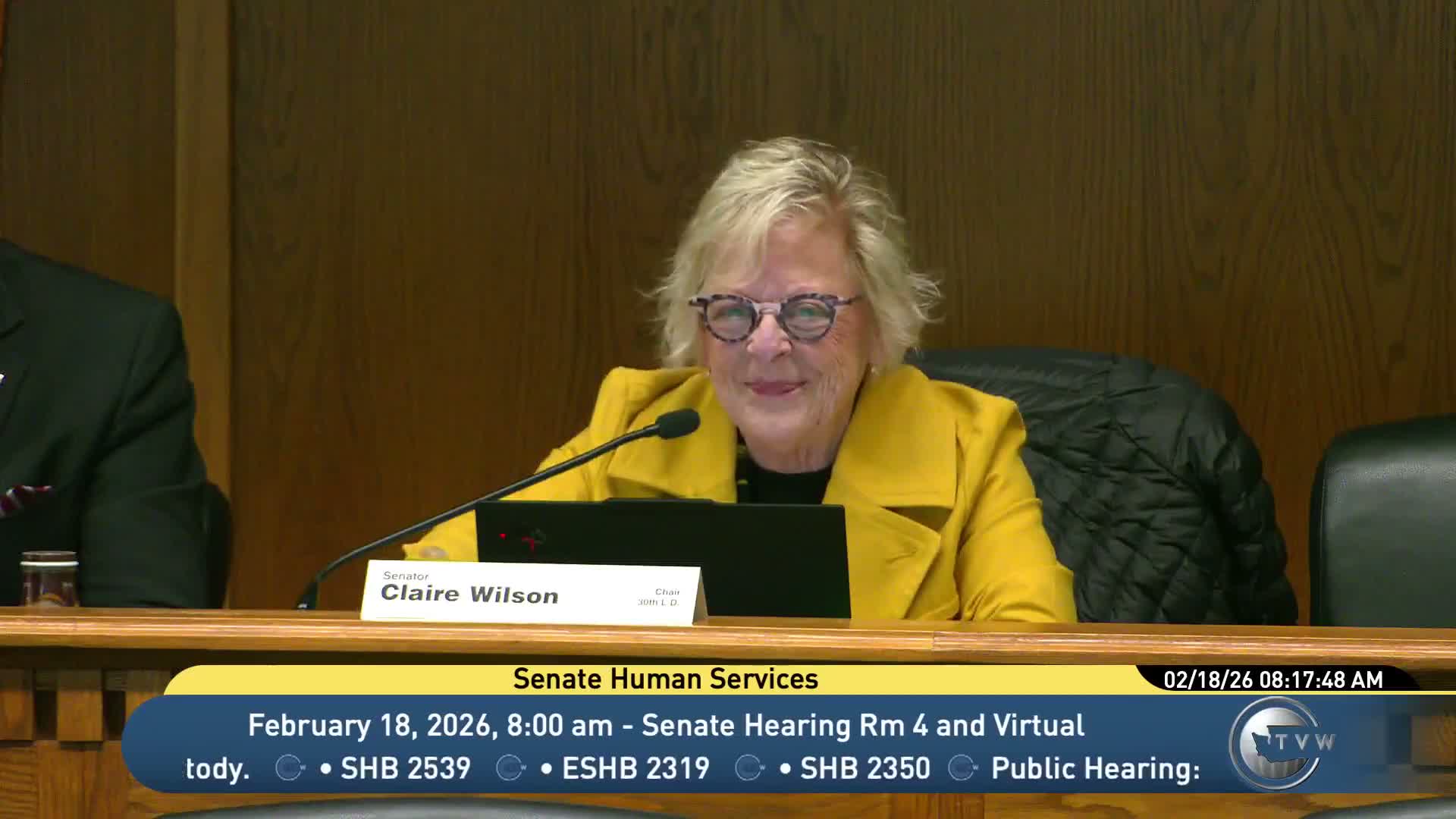
The Senate Human Services Committee on Feb. 18 heard two related bills from Representative Daria Farabhar aimed at clarifying terminology and increasing transparency for residential habilitation centers (RHCs) that serve adults with intellectual and developmental disabilities.
Allison Mendiola, committee staff, described engrossed Substitute House Bill 2319 as a renaming measure that would change facility names such as Fircrest School to Fircrest Residential Rehabilitation Center while preserving existing statutory references. Mendiola said the bill is intended to reduce public confusion because the facilities no longer function as K–12 schools. She told the committee the fiscal note shows no cost.
The committee also considered Substitute House Bill 2350, which would require the Department of Social and Health Services to provide notice within 10 days when an RHC is found out of compliance with Centers for Medicare & Medicaid Services (CMS) conditions of participation, to include a plain-language summary of findings and potential impacts on residential safety, and to post the notice prominently at the facility in English and any alternative languages requested by residents.
Representative Daria Farabhar (46th Legislative District) said the name change ‘‘does not change any of the services that are being provided, any of the operations of the facility’’ but corrects misleading terminology. She said HB 2350 grew from concerns after Rainier RHC fell out of compliance with active-treatment requirements and that timely notice would allow families and guardians to advocate, request transfers and document patterns of failures.
Supporters included Disability Rights Washington, The Arc of Washington, self-advocates and the Office of the Developmental Disability Ombuds, who emphasized that residents, guardians and potential placement seekers often lack easy access to survey findings and plans of correction. Chloe Marino of Disability Rights Washington said the 10-day timeline allows facilities to decide whether to engage dispute resolution while ensuring residents and families receive digestible information.
Senators asked about fiscal implications (signage, stationery and other costs) and whether renaming would change funding; staff and supporters said the bills do not alter funding or operations and sought to minimize administrative burden. Representative Farabhar said she would consider proposals for additional legislative reporting but wanted to understand resource implications.
The committee heard testimony and closed the hearings on HB 2319 and HB 2350 with no committee votes recorded in the transcript.
Allison Mendiola, committee staff, described engrossed Substitute House Bill 2319 as a renaming measure that would change facility names such as Fircrest School to Fircrest Residential Rehabilitation Center while preserving existing statutory references. Mendiola said the bill is intended to reduce public confusion because the facilities no longer function as K–12 schools. She told the committee the fiscal note shows no cost.
The committee also considered Substitute House Bill 2350, which would require the Department of Social and Health Services to provide notice within 10 days when an RHC is found out of compliance with Centers for Medicare & Medicaid Services (CMS) conditions of participation, to include a plain-language summary of findings and potential impacts on residential safety, and to post the notice prominently at the facility in English and any alternative languages requested by residents.
Representative Daria Farabhar (46th Legislative District) said the name change ‘‘does not change any of the services that are being provided, any of the operations of the facility’’ but corrects misleading terminology. She said HB 2350 grew from concerns after Rainier RHC fell out of compliance with active-treatment requirements and that timely notice would allow families and guardians to advocate, request transfers and document patterns of failures.
Supporters included Disability Rights Washington, The Arc of Washington, self-advocates and the Office of the Developmental Disability Ombuds, who emphasized that residents, guardians and potential placement seekers often lack easy access to survey findings and plans of correction. Chloe Marino of Disability Rights Washington said the 10-day timeline allows facilities to decide whether to engage dispute resolution while ensuring residents and families receive digestible information.
Senators asked about fiscal implications (signage, stationery and other costs) and whether renaming would change funding; staff and supporters said the bills do not alter funding or operations and sought to minimize administrative burden. Representative Farabhar said she would consider proposals for additional legislative reporting but wanted to understand resource implications.
The committee heard testimony and closed the hearings on HB 2319 and HB 2350 with no committee votes recorded in the transcript.
Don't Miss a Word: See the Full Meeting!
Go beyond summaries. Unlock every video, transcript, and key insight with a Founder Membership.
✓
Get instant access to full meeting videos
✓
Search and clip any phrase from complete transcripts
✓
Receive AI-powered summaries & custom alerts
✓
Enjoy lifetime, unrestricted access to government data
30-day money-back guarantee
