House panel considers criminal penalties to protect access to places of worship
February 19, 2026 | Legislative Sessions, Washington
This article was created by AI summarizing key points discussed. AI makes mistakes, so for full details and context, please refer to the video of the full meeting. Please report any errors so we can fix them. Report an error »
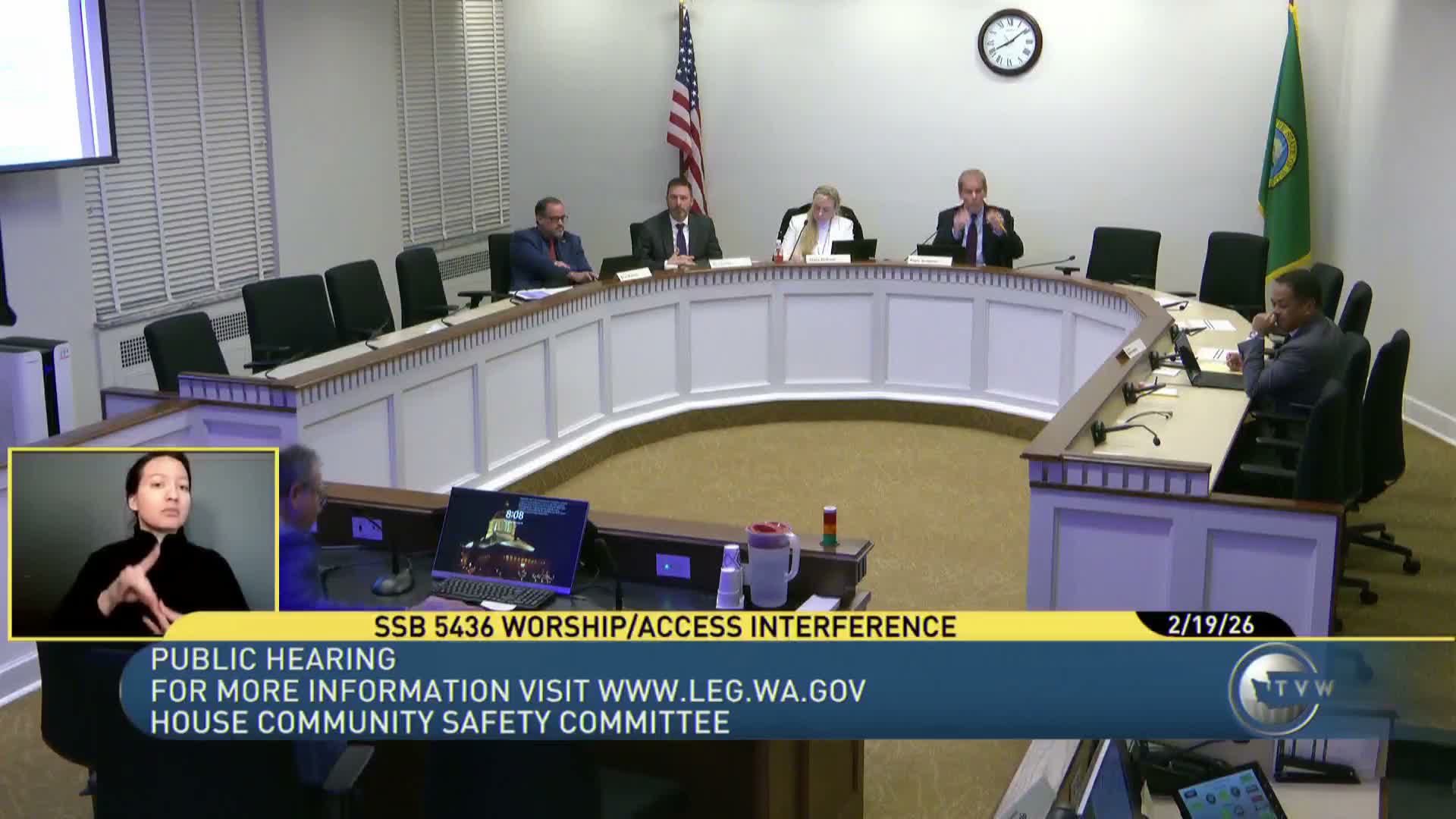
The committee heard testimony on engrossed substitute Senate Bill 54 36, which would create a new offense for willful or reckless interference with access to places of worship around services and allow civil remedies and per‑day damages for aggrieved parties.
Lena Langer, counsel to the committee, said the bill mirrors existing state law that protects healthcare facilities and includes prohibited conduct such as physical obstruction of ingress or egress, trespass, repeated telephoning or electronic harassment, and knowingly permitting devices to be used for harassment. The offense would be a gross misdemeanor, and the bill provides for recovery of actual damages, attorney fees and statutory per‑day damages when applicable.
Witnesses from the Anti‑Defamation League, Faith Action Network, Jewish Community Relations Council and Sikh Coalition supported the measure as a targeted safety statute shaped with stakeholder input. Yuval Bernstein (ADL) said the bill is “focused on conduct, not speech,” and cited increasing harassment and threats against houses of worship.
Several witnesses, including Ramona Brandes of the Washington Association of Criminal Defense Lawyers, warned that the bill’s current language could be applied too broadly, chilling constitutionally protected protest or being weaponized to sue officers or place‑of‑worship agents acting in official capacities. Law‑enforcement representatives requested explicit exclusions for officers acting within their duties and asked for an intent requirement so the law targets deliberate obstruction rather than incidental crowding.
Committee members acknowledged the concerns and signaled they would work on clarifying amendments to address immigration‑enforcement scenarios, agency actions, and the definition of harassment; the bill passed the Senate unanimously and was presented with stakeholder support. Formal action was not taken on Feb. 19.
The committee will accept amendment language on these issues as it prepares for further consideration.
Lena Langer, counsel to the committee, said the bill mirrors existing state law that protects healthcare facilities and includes prohibited conduct such as physical obstruction of ingress or egress, trespass, repeated telephoning or electronic harassment, and knowingly permitting devices to be used for harassment. The offense would be a gross misdemeanor, and the bill provides for recovery of actual damages, attorney fees and statutory per‑day damages when applicable.
Witnesses from the Anti‑Defamation League, Faith Action Network, Jewish Community Relations Council and Sikh Coalition supported the measure as a targeted safety statute shaped with stakeholder input. Yuval Bernstein (ADL) said the bill is “focused on conduct, not speech,” and cited increasing harassment and threats against houses of worship.
Several witnesses, including Ramona Brandes of the Washington Association of Criminal Defense Lawyers, warned that the bill’s current language could be applied too broadly, chilling constitutionally protected protest or being weaponized to sue officers or place‑of‑worship agents acting in official capacities. Law‑enforcement representatives requested explicit exclusions for officers acting within their duties and asked for an intent requirement so the law targets deliberate obstruction rather than incidental crowding.
Committee members acknowledged the concerns and signaled they would work on clarifying amendments to address immigration‑enforcement scenarios, agency actions, and the definition of harassment; the bill passed the Senate unanimously and was presented with stakeholder support. Formal action was not taken on Feb. 19.
The committee will accept amendment language on these issues as it prepares for further consideration.
View the Full Meeting & All Its Details
This article offers just a summary. Unlock complete video, transcripts, and insights as a Founder Member.
✓
Watch full, unedited meeting videos
✓
Search every word spoken in unlimited transcripts
✓
AI summaries & real-time alerts (all government levels)
✓
Permanent access to expanding government content
30-day money-back guarantee
