Legislative leaders signal support for "millionaire's tax" as House prepares hearings
February 18, 2026 | Legislative Sessions, Washington
This article was created by AI summarizing key points discussed. AI makes mistakes, so for full details and context, please refer to the video of the full meeting. Please report any errors so we can fix them. Report an error »
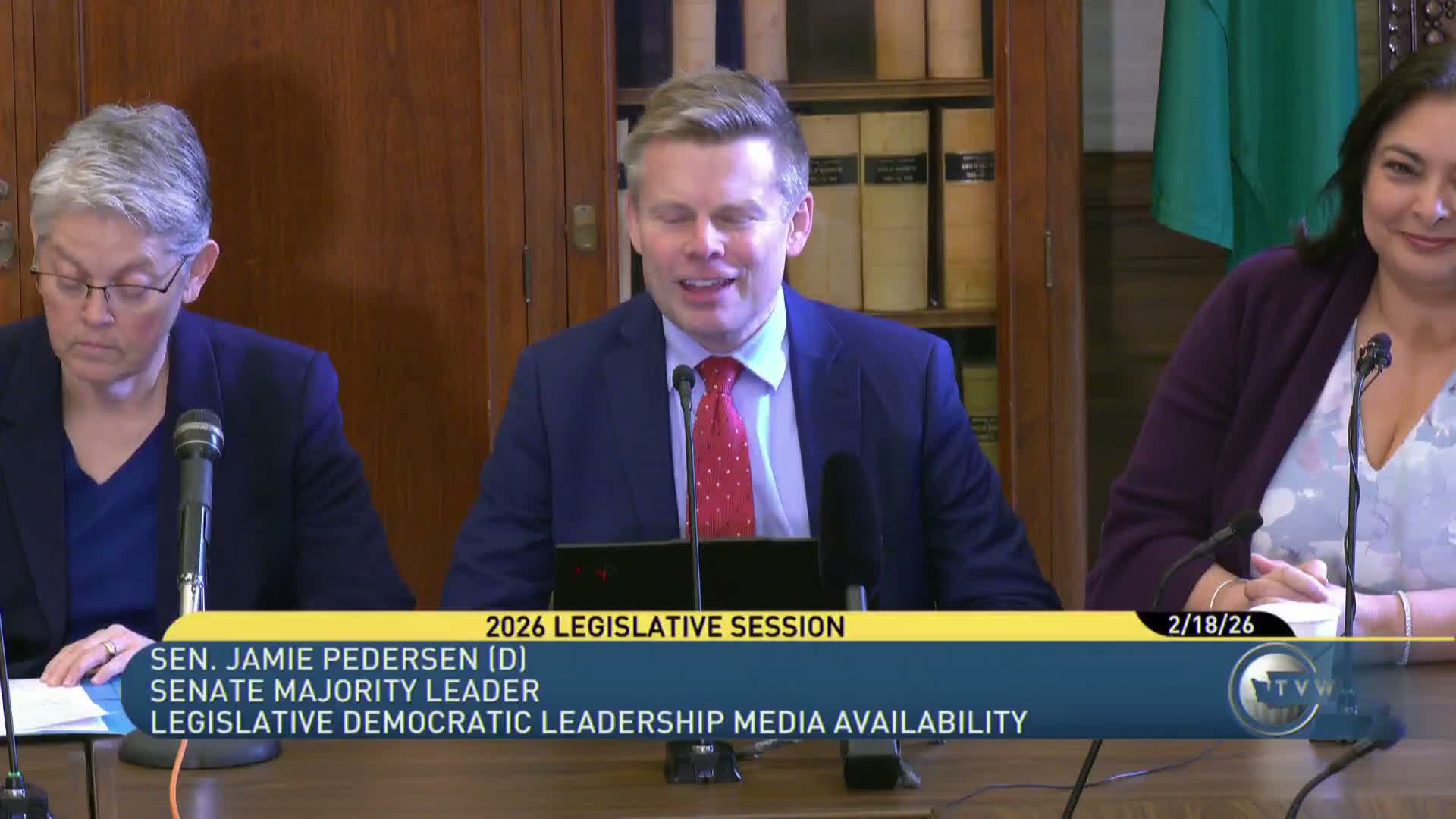
State legislative leaders said they still expect to advance a proposed income tax on the highest earners this short session, even as they consider changes suggested by the governor and parse an updated revenue forecast.
Speaker 2, summarizing the Senate priorities, said the caucus has made progress on affordability and protective measures this half of session and that the "millionaire's tax" remains central to longer-term fiscal sustainability. "The millionaire's tax ... really hits on all of the themes for us," Speaker 2 said, citing funds for a working-families tax credit and small-business tax relief.
Why it matters: Leaders said the tax is intended as a structural change for long-term fiscal sustainability, not a one-year fix. Speaker 7 described the updated revenue forecast as providing "breathing room" that will let lawmakers revisit some planned operating-budget reductions and increase reserves, but added that caseload pressures will consume part of the new revenue.
House action and timeline: House members have scheduled a Finance Committee hearing on the proposal next week, officials said. Speaker 4 said the bill has strong caucus support but leaders have not finished vote counting: "We have good support in our caucus for the bill, but I haven't vote-counted it yet," Speaker 4 said. The hearing will include potential technical amendments and choices about how much revenue flows to tax reductions vs. other priorities.
Governor's suggestions: The governor offered alternatives such as a sales-tax holiday and targeted relief (for items like diapers) and described the package as about $1.9 billion in cost, a figure Speaker 2 repeated when summarizing the governor's proposals. Leaders said they welcome the governor's ideas and will consider them alongside caucus priorities when reconciling the House and Senate versions.
Policy trade-offs: Speakers emphasized trade-offs between targeted tax relief and maintaining a sustainable budget. Speaker 4 said decisions about which tax reductions to include were both fiscal and policy choices, noting some proposed sales-tax reductions were prioritized because they would broadly help nonprofits, small businesses and school districts.
What happens next: The Finance Committee hearing is scheduled next week and will be the first major procedural test in the House. Leaders said they will continue negotiating text and potential amendments there before the bill would move to a floor vote.
Speaker 2, summarizing the Senate priorities, said the caucus has made progress on affordability and protective measures this half of session and that the "millionaire's tax" remains central to longer-term fiscal sustainability. "The millionaire's tax ... really hits on all of the themes for us," Speaker 2 said, citing funds for a working-families tax credit and small-business tax relief.
Why it matters: Leaders said the tax is intended as a structural change for long-term fiscal sustainability, not a one-year fix. Speaker 7 described the updated revenue forecast as providing "breathing room" that will let lawmakers revisit some planned operating-budget reductions and increase reserves, but added that caseload pressures will consume part of the new revenue.
House action and timeline: House members have scheduled a Finance Committee hearing on the proposal next week, officials said. Speaker 4 said the bill has strong caucus support but leaders have not finished vote counting: "We have good support in our caucus for the bill, but I haven't vote-counted it yet," Speaker 4 said. The hearing will include potential technical amendments and choices about how much revenue flows to tax reductions vs. other priorities.
Governor's suggestions: The governor offered alternatives such as a sales-tax holiday and targeted relief (for items like diapers) and described the package as about $1.9 billion in cost, a figure Speaker 2 repeated when summarizing the governor's proposals. Leaders said they welcome the governor's ideas and will consider them alongside caucus priorities when reconciling the House and Senate versions.
Policy trade-offs: Speakers emphasized trade-offs between targeted tax relief and maintaining a sustainable budget. Speaker 4 said decisions about which tax reductions to include were both fiscal and policy choices, noting some proposed sales-tax reductions were prioritized because they would broadly help nonprofits, small businesses and school districts.
What happens next: The Finance Committee hearing is scheduled next week and will be the first major procedural test in the House. Leaders said they will continue negotiating text and potential amendments there before the bill would move to a floor vote.
Don't Miss a Word: See the Full Meeting!
Go beyond summaries. Unlock every video, transcript, and key insight with a Founder Membership.
✓
Get instant access to full meeting videos
✓
Search and clip any phrase from complete transcripts
✓
Receive AI-powered summaries & custom alerts
✓
Enjoy lifetime, unrestricted access to government data
30-day money-back guarantee
