Heated testimony as committee considers ban on law‑enforcement face coverings
February 18, 2026 | Legislative Sessions, Washington
This article was created by AI summarizing key points discussed. AI makes mistakes, so for full details and context, please refer to the video of the full meeting. Please report any errors so we can fix them. Report an error »
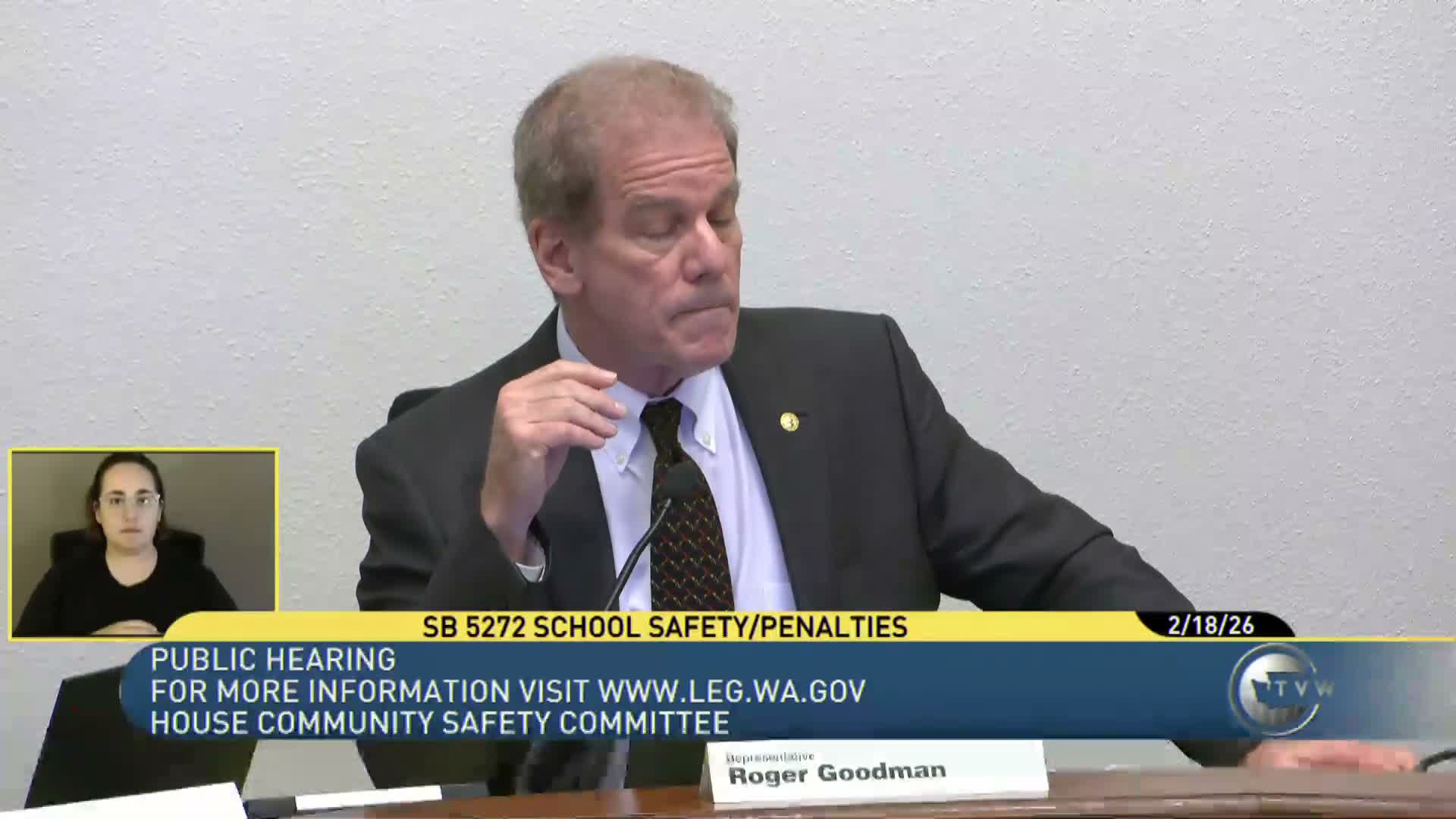
Counsel Lena Langer summarized the bill’s elements: a facial covering is an opaque mask, garment or item that conceals a person’s facial identity; the bill excludes translucent face shields, clear masks, N95 medical masks, surgical masks, other devices necessary for protection against toxins or hazardous conditions, and helmets used for vehicle protection. The bill’s definition of "law enforcement officer" explicitly included state, local and certain federal agents.
Senator Javier Valdez (46th District), the prime sponsor, described stakeholder work over the summer and fall, referenced national examples of masked federal agents and said, "if you're gonna be performing your job as a law enforcement official... the public needs to know exactly who you are and not... hiding your identity." He said he was working with WACOPS on an amendment addressing inclement weather and L&I guidance.
Public testimony was sharply divided. Supporters — including student lobbyist Moe Al Khazraji, local electeds, county prosecutors (Lisa Mannion), and community leaders — said masked agents terrorize communities, harm trust and make it hard to hold authorities accountable. Chris Bloomquist testified, removing his mask and saying "Democracy demands transparency. Democracy dies in darkness."
Opponents — including speakers who cited a recent federal injunction in California — warned the bill could conflict with federal supremacy, expose officers and families to doxxing and threats, and raise local liability for cities. Anthony Mixer and Noah Meehan argued similar laws were struck down in federal court and urged caution. Stakeholders from law‑enforcement organizations (WACOPS and sheriff/prosecutor associations) urged narrow, implementable exceptions and recommended that Labor & Industries rulemaking could define hazardous conditions (cold weather, smoke) to protect officer health.
Nathan Olsen, public safety policy advisor for the governor, testified the governor supports the bill and said an L&I exception provision would be acceptable. Committee members and staff indicated they were working on amendment language to address inclement weather, medical or environmental protective needs, and intergovernmental immunity questions. The hearing concluded with the committee planning executive action the next day.
Senator Javier Valdez (46th District), the prime sponsor, described stakeholder work over the summer and fall, referenced national examples of masked federal agents and said, "if you're gonna be performing your job as a law enforcement official... the public needs to know exactly who you are and not... hiding your identity." He said he was working with WACOPS on an amendment addressing inclement weather and L&I guidance.
Public testimony was sharply divided. Supporters — including student lobbyist Moe Al Khazraji, local electeds, county prosecutors (Lisa Mannion), and community leaders — said masked agents terrorize communities, harm trust and make it hard to hold authorities accountable. Chris Bloomquist testified, removing his mask and saying "Democracy demands transparency. Democracy dies in darkness."
Opponents — including speakers who cited a recent federal injunction in California — warned the bill could conflict with federal supremacy, expose officers and families to doxxing and threats, and raise local liability for cities. Anthony Mixer and Noah Meehan argued similar laws were struck down in federal court and urged caution. Stakeholders from law‑enforcement organizations (WACOPS and sheriff/prosecutor associations) urged narrow, implementable exceptions and recommended that Labor & Industries rulemaking could define hazardous conditions (cold weather, smoke) to protect officer health.
Nathan Olsen, public safety policy advisor for the governor, testified the governor supports the bill and said an L&I exception provision would be acceptable. Committee members and staff indicated they were working on amendment language to address inclement weather, medical or environmental protective needs, and intergovernmental immunity questions. The hearing concluded with the committee planning executive action the next day.
Don't Miss a Word: See the Full Meeting!
Go beyond summaries. Unlock every video, transcript, and key insight with a Founder Membership.
✓
Get instant access to full meeting videos
✓
Search and clip any phrase from complete transcripts
✓
Receive AI-powered summaries & custom alerts
✓
Enjoy lifetime, unrestricted access to government data
30-day money-back guarantee
