Bill would let state attorney general issue civil investigative demands in constitutional and statutory probes
February 18, 2026 | Legislative Sessions, Washington
This article was created by AI summarizing key points discussed. AI makes mistakes, so for full details and context, please refer to the video of the full meeting. Please report any errors so we can fix them. Report an error »
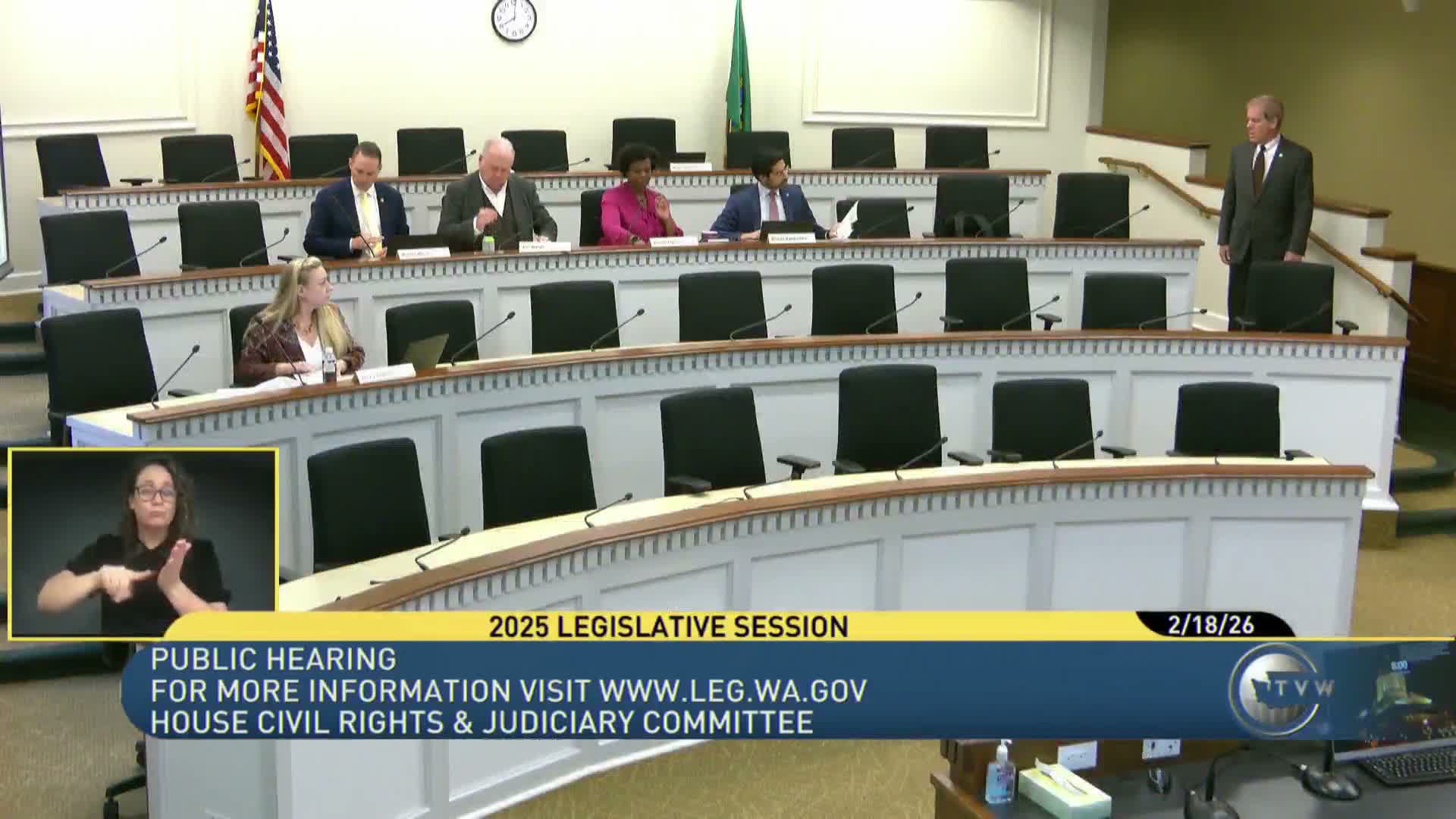
The Civil Rights and Judiciary Committee heard testimony Feb. 18 on ESSB 5925, which would authorize the Washington attorney generals office to issue civil investigative demands to gather documents and information in investigations of alleged violations of the state and federal constitutions and certain statutes.
Senator Drew Hansen, the bills sponsor, told the committee the measure standardizes and narrows existing investigatory practice: "The attorney general has the power to issue civil investigative demands or CIDs...This is generally a written request for documents, identities of people, written discovery," he said, adding the Senate narrowed where that authority applies.
Eddy Adams, committee staff, briefed lawmakers that the bill specifies required contents and service for demands, procedures for production and confidentiality, and court proceedings for contesting or enforcing a demand. "The bill provides standards for required contents of a demand and how it must be served, the process for production of documents and information, the confidentiality of disclosed documents and information, and court proceedings for contesting, modifying, or enforcing a demand," Adams said.
Supporters from the attorney generals civil rights division argued the office needs clearer tools to investigate discrimination and other civil violations efficiently. Shalia (Salang/Stallings) (senior counsel, AGO civil rights division) told the committee the division has limited tools compared with other enforcement areas and that CIDs would allow more efficient, earlier evidence gathering.
Opponents, including county prosecutors and law-enforcement groups, warned the bill would give the AG expansive investigatory power without judicial preapproval. One county prosecutor said the bill "does grant the attorney general's office new investigatory authority and new power" and warned it would allow "fishing expeditions" into separately elected offices without judicial safeguards.
Staff noted a recipient of a CID could petition the court to contest or modify the demand. Committee members asked about oversight and whether the attorney general would be effectively self-supervising; proponents pointed to professional-conduct rules, State Bar oversight, and eventual judicial review as constraints.
The committee did not take a vote; the hearing record includes extensive public comment both for and against further limiting or expanding CID authority. The bill will remain under committee consideration; next steps include possible amendments and additional hearings.
Senator Drew Hansen, the bills sponsor, told the committee the measure standardizes and narrows existing investigatory practice: "The attorney general has the power to issue civil investigative demands or CIDs...This is generally a written request for documents, identities of people, written discovery," he said, adding the Senate narrowed where that authority applies.
Eddy Adams, committee staff, briefed lawmakers that the bill specifies required contents and service for demands, procedures for production and confidentiality, and court proceedings for contesting or enforcing a demand. "The bill provides standards for required contents of a demand and how it must be served, the process for production of documents and information, the confidentiality of disclosed documents and information, and court proceedings for contesting, modifying, or enforcing a demand," Adams said.
Supporters from the attorney generals civil rights division argued the office needs clearer tools to investigate discrimination and other civil violations efficiently. Shalia (Salang/Stallings) (senior counsel, AGO civil rights division) told the committee the division has limited tools compared with other enforcement areas and that CIDs would allow more efficient, earlier evidence gathering.
Opponents, including county prosecutors and law-enforcement groups, warned the bill would give the AG expansive investigatory power without judicial preapproval. One county prosecutor said the bill "does grant the attorney general's office new investigatory authority and new power" and warned it would allow "fishing expeditions" into separately elected offices without judicial safeguards.
Staff noted a recipient of a CID could petition the court to contest or modify the demand. Committee members asked about oversight and whether the attorney general would be effectively self-supervising; proponents pointed to professional-conduct rules, State Bar oversight, and eventual judicial review as constraints.
The committee did not take a vote; the hearing record includes extensive public comment both for and against further limiting or expanding CID authority. The bill will remain under committee consideration; next steps include possible amendments and additional hearings.
View the Full Meeting & All Its Details
This article offers just a summary. Unlock complete video, transcripts, and insights as a Founder Member.
✓
Watch full, unedited meeting videos
✓
Search every word spoken in unlimited transcripts
✓
AI summaries & real-time alerts (all government levels)
✓
Permanent access to expanding government content
30-day money-back guarantee
