Growers warn Department of Health fee hikes would cripple small shellfish businesses
February 18, 2026 | Legislative Sessions, Washington
This article was created by AI summarizing key points discussed. AI makes mistakes, so for full details and context, please refer to the video of the full meeting. Please report any errors so we can fix them. Report an error »
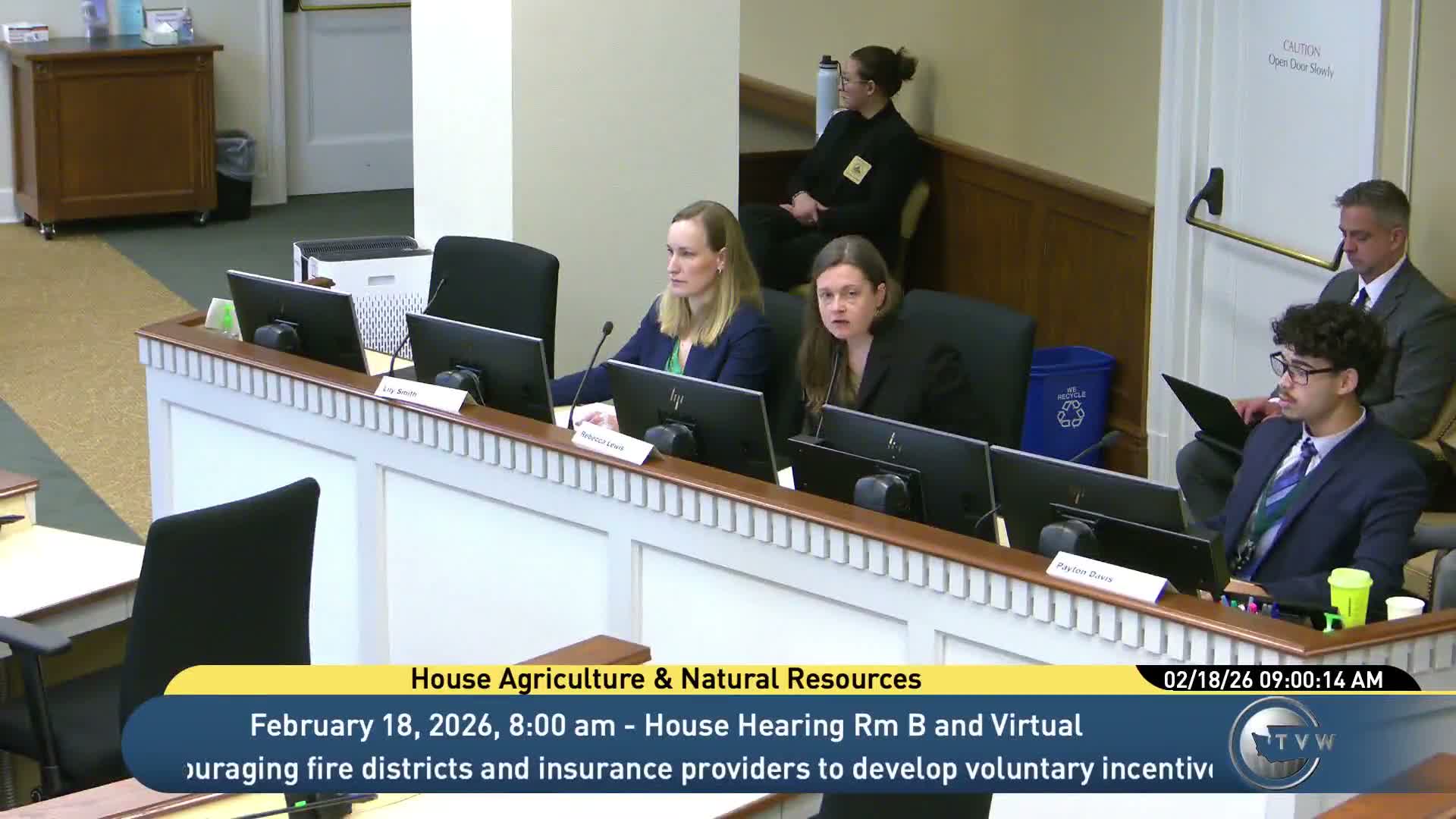
The House Agriculture and Natural Resources Committee heard House Bill 2737 on Feb. 18, a proposal that would exempt the Department of Health’s shellfish regulatory program from the agency’s full-cost-recovery requirement and establish maximum fees for certain licenses, biotoxin testing and export certificates. The bill would apply those maximums retroactively to fees and surcharges established on or before Feb. 1, 2026, and contains an emergency clause.
Rep. Birnbaum (prime sponsor) said the bill is intended to find middle ground between options in a 2025 “green report” and the department’s full-cost-recovery rulemaking. The report modeled “option A” (full cost recovery) and “option B” (which removes the biotoxin fee element); Birnbaum said his proposal is more generous to the state than option B but aims to avert the most severe industry impacts.
Lauren Jenks, assistant secretary for environmental public health at DOH, explained the department set a full-cost-recovery fee schedule after years of General Fund supplementation and charged licensees 50% of that schedule effective Feb. 1, with plans to move to 100% in the following year absent legislative action. The department said it can set fees under current law but that changing which programs receive General Fund support is a legislative decision.
Shellfish industry witnesses, including Justin Stang (Pacific Coast Shellfish Growers Association), Kyle Wentz (Chelsea Farms), Evie Foggergan (Calm Cove Oyster Company) and others, said the increases would be crippling for many small, family-run farms and local processors. Evie Foggergan said her company’s total revenue is $57,000 and that DOH fees would rise to $2,400 this year and to $4,400 next year under the current rule, while HB 2737 would cap those fees at a sustainable $1,000 for her business.
Annie Harold and Marilyn Sheldon, fourth-generation Willapa Bay oyster farmers, offered itemized examples: Harold said a combined set of DOH fees for her operation would rise from roughly $8,307 to $32,956 annually under the department’s schedule — a 655% increase for some line items — and said processors could drop licenses, forcing growers to lose markets. DOH staff said the department reopened rulemaking to better target fee categories and reduce impacts on the smallest license holders.
Sign-in totals for the public record showed substantial pro-industry submissions (pro 202, con 49), and the committee did not take a vote during the hearing. Chair Reeves said members should coordinate amendments promptly because items will appear on the executive calendar next week.
Rep. Birnbaum (prime sponsor) said the bill is intended to find middle ground between options in a 2025 “green report” and the department’s full-cost-recovery rulemaking. The report modeled “option A” (full cost recovery) and “option B” (which removes the biotoxin fee element); Birnbaum said his proposal is more generous to the state than option B but aims to avert the most severe industry impacts.
Lauren Jenks, assistant secretary for environmental public health at DOH, explained the department set a full-cost-recovery fee schedule after years of General Fund supplementation and charged licensees 50% of that schedule effective Feb. 1, with plans to move to 100% in the following year absent legislative action. The department said it can set fees under current law but that changing which programs receive General Fund support is a legislative decision.
Shellfish industry witnesses, including Justin Stang (Pacific Coast Shellfish Growers Association), Kyle Wentz (Chelsea Farms), Evie Foggergan (Calm Cove Oyster Company) and others, said the increases would be crippling for many small, family-run farms and local processors. Evie Foggergan said her company’s total revenue is $57,000 and that DOH fees would rise to $2,400 this year and to $4,400 next year under the current rule, while HB 2737 would cap those fees at a sustainable $1,000 for her business.
Annie Harold and Marilyn Sheldon, fourth-generation Willapa Bay oyster farmers, offered itemized examples: Harold said a combined set of DOH fees for her operation would rise from roughly $8,307 to $32,956 annually under the department’s schedule — a 655% increase for some line items — and said processors could drop licenses, forcing growers to lose markets. DOH staff said the department reopened rulemaking to better target fee categories and reduce impacts on the smallest license holders.
Sign-in totals for the public record showed substantial pro-industry submissions (pro 202, con 49), and the committee did not take a vote during the hearing. Chair Reeves said members should coordinate amendments promptly because items will appear on the executive calendar next week.
View the Full Meeting & All Its Details
This article offers just a summary. Unlock complete video, transcripts, and insights as a Founder Member.
✓
Watch full, unedited meeting videos
✓
Search every word spoken in unlimited transcripts
✓
AI summaries & real-time alerts (all government levels)
✓
Permanent access to expanding government content
30-day money-back guarantee
