Montgomery County councilmember urges caution as campaign seeks to expose unlicensed massage operations tied to trafficking
February 18, 2026 | Montgomery County, Maryland
This article was created by AI summarizing key points discussed. AI makes mistakes, so for full details and context, please refer to the video of the full meeting. Please report any errors so we can fix them. Report an error »
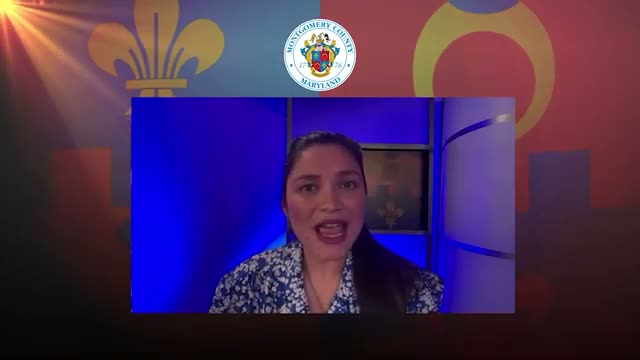
Montgomery County Councilmember Lucky on the county’s Spanish‑language public affairs program outlined a new outreach campaign aimed at helping residents identify massage, acupuncture and other body‑contact services that operate without individual practitioner licenses and may be linked to human trafficking.
"Algunas señales...es cuando usted vea un precio...que está demasiado bueno para que sea realidad" ("Some signs...when you see a price that’s too good to be true"), Lucky said, citing low prices and cash‑only transactions as red flags. She said businesses sometimes display framed certificates while individual practitioners lack valid, current licenses.
The program, Lucky said, builds on stepped‑up unannounced inspections by county Health & Human Services and the police after enforcement increased in June 2024. The host reported that Captain O’Brien’s inspections covered "alrededor de 40 negocios" (about 40 businesses) and revealed practices such as counterfeit certificates and unlicensed staff.
Lucky stressed that inspections are also intended to help victims. ‘‘Las personas que son víctimas de tráfico humano...no van a ser penalizados’’ (People who are victims of human trafficking will not be penalized), she said, and noted that interpreters are made available during inspections to offer resources and referrals.
Residents were given reporting options: the national tip line 1‑866‑411‑TIPS (TIPS) and the local tip line 240‑773‑TIPS. Lucky said the campaign will include educational videos, social‑media content, information aboard county buses and a local website linked from the county human‑trafficking committee page with guidance on how to verify practitioner licenses through the Maryland board of massage.
Next steps: Lucky and county staff are promoting the outreach materials and encouraging anonymous reporting; the transcript records no formal vote or ordinance tied to the campaign during this program.
"Algunas señales...es cuando usted vea un precio...que está demasiado bueno para que sea realidad" ("Some signs...when you see a price that’s too good to be true"), Lucky said, citing low prices and cash‑only transactions as red flags. She said businesses sometimes display framed certificates while individual practitioners lack valid, current licenses.
The program, Lucky said, builds on stepped‑up unannounced inspections by county Health & Human Services and the police after enforcement increased in June 2024. The host reported that Captain O’Brien’s inspections covered "alrededor de 40 negocios" (about 40 businesses) and revealed practices such as counterfeit certificates and unlicensed staff.
Lucky stressed that inspections are also intended to help victims. ‘‘Las personas que son víctimas de tráfico humano...no van a ser penalizados’’ (People who are victims of human trafficking will not be penalized), she said, and noted that interpreters are made available during inspections to offer resources and referrals.
Residents were given reporting options: the national tip line 1‑866‑411‑TIPS (TIPS) and the local tip line 240‑773‑TIPS. Lucky said the campaign will include educational videos, social‑media content, information aboard county buses and a local website linked from the county human‑trafficking committee page with guidance on how to verify practitioner licenses through the Maryland board of massage.
Next steps: Lucky and county staff are promoting the outreach materials and encouraging anonymous reporting; the transcript records no formal vote or ordinance tied to the campaign during this program.
View the Full Meeting & All Its Details
This article offers just a summary. Unlock complete video, transcripts, and insights as a Founder Member.
✓
Watch full, unedited meeting videos
✓
Search every word spoken in unlimited transcripts
✓
AI summaries & real-time alerts (all government levels)
✓
Permanent access to expanding government content
30-day money-back guarantee
