Provo official explains tax-increment financing, HTRZ at West District meeting
February 19, 2026 | Neighborhood District, Provo, Utah County, Utah
This article was created by AI summarizing key points discussed. AI makes mistakes, so for full details and context, please refer to the video of the full meeting. Please report any errors so we can fix them. Report an error »
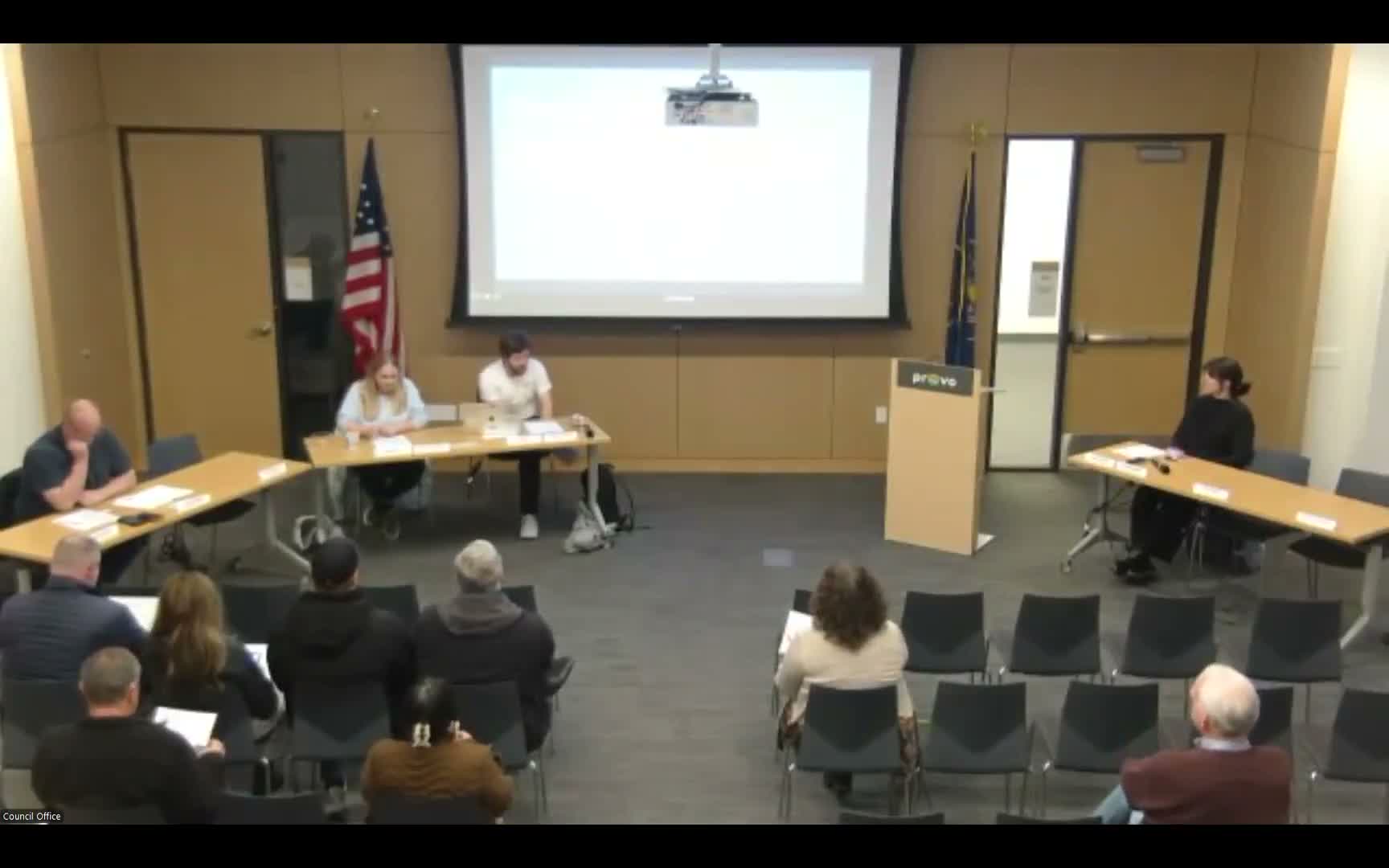
Cody Hill, Provo City's economic development division director, explained tax-increment financing and the state's Housing and Transit Reinvestment Zone at the West District neighborhood meeting, saying the tools are intended to spur development and, in some cases, increase housing density around transit stops.
Hill said the basic idea is not to create a new tax on homeowners but to redirect a share of future incremental tax revenue from participating taxing entities into a redevelopment budget for a project area. "It is a revenue strategy for our community generating additional tax dollars for new business investments," Hill said. He told residents the tool can be used to clean up brownfield sites, speed slow development, or enhance existing projects.
Why it matters: the zoning and budgeting choices determine whether a large private investment can be supported with public infrastructure or remediation funding. Hill used an example in the presentation to illustrate scale: a hypothetical $5 million depreciating asset might produce roughly $277,000 in property tax revenue for an affected taxing entity over 20 years, while a $150 million investment could generate far larger incremental receipts to finance site improvements. Hill also warned the calculations require careful "but-for" review to judge whether the development truly depends on public support.
Residents asked whether opening two fields at Epic Sports Park would satisfy Land and Water Conservation Fund (LWCF) requirements that some parks remain open to the public in perpetuity. Hill said he believed the city is currently in compliance but promised to research the LWCF specifics and follow up by email. He also said former industrial parcels in the Ironton area (including lands once owned/operated by US Steel) present typical brownfield challenges and require EPA and multi-agency remediation before development.
School-district and other taxing-entity participation is negotiated through interlocal agreements, Hill said. ‘‘If a school district agrees to forego X percent of its incremental tax receipts, those dollars will be dedicated to the redevelopment budget and tied to a project-area plan and budget that specifies uses such as demolition, storm-drain or water improvements,’’ he said. He noted the state commission reviews HTRZ plans and that each interlocal agreement typically limits how funds may be spent.
What's next: project-area plans and budgets must still be adopted and any future developer request (for example, a proposed commercial project or hotel) would be considered by the city council acting in its redevelopment-agency capacity. Hill said he would leave contact cards with staff and provide follow-up details when city staff can confirm legal or grant-related specifics.
Sources and provenance: Hill's presentation and Q&A (transcript start SEG 217; finish SEG 939).
Hill said the basic idea is not to create a new tax on homeowners but to redirect a share of future incremental tax revenue from participating taxing entities into a redevelopment budget for a project area. "It is a revenue strategy for our community generating additional tax dollars for new business investments," Hill said. He told residents the tool can be used to clean up brownfield sites, speed slow development, or enhance existing projects.
Why it matters: the zoning and budgeting choices determine whether a large private investment can be supported with public infrastructure or remediation funding. Hill used an example in the presentation to illustrate scale: a hypothetical $5 million depreciating asset might produce roughly $277,000 in property tax revenue for an affected taxing entity over 20 years, while a $150 million investment could generate far larger incremental receipts to finance site improvements. Hill also warned the calculations require careful "but-for" review to judge whether the development truly depends on public support.
Residents asked whether opening two fields at Epic Sports Park would satisfy Land and Water Conservation Fund (LWCF) requirements that some parks remain open to the public in perpetuity. Hill said he believed the city is currently in compliance but promised to research the LWCF specifics and follow up by email. He also said former industrial parcels in the Ironton area (including lands once owned/operated by US Steel) present typical brownfield challenges and require EPA and multi-agency remediation before development.
School-district and other taxing-entity participation is negotiated through interlocal agreements, Hill said. ‘‘If a school district agrees to forego X percent of its incremental tax receipts, those dollars will be dedicated to the redevelopment budget and tied to a project-area plan and budget that specifies uses such as demolition, storm-drain or water improvements,’’ he said. He noted the state commission reviews HTRZ plans and that each interlocal agreement typically limits how funds may be spent.
What's next: project-area plans and budgets must still be adopted and any future developer request (for example, a proposed commercial project or hotel) would be considered by the city council acting in its redevelopment-agency capacity. Hill said he would leave contact cards with staff and provide follow-up details when city staff can confirm legal or grant-related specifics.
Sources and provenance: Hill's presentation and Q&A (transcript start SEG 217; finish SEG 939).
View the Full Meeting & All Its Details
This article offers just a summary. Unlock complete video, transcripts, and insights as a Founder Member.
✓
Watch full, unedited meeting videos
✓
Search every word spoken in unlimited transcripts
✓
AI summaries & real-time alerts (all government levels)
✓
Permanent access to expanding government content
30-day money-back guarantee
