Witness says lack of transactional drug‑price data hides who profits and who pays
February 18, 2026 | House Committee on Energy and Commerce, House Committee, House, Legislative, Federal
This article was created by AI summarizing key points discussed. AI makes mistakes, so for full details and context, please refer to the video of the full meeting. Please report any errors so we can fix them. Report an error »
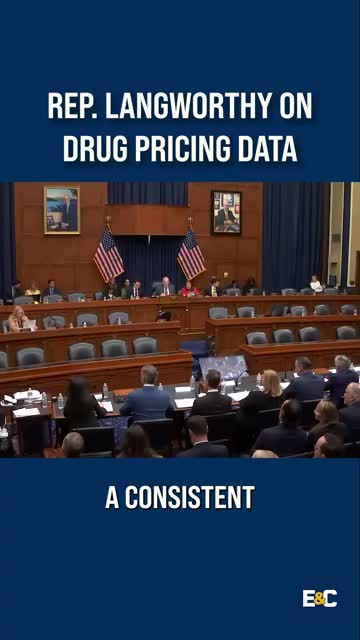
An unidentified witness testified that opaque pricing practices across the prescription drug supply chain make it impossible to determine who benefits from rising costs and who ultimately bears them. "A consistent theme across the prescription drug supply chain is that every major actor blames another major actor for high prices," the witness said, adding that "Congress, employers, and patients still do not have access to transactional level price data."
Why it matters: The witness argued that without transactional‑level price data — detailed records of payments and rebates at each step in the chain — policymakers and plan sponsors cannot trace where excess costs accrue or identify which actors are capturing them. That, the witness said, prevents lawmakers and employers from answering “Why is health care so much more expensive than it was 10 or 15 years ago?”
The testimony summarized who blames whom. According to the witness, manufacturers point to pharmacy benefit managers (PBMs) and rebate structures; PBMs point back to manufacturer list prices and pharmacy‑site reimbursement practices; wholesalers invoked contracting dynamics; and plan sponsors said they lack visibility into the transactions that would show flows of money. The witness used the transcript to underscore the point that these are competing explanations rather than mutually exclusive facts.
Direct quotes from the witness emphasized the data gap: "Congress, employers, and patients still do not have access to transactional level price data needed to determine where excess costs are accruing, who benefits, and who ultimately bears the burden of that." The witness also framed the absence of granular accounting information as central to any effort to evaluate policy options.
The testimony did not record any formal motions, votes or specific policy proposals; it focused on diagnosing the problem and urging improved transparency in pricing data. The transcript did not identify the witness by name or provide an affiliation. No legislative action or next steps were recorded in the provided excerpt.
Why it matters: The witness argued that without transactional‑level price data — detailed records of payments and rebates at each step in the chain — policymakers and plan sponsors cannot trace where excess costs accrue or identify which actors are capturing them. That, the witness said, prevents lawmakers and employers from answering “Why is health care so much more expensive than it was 10 or 15 years ago?”
The testimony summarized who blames whom. According to the witness, manufacturers point to pharmacy benefit managers (PBMs) and rebate structures; PBMs point back to manufacturer list prices and pharmacy‑site reimbursement practices; wholesalers invoked contracting dynamics; and plan sponsors said they lack visibility into the transactions that would show flows of money. The witness used the transcript to underscore the point that these are competing explanations rather than mutually exclusive facts.
Direct quotes from the witness emphasized the data gap: "Congress, employers, and patients still do not have access to transactional level price data needed to determine where excess costs are accruing, who benefits, and who ultimately bears the burden of that." The witness also framed the absence of granular accounting information as central to any effort to evaluate policy options.
The testimony did not record any formal motions, votes or specific policy proposals; it focused on diagnosing the problem and urging improved transparency in pricing data. The transcript did not identify the witness by name or provide an affiliation. No legislative action or next steps were recorded in the provided excerpt.
View the Full Meeting & All Its Details
This article offers just a summary. Unlock complete video, transcripts, and insights as a Founder Member.
✓
Watch full, unedited meeting videos
✓
Search every word spoken in unlimited transcripts
✓
AI summaries & real-time alerts (all government levels)
✓
Permanent access to expanding government content
30-day money-back guarantee
