Craven County approves $64,320 scanning pilot to begin preserving historic deed books
February 16, 2026 | Craven County, North Carolina
This article was created by AI summarizing key points discussed. AI makes mistakes, so for full details and context, please refer to the video of the full meeting. Please report any errors so we can fix them. Report an error »
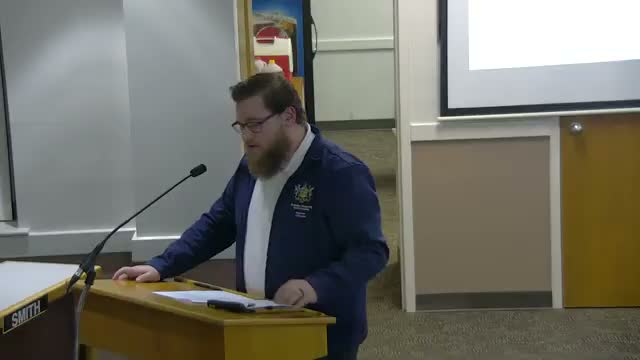
The Craven County Board of Commissioners approved a budget amendment to fund a scanning pilot in the Register of Deeds office on Feb. 16 after a presentation by Register Joshua Korr.
Korr described space and records management changes since taking office, including clearing decades of accumulated items from vaults and creating an organized inventory for deed books and permanent records. He said some paper records date to the late 18th century and that preservation needs are large: "This is the context... It's $3,260,000. That's the amount of money that we have to spend in order to preserve all the records," he said, describing that figure as the cost to complete preservation work across the office's records.
To start, county staff sought bids to scan 200 books as a test project. Korr reported two bids: $64,320 and $104,679.75, and recommended the lower bid for a phased approach rather than an expensive, immediate program. During the discussion Korr acknowledged a transcript inconsistency about an earlier-quoted figure of $6,432 and clarified the board was being asked to fund $64,320 "to get started and copy some of these documents so we can see whether this process would cost some millions to do it all."
Commissioners debated historic-preservation concerns for pre-1900 handwritten books; Korr assured the board those older, historically significant volumes would be preserved. A motion to approve the budget amendment and contract for $64,320 passed on roll call, with one recorded "no" vote.
Korr said the pilot will produce sample images to show commissioners how digitized records will look and to guide next steps on funding and prioritization.
What happens next: staff will execute the pilot scanning contract, return examples to the board, and continue building a multi-year preservation strategy. Korr estimated full compliance with older microfilm requirements could cost more than $150,000 and that complete preservation work would require multi-year funding decisions.
Korr described space and records management changes since taking office, including clearing decades of accumulated items from vaults and creating an organized inventory for deed books and permanent records. He said some paper records date to the late 18th century and that preservation needs are large: "This is the context... It's $3,260,000. That's the amount of money that we have to spend in order to preserve all the records," he said, describing that figure as the cost to complete preservation work across the office's records.
To start, county staff sought bids to scan 200 books as a test project. Korr reported two bids: $64,320 and $104,679.75, and recommended the lower bid for a phased approach rather than an expensive, immediate program. During the discussion Korr acknowledged a transcript inconsistency about an earlier-quoted figure of $6,432 and clarified the board was being asked to fund $64,320 "to get started and copy some of these documents so we can see whether this process would cost some millions to do it all."
Commissioners debated historic-preservation concerns for pre-1900 handwritten books; Korr assured the board those older, historically significant volumes would be preserved. A motion to approve the budget amendment and contract for $64,320 passed on roll call, with one recorded "no" vote.
Korr said the pilot will produce sample images to show commissioners how digitized records will look and to guide next steps on funding and prioritization.
What happens next: staff will execute the pilot scanning contract, return examples to the board, and continue building a multi-year preservation strategy. Korr estimated full compliance with older microfilm requirements could cost more than $150,000 and that complete preservation work would require multi-year funding decisions.
Don't Miss a Word: See the Full Meeting!
Go beyond summaries. Unlock every video, transcript, and key insight with a Founder Membership.
✓
Get instant access to full meeting videos
✓
Search and clip any phrase from complete transcripts
✓
Receive AI-powered summaries & custom alerts
✓
Enjoy lifetime, unrestricted access to government data
30-day money-back guarantee
