House panel reviews H.549 to expand access to IDs and driver's licenses for incarcerated Vermonters
February 18, 2026 | Corrections & Institutions, HOUSE OF REPRESENTATIVES, Committees, Legislative , Vermont
This article was created by AI summarizing key points discussed. AI makes mistakes, so for full details and context, please refer to the video of the full meeting. Please report any errors so we can fix them. Report an error »
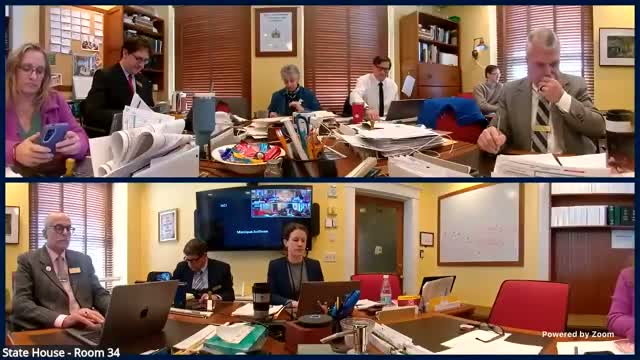
Hillary Cheddar Ames, legislative counsel for the Office of Legislative Council, told the House Corrections and Institutions Committee on Feb. 18 that draft 2.1 of H.549 would expand procedures so that people who are sentenced or detained in correctional facilities can obtain non‑driver identification cards, operator's licenses and learner's permits through coordination between the Department of Corrections (DOC) and the Department of Motor Vehicles (DMV).
Ames said, "This version makes 5 changes that we talked about just yesterday," and walked members through the bill's main elements: DOC will collect documents for detained individuals as it already does for sentenced people; detained individuals who present those documents at DMV after release may obtain credentials at no cost; the bill adds a cross‑reference in title 28 to point readers to the motor‑vehicle provisions in title 23; a handful of clarifying language edits; and staggered effective dates for different provisions.
Why 'six months'?
Committee members pressed the bill team on eligibility thresholds and timing. The draft uses a six‑month sentence/detention threshold as a trigger for some provisions; members asked why that cutoff was chosen. Monique Sullivan (DOC) said she did not know the origin and offered to check. Sullivan told the committee she had "asked the person who was here before me, and he said, I think it was the legislative mandate," but members requested staff confirm the authority or reasoning and return clearer documentation.
Mailing address and replacement licenses
A detailed exchange focused on replacement operator's licenses for people who apply while incarcerated. The draft would allow DOC to submit proof of Vermont residency and a mailing address the individual will use after release so that the DMV can issue a replacement license while the person is still incarcerated. Several members said the current wording is unclear about whether the mailing address must be provided by DOC at the time it submits documentation or by the person at DMV after release. Ames agreed the language needs to be clearer and said she would revise the drafting and check with Nancy Prescott and other staff before returning a new version for line‑by‑line consideration.
Expiration windows and eligibility timing
Counsel explained timing rules intended to reflect DMV practice: an applicant must have an unexpired operator's license or one that expired within a limited window to be eligible for replacement. Ames described a three‑year expiration window for operator's licenses and a two‑year window for learner's permits as part of the bill's eligibility language, and noted why the rule is needed when DOC collects documents well in advance of a person's release.
Fee waiver and coordination
Under draft 2.1, DMV would charge $0 when issuing replacement credentials to people who were detained and for whom DOC collected the required documentation in custody. The bill also adds a placeholder in title 28 listing DOC responsibilities and explicitly authorizes the commissioner to coordinate with DMV on credentialing for eligible individuals.
Next steps
No formal motion or vote was taken. Committee members were urged to read the draft line‑by‑line overnight. Ames said sentenced‑person provisions would have an effective date of July 1, 2026, while detained‑person provisions would take effect Jan. 1, 2027, reflecting DMV's system readiness. The committee scheduled a follow‑up meeting the next day at about 2:30 p.m. for a further line‑by‑line review.
What the committee did not resolve
The committee did not resolve the origin or legal basis for the six‑month threshold, the precise drafting that will make clear whether DOC or the released person provides the post‑release mailing address, or the final expiration window language; staff were asked to clarify and return revised text before the item goes to the floor.
Ames said, "This version makes 5 changes that we talked about just yesterday," and walked members through the bill's main elements: DOC will collect documents for detained individuals as it already does for sentenced people; detained individuals who present those documents at DMV after release may obtain credentials at no cost; the bill adds a cross‑reference in title 28 to point readers to the motor‑vehicle provisions in title 23; a handful of clarifying language edits; and staggered effective dates for different provisions.
Why 'six months'?
Committee members pressed the bill team on eligibility thresholds and timing. The draft uses a six‑month sentence/detention threshold as a trigger for some provisions; members asked why that cutoff was chosen. Monique Sullivan (DOC) said she did not know the origin and offered to check. Sullivan told the committee she had "asked the person who was here before me, and he said, I think it was the legislative mandate," but members requested staff confirm the authority or reasoning and return clearer documentation.
Mailing address and replacement licenses
A detailed exchange focused on replacement operator's licenses for people who apply while incarcerated. The draft would allow DOC to submit proof of Vermont residency and a mailing address the individual will use after release so that the DMV can issue a replacement license while the person is still incarcerated. Several members said the current wording is unclear about whether the mailing address must be provided by DOC at the time it submits documentation or by the person at DMV after release. Ames agreed the language needs to be clearer and said she would revise the drafting and check with Nancy Prescott and other staff before returning a new version for line‑by‑line consideration.
Expiration windows and eligibility timing
Counsel explained timing rules intended to reflect DMV practice: an applicant must have an unexpired operator's license or one that expired within a limited window to be eligible for replacement. Ames described a three‑year expiration window for operator's licenses and a two‑year window for learner's permits as part of the bill's eligibility language, and noted why the rule is needed when DOC collects documents well in advance of a person's release.
Fee waiver and coordination
Under draft 2.1, DMV would charge $0 when issuing replacement credentials to people who were detained and for whom DOC collected the required documentation in custody. The bill also adds a placeholder in title 28 listing DOC responsibilities and explicitly authorizes the commissioner to coordinate with DMV on credentialing for eligible individuals.
Next steps
No formal motion or vote was taken. Committee members were urged to read the draft line‑by‑line overnight. Ames said sentenced‑person provisions would have an effective date of July 1, 2026, while detained‑person provisions would take effect Jan. 1, 2027, reflecting DMV's system readiness. The committee scheduled a follow‑up meeting the next day at about 2:30 p.m. for a further line‑by‑line review.
What the committee did not resolve
The committee did not resolve the origin or legal basis for the six‑month threshold, the precise drafting that will make clear whether DOC or the released person provides the post‑release mailing address, or the final expiration window language; staff were asked to clarify and return revised text before the item goes to the floor.
View the Full Meeting & All Its Details
This article offers just a summary. Unlock complete video, transcripts, and insights as a Founder Member.
✓
Watch full, unedited meeting videos
✓
Search every word spoken in unlimited transcripts
✓
AI summaries & real-time alerts (all government levels)
✓
Permanent access to expanding government content
30-day money-back guarantee
