Fair organizers tell committee capital grants fund long‑life infrastructure and local economic activity
February 18, 2026 | Corrections & Institutions, HOUSE OF REPRESENTATIVES, Committees, Legislative , Vermont
This article was created by AI summarizing key points discussed. AI makes mistakes, so for full details and context, please refer to the video of the full meeting. Please report any errors so we can fix them. Report an error »
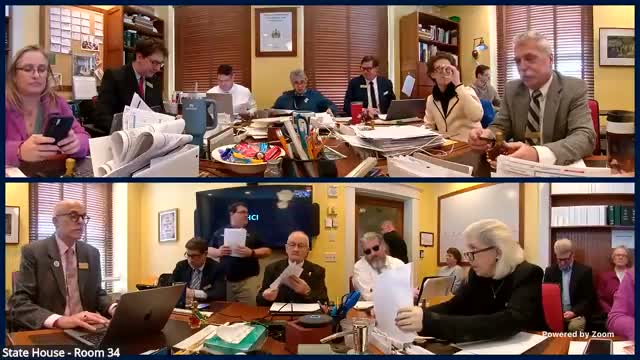
After the parole‑board discussion the committee shifted to the capital grants portion of the capital bill and heard testimony from several fair organizers about how state grants are used.
Robert Congdon, president of the Rutland County Agricultural Society (Vermont State Fair), said capital grants have helped his fair replace porta‑potties with permanent restroom facilities and fund other infrastructure upgrades. "We are receiving, just around $10,000 out of the stipend fund," he said, and added that premiums for exhibitors run roughly $25,000 per fair.
Art LaPlante, president of the Orleans County Fairgrounds, described taking down old barns and building a 62‑by‑150, 60‑stall horse barn—"the largest project since 1969"—and thanked the committee for capital support that enabled the work.
Randy Beam of Lamoille County described using grant money for two overhead doors for a 4‑H building, and replacing an asphalt pad with concrete to improve vendor access. Tim Shea of the Champlain Valley Exposition said dedication of capital funds to infrastructure "frees up money" so fairs can buy equipment such as tractors and golf carts and host community uses including public safety training and elections.
Cindy Cahart of the Addison Fair said grant funding helps fairs convert tents to permanent buildings; she also noted winter storage revenue (about $70,000) that helps sustain year‑round operations.
Witnesses emphasized the capital program's rules—grants must be used on projects with at least a 20‑year life—and said the $300,000 statewide allocation is split by request among fairs. The committee asked questions about matching requirements and whether funds are evenly divided.
Next steps: the committee accepted testimony and paused for a brief break before resuming additional witness testimony and further consideration of capital allocations.
Robert Congdon, president of the Rutland County Agricultural Society (Vermont State Fair), said capital grants have helped his fair replace porta‑potties with permanent restroom facilities and fund other infrastructure upgrades. "We are receiving, just around $10,000 out of the stipend fund," he said, and added that premiums for exhibitors run roughly $25,000 per fair.
Art LaPlante, president of the Orleans County Fairgrounds, described taking down old barns and building a 62‑by‑150, 60‑stall horse barn—"the largest project since 1969"—and thanked the committee for capital support that enabled the work.
Randy Beam of Lamoille County described using grant money for two overhead doors for a 4‑H building, and replacing an asphalt pad with concrete to improve vendor access. Tim Shea of the Champlain Valley Exposition said dedication of capital funds to infrastructure "frees up money" so fairs can buy equipment such as tractors and golf carts and host community uses including public safety training and elections.
Cindy Cahart of the Addison Fair said grant funding helps fairs convert tents to permanent buildings; she also noted winter storage revenue (about $70,000) that helps sustain year‑round operations.
Witnesses emphasized the capital program's rules—grants must be used on projects with at least a 20‑year life—and said the $300,000 statewide allocation is split by request among fairs. The committee asked questions about matching requirements and whether funds are evenly divided.
Next steps: the committee accepted testimony and paused for a brief break before resuming additional witness testimony and further consideration of capital allocations.
Don't Miss a Word: See the Full Meeting!
Go beyond summaries. Unlock every video, transcript, and key insight with a Founder Membership.
✓
Get instant access to full meeting videos
✓
Search and clip any phrase from complete transcripts
✓
Receive AI-powered summaries & custom alerts
✓
Enjoy lifetime, unrestricted access to government data
30-day money-back guarantee
