Pennington County begins coordination on ambulance coverage and possible taxing districts as Rapid City service changes loom
February 18, 2026 | Pennington County, South Dakota
This article was created by AI summarizing key points discussed. AI makes mistakes, so for full details and context, please refer to the video of the full meeting. Please report any errors so we can fix them. Report an error »
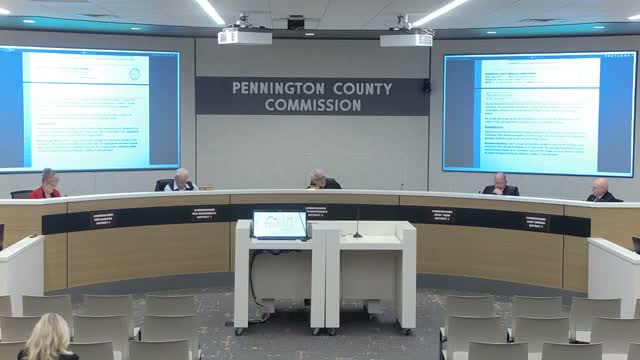
Prompted by concerns that Rapid City could reduce ambulance coverage in parts of Pennington County, the commission on Feb. 17 opened a multi-jurisdiction discussion about options to assure ambulance response for unincorporated areas and small municipalities.
Staff and fire-administration representatives described several approaches: (1) municipalities or local fire districts could form ambulance taxing districts (which generally require petitioning, boundary decisions and a voter question or county resolution, each with statutory timelines); (2) districts can fund services through an ad valorem levy or a special assessment (both have distinct statutory limits and procedural steps); or (3) the county or local jurisdictions could negotiate intergovernmental contracts with ambulance providers to cover gaps.
County staff cautioned that even with an expedited process, statutory deadlines likely prevent a newly formed district from generating an ad valorem levy payable in 2027 if it was placed on the 2026 primary ballot; therefore, commissioners directed staff to convene a special meeting with affected players (Box Elder, New Underwood, Wall, Mead and Custer County contacts, fire districts and ambulance providers) to map response areas, avoid donor holes and identify short-term contracting or mutual-aid options.
Attendees stressed the need to coordinate boundaries across county lines (several speakers noted cross-county service areas) and to educate affected property owners about potential assessment or levy methods and how exemptions (for agricultural land, etc.) can change per-property impacts. No formal district was created; staff and county fire administration will schedule follow-up regional meetings and report back with a recommended path forward and timeline.
Staff and fire-administration representatives described several approaches: (1) municipalities or local fire districts could form ambulance taxing districts (which generally require petitioning, boundary decisions and a voter question or county resolution, each with statutory timelines); (2) districts can fund services through an ad valorem levy or a special assessment (both have distinct statutory limits and procedural steps); or (3) the county or local jurisdictions could negotiate intergovernmental contracts with ambulance providers to cover gaps.
County staff cautioned that even with an expedited process, statutory deadlines likely prevent a newly formed district from generating an ad valorem levy payable in 2027 if it was placed on the 2026 primary ballot; therefore, commissioners directed staff to convene a special meeting with affected players (Box Elder, New Underwood, Wall, Mead and Custer County contacts, fire districts and ambulance providers) to map response areas, avoid donor holes and identify short-term contracting or mutual-aid options.
Attendees stressed the need to coordinate boundaries across county lines (several speakers noted cross-county service areas) and to educate affected property owners about potential assessment or levy methods and how exemptions (for agricultural land, etc.) can change per-property impacts. No formal district was created; staff and county fire administration will schedule follow-up regional meetings and report back with a recommended path forward and timeline.
Don't Miss a Word: See the Full Meeting!
Go beyond summaries. Unlock every video, transcript, and key insight with a Founder Membership.
✓
Get instant access to full meeting videos
✓
Search and clip any phrase from complete transcripts
✓
Receive AI-powered summaries & custom alerts
✓
Enjoy lifetime, unrestricted access to government data
30-day money-back guarantee
