Witnesses back stronger Akamai arrival rules while airlines seek federal-aligned inspection language
February 14, 2026 | Senate, Legislative , Hawaii
This article was created by AI summarizing key points discussed. AI makes mistakes, so for full details and context, please refer to the video of the full meeting. Please report any errors so we can fix them. Report an error »
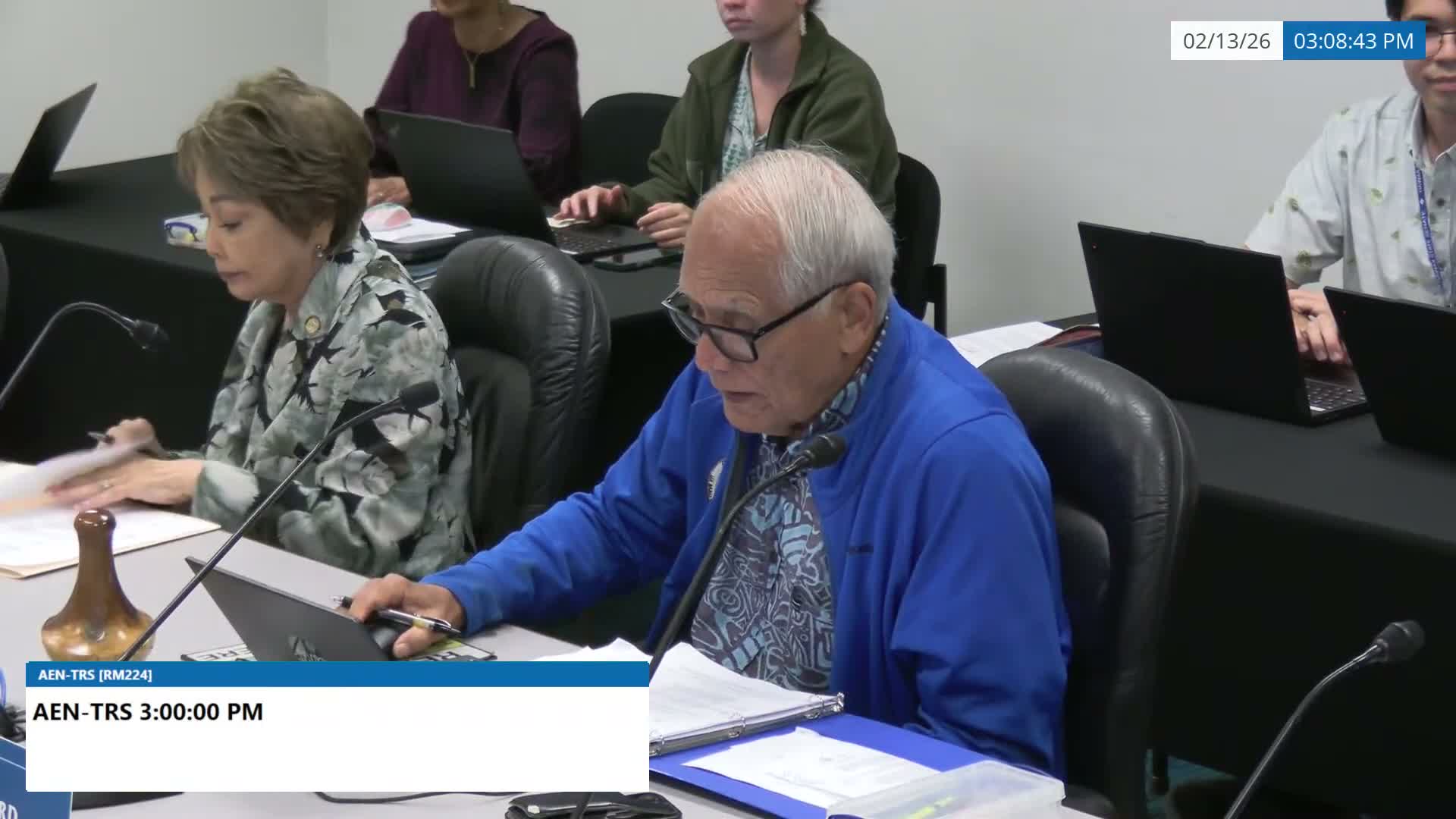
Supporters of a measure to tighten Hawaii's Akamai arrival biosecurity program told a joint Senate committee on Feb. 13 that clearer state rules would improve prevention of invasive species, while commercial airlines asked for limits so inspections do not conflict with federal aviation operations.
Patrick Chi of the Department of Land and Natural Resources and the Hawaii Invasive Species Council testified that SB2709 would strengthen the Department of Agriculture and Biosecurity’s (DAB) authority and is “strategic in managing imports,” calling complete enforcement of the Akamai arrival program a cornerstone of biosecurity prevention.
Cedric Gates, speaking for DAB, said the bill’s intent is to create standardized rules and increase DAB’s enforcement ability, including use of citations and an opportunity for people to complete required forms before fines take effect. Jonathan Ho, DAB’s plant quarantine branch manager, described near-term enforcement steps including retraining staff, reintroducing detector dogs for baggage screening and creating a pipeline of biosecurity technicians to expand coverage statewide.
“Once we get the dog in, get them settled, get the staff trained, I’m hopeful that we’re going to be able to do that by the end of this year,” Jonathan Ho said about plans to begin citation processes following training and canine deployment.
Airline representatives expressed support for the policy goal but warned that changing statutory language from “may” to “shall” as it applies to aircraft inspections could create operational conflicts with federal aviation authority and TSA protocols. Jacob Aki, representing Alaska Hawaiian Airlines, said the change would remove discretion and could require inspections whenever an agent claims “good cause,” potentially disrupting federally governed secure-area access, maintenance windows and passenger movement.
“We strongly support the state’s effort to protect our natural environment… but we do have some concern with some of the language change, particularly as it relates to the state’s authority to inspect our aircrafts,” Aki said, requesting an amendment clarifying inspections must be conducted consistent with federal aviation safety, security and operational requirements.
Committee members pressed witness on operational details: whether inspections would delay passenger baggage retrieval and how private jets and smaller island ports would be handled. Ho said most incoming flights are funneled through Honolulu; smaller islands often rely on voluntary reporting and postarrival follow-up. He also described limits on compelling searches and said targeted use of detector dogs and technicians would make compelled inspections more administrable.
The committee postponed final decision on SB2709; the joint committee set follow-up sessions to continue deliberations and to obtain clarifying timeline information from DAB.
Patrick Chi of the Department of Land and Natural Resources and the Hawaii Invasive Species Council testified that SB2709 would strengthen the Department of Agriculture and Biosecurity’s (DAB) authority and is “strategic in managing imports,” calling complete enforcement of the Akamai arrival program a cornerstone of biosecurity prevention.
Cedric Gates, speaking for DAB, said the bill’s intent is to create standardized rules and increase DAB’s enforcement ability, including use of citations and an opportunity for people to complete required forms before fines take effect. Jonathan Ho, DAB’s plant quarantine branch manager, described near-term enforcement steps including retraining staff, reintroducing detector dogs for baggage screening and creating a pipeline of biosecurity technicians to expand coverage statewide.
“Once we get the dog in, get them settled, get the staff trained, I’m hopeful that we’re going to be able to do that by the end of this year,” Jonathan Ho said about plans to begin citation processes following training and canine deployment.
Airline representatives expressed support for the policy goal but warned that changing statutory language from “may” to “shall” as it applies to aircraft inspections could create operational conflicts with federal aviation authority and TSA protocols. Jacob Aki, representing Alaska Hawaiian Airlines, said the change would remove discretion and could require inspections whenever an agent claims “good cause,” potentially disrupting federally governed secure-area access, maintenance windows and passenger movement.
“We strongly support the state’s effort to protect our natural environment… but we do have some concern with some of the language change, particularly as it relates to the state’s authority to inspect our aircrafts,” Aki said, requesting an amendment clarifying inspections must be conducted consistent with federal aviation safety, security and operational requirements.
Committee members pressed witness on operational details: whether inspections would delay passenger baggage retrieval and how private jets and smaller island ports would be handled. Ho said most incoming flights are funneled through Honolulu; smaller islands often rely on voluntary reporting and postarrival follow-up. He also described limits on compelling searches and said targeted use of detector dogs and technicians would make compelled inspections more administrable.
The committee postponed final decision on SB2709; the joint committee set follow-up sessions to continue deliberations and to obtain clarifying timeline information from DAB.
Don't Miss a Word: See the Full Meeting!
Go beyond summaries. Unlock every video, transcript, and key insight with a Founder Membership.
✓
Get instant access to full meeting videos
✓
Search and clip any phrase from complete transcripts
✓
Receive AI-powered summaries & custom alerts
✓
Enjoy lifetime, unrestricted access to government data
30-day money-back guarantee
