Committee adopts amendments to allow civil claims for unauthorized disclosure of intimate images
February 14, 2026 | Senate, Legislative , Hawaii
This article was created by AI summarizing key points discussed. AI makes mistakes, so for full details and context, please refer to the video of the full meeting. Please report any errors so we can fix them. Report an error »
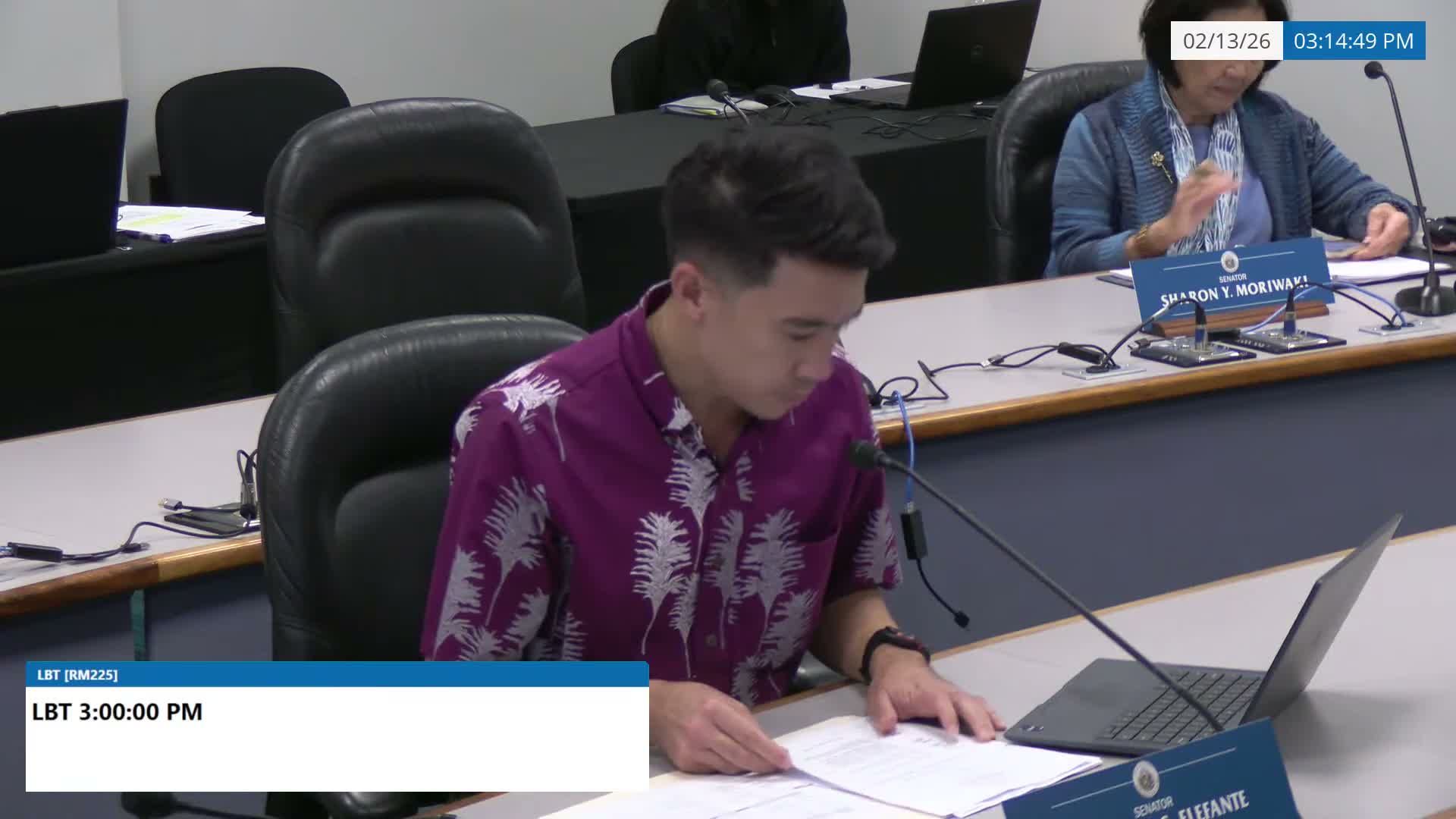
The Senate Committee on Labor and Technology on Feb. 13 recommended passage with amendments of SB2448, a bill enacting civil remedies for the unauthorized disclosure of intimate images.
Jane Stornicki, legislative counsel for the Uniform Law Commission, told the committee the bill "allows a plaintiff to bring a civil claim for the unlawful dissemination of intimate images" when an intimate image is intentionally disclosed without consent and the plaintiff can satisfy awareness requirements. She said the bill dovetails with a separate criminal measure (SB2135) that includes a reasonable-expectation-of-privacy requirement and that the civil measure is intended to address classic 'revenge porn' situations where victims lack clear civil recourse under current Hawaiian law.
Supporters, including Yasmine Cheney of the Commission on the Status of Women and Imua Alliance's registered representative Chris Caulfield, urged civil options for survivors. Several witnesses, notably Lynn Costales of the abuse treatment center and Dennis Dunn, emphasized concerns about the bill's use of the term "private" and the potential for discovery to subject survivors to intrusive inquiries. Costales said uniform-model language "does not leave a whole lot of wiggle room to expand protections for survivors," and urged tightened protections to avoid victim blaming.
In response, Stornicki said the drafters remained open to Hawaii-specific modifications, including language to clarify privacy thresholds, and agreed to consider adding deceased depicted individuals so that "the decedent's estate would bring a claim" if appropriate. The chair's amendment adopted language to require courts to prohibit further dissemination (including destruction/deletion/return of the image) and to require identification of persons or entities who received disclosure; it also inserted language vesting rights in the estate of a deceased depicted individual. The committee adopted the chair's recommendation by voice vote.
The committee's action sends the bill forward with directions to refine discovery protections and clarify the privacy definition during follow-up discussions.
Jane Stornicki, legislative counsel for the Uniform Law Commission, told the committee the bill "allows a plaintiff to bring a civil claim for the unlawful dissemination of intimate images" when an intimate image is intentionally disclosed without consent and the plaintiff can satisfy awareness requirements. She said the bill dovetails with a separate criminal measure (SB2135) that includes a reasonable-expectation-of-privacy requirement and that the civil measure is intended to address classic 'revenge porn' situations where victims lack clear civil recourse under current Hawaiian law.
Supporters, including Yasmine Cheney of the Commission on the Status of Women and Imua Alliance's registered representative Chris Caulfield, urged civil options for survivors. Several witnesses, notably Lynn Costales of the abuse treatment center and Dennis Dunn, emphasized concerns about the bill's use of the term "private" and the potential for discovery to subject survivors to intrusive inquiries. Costales said uniform-model language "does not leave a whole lot of wiggle room to expand protections for survivors," and urged tightened protections to avoid victim blaming.
In response, Stornicki said the drafters remained open to Hawaii-specific modifications, including language to clarify privacy thresholds, and agreed to consider adding deceased depicted individuals so that "the decedent's estate would bring a claim" if appropriate. The chair's amendment adopted language to require courts to prohibit further dissemination (including destruction/deletion/return of the image) and to require identification of persons or entities who received disclosure; it also inserted language vesting rights in the estate of a deceased depicted individual. The committee adopted the chair's recommendation by voice vote.
The committee's action sends the bill forward with directions to refine discovery protections and clarify the privacy definition during follow-up discussions.
View the Full Meeting & All Its Details
This article offers just a summary. Unlock complete video, transcripts, and insights as a Founder Member.
✓
Watch full, unedited meeting videos
✓
Search every word spoken in unlimited transcripts
✓
AI summaries & real-time alerts (all government levels)
✓
Permanent access to expanding government content
30-day money-back guarantee
