At-a-glance: committee votes and recommendations from Feb. 13 joint hearings
February 14, 2026 | Senate, Legislative , Hawaii
This article was created by AI summarizing key points discussed. AI makes mistakes, so for full details and context, please refer to the video of the full meeting. Please report any errors so we can fix them. Report an error »
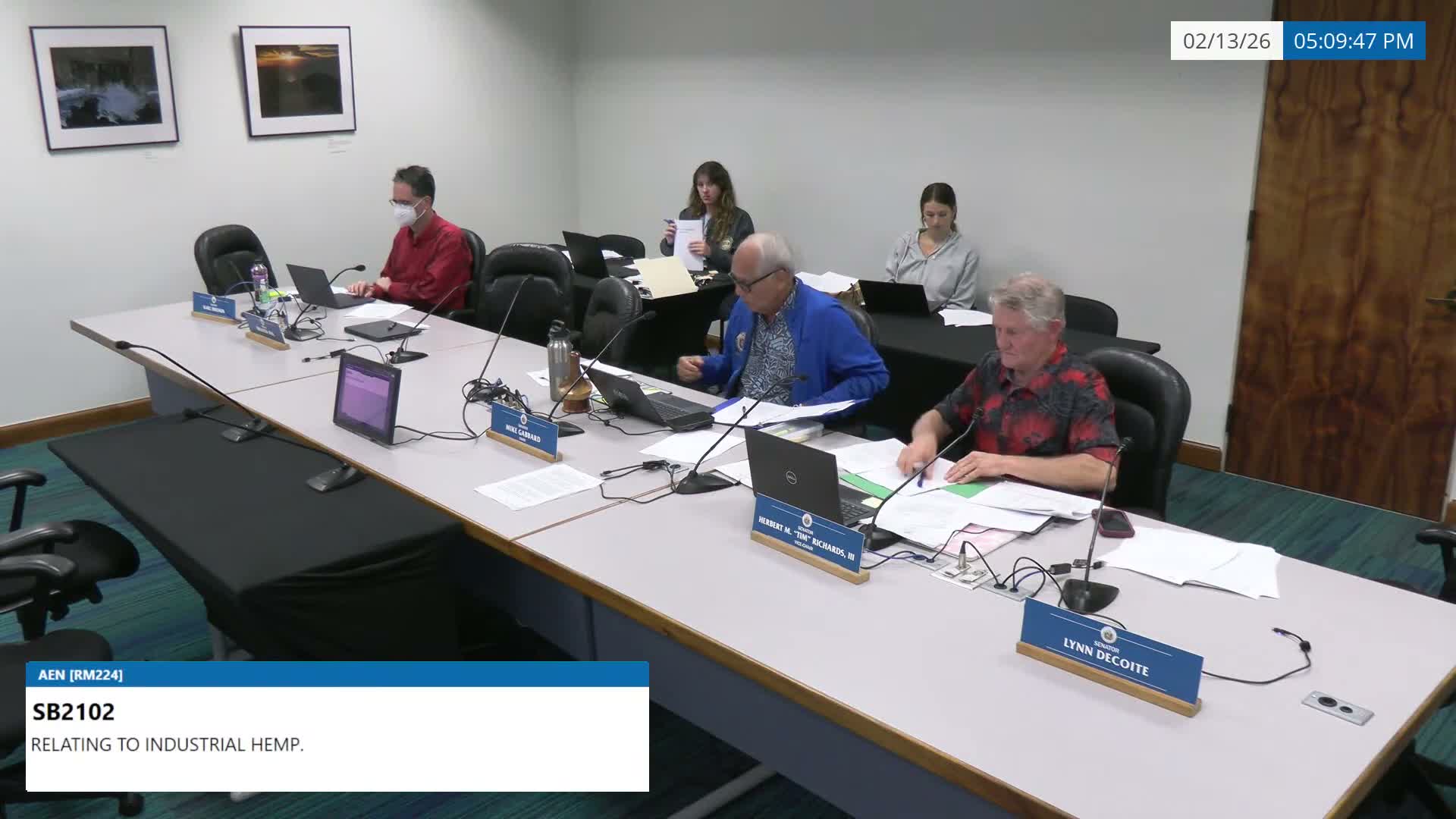
The joint Senate committees considered multiple bills on Feb. 13 and recorded committee recommendations and votes on a number of measures. Below is a concise summary of action taken during the hearing.
Votes and committee recommendations
- SB3154 (DOT NEPA assumption): Committee recommended passage with technical amendments; committee vote recorded as adopted (committee tally reported as 5 in favor).
- SB2907 (Marine Affairs / Office of Marine Affairs): Committee passed with SD1 amendments addressing coordinator salary, office placement in Governor's Office, and report date; recommendation adopted.
- SB2595 (Agribusiness Development Corporation): Committee passed the bill with SD1 to fix drafting error and defer effective date; recommendation adopted.
- SB2885 (CRB handling/storage rules): Committee recommended passing with technical amendments and deferring the effective date; recommendation adopted.
- SB3012 (Animal importation / sterilization): Committee recommended passing with Hawaiian Humane Society amendments to track intact animal imports without re-regulating breeders and shifting recordkeeping to county animal-control; motion recorded as adopted with some votes cast with reservations.
- SB3162, SB3256, SB3162 (Strategic Food Reserves and Ag Transportation Assistance) and multiple agriculture bills: Committee recommended passage with technical or AG's-office amendments and deferred effective dates in several cases to allow administrative preparation.
Deferred items and next steps
- SB2709 (Akamai arrival program / biosecurity): Committee deferred decision making to allow DAB to supply implementation timelines and to refine inspection language, including possible alignment with federal aviation rules.
- Other measures were deferred to dates noted in committee announcements to permit further review or receipt of additional materials from agencies.
The committee closed the Feb. 13 meeting after recording votes and directions to staff to draft amendments and committee reports. Members repeatedly deferred effective dates (commonly to July 1, 2050 or similar placeholder dates) to allow time for administrative rulemaking and implementation planning.
Votes and committee recommendations
- SB3154 (DOT NEPA assumption): Committee recommended passage with technical amendments; committee vote recorded as adopted (committee tally reported as 5 in favor).
- SB2907 (Marine Affairs / Office of Marine Affairs): Committee passed with SD1 amendments addressing coordinator salary, office placement in Governor's Office, and report date; recommendation adopted.
- SB2595 (Agribusiness Development Corporation): Committee passed the bill with SD1 to fix drafting error and defer effective date; recommendation adopted.
- SB2885 (CRB handling/storage rules): Committee recommended passing with technical amendments and deferring the effective date; recommendation adopted.
- SB3012 (Animal importation / sterilization): Committee recommended passing with Hawaiian Humane Society amendments to track intact animal imports without re-regulating breeders and shifting recordkeeping to county animal-control; motion recorded as adopted with some votes cast with reservations.
- SB3162, SB3256, SB3162 (Strategic Food Reserves and Ag Transportation Assistance) and multiple agriculture bills: Committee recommended passage with technical or AG's-office amendments and deferred effective dates in several cases to allow administrative preparation.
Deferred items and next steps
- SB2709 (Akamai arrival program / biosecurity): Committee deferred decision making to allow DAB to supply implementation timelines and to refine inspection language, including possible alignment with federal aviation rules.
- Other measures were deferred to dates noted in committee announcements to permit further review or receipt of additional materials from agencies.
The committee closed the Feb. 13 meeting after recording votes and directions to staff to draft amendments and committee reports. Members repeatedly deferred effective dates (commonly to July 1, 2050 or similar placeholder dates) to allow time for administrative rulemaking and implementation planning.
Don't Miss a Word: See the Full Meeting!
Go beyond summaries. Unlock every video, transcript, and key insight with a Founder Membership.
✓
Get instant access to full meeting videos
✓
Search and clip any phrase from complete transcripts
✓
Receive AI-powered summaries & custom alerts
✓
Enjoy lifetime, unrestricted access to government data
30-day money-back guarantee
