Senate approves Drug Cost Review Commission after heated debate; measure passes 28–8
May 21, 2024 | Legislative, Rhode Island
This article was created by AI summarizing key points discussed. AI makes mistakes, so for full details and context, please refer to the video of the full meeting. Please report any errors so we can fix them. Report an error »
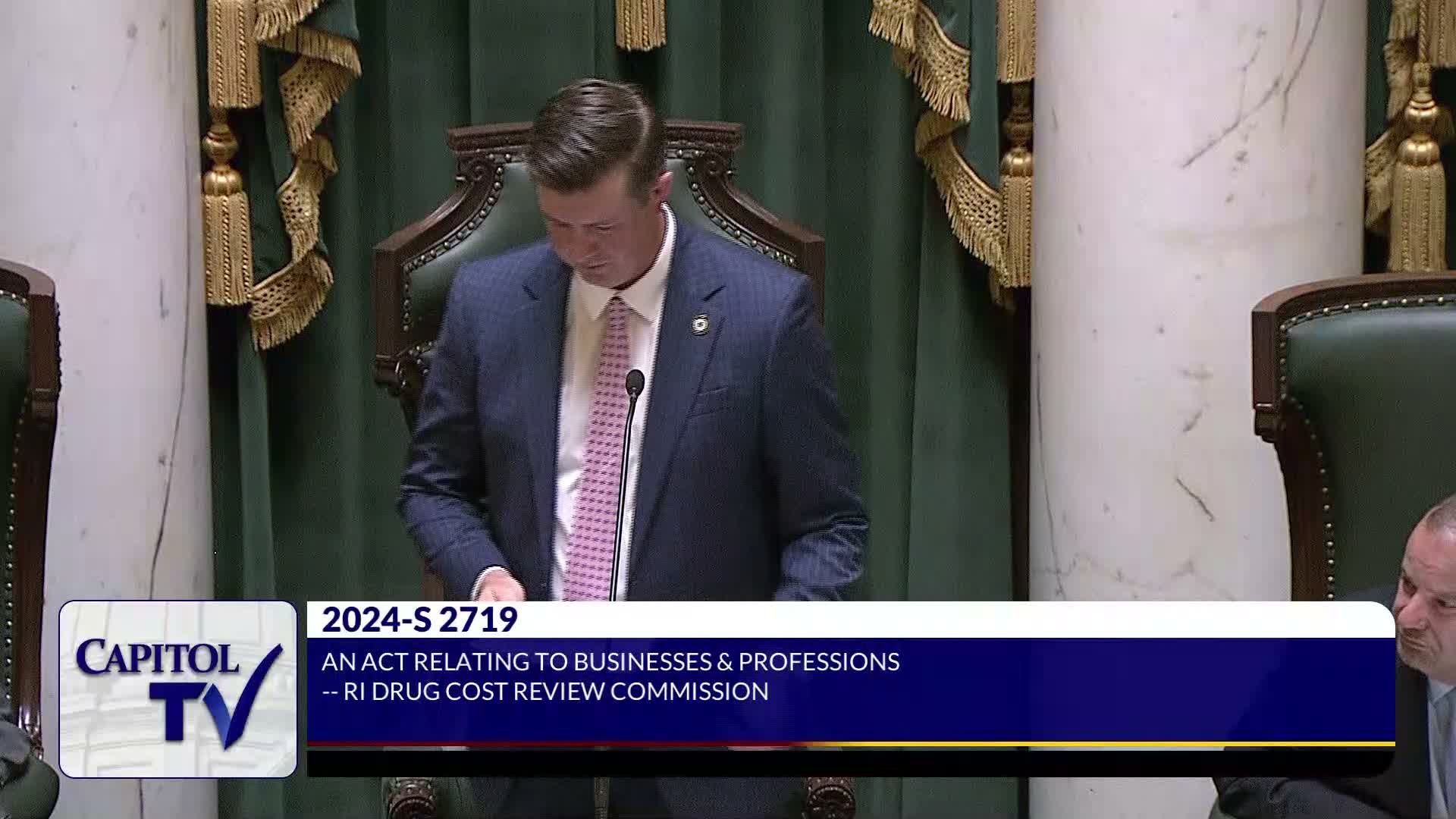
The Rhode Island Senate on Tuesday approved SB 2719, creating a Drug Cost Review Commission charged with reviewing manufacturer pricing for prescription drugs and issuing determinations intended to reduce costs for consumers.
The measure, introduced by Senator DiMario, establishes an advisory committee that includes providers and patients and authorizes the commission to review submissions from manufacturers and sellers to determine whether drug costs are affordable. ‘‘This is a move in the direction of taking a more comprehensive look at making prescription drug costs more affordable,’’ DiMario said during floor debate.
Opponents, led by Senator Bell, warned the commission could disproportionately affect pharmacists and wholesalers rather than ensuring savings reach consumers. Bell said the bill ‘‘targets the pharmacists and the pharmacy wholesalers’’ and does not guarantee that lowered costs will be returned to patients or that insurers will pass savings through to consumers. Bell noted reporting and reimbursement provisions beginning around page 6, line 26 (as discussed on the floor) and argued the bill omits protections to ensure savings are passed on.
Senator Ujifusa cited experiences in other states and questioned the commission’s effectiveness and cost. ‘‘Other states have tried setting up these commissions…not one has been able to show that they can lower the price of a single drug for consumers,’’ Ujifusa said, and noted the bill authorizes ‘‘such sums as necessary but not to exceed $500,000 per year’’ as a ceiling for start-up funding.
Supporters, including Senator Miller, said the bill sets price determination at the manufacturer level and incorporates language intended to carry price reductions through distributors and pharmacies so they reach consumers at the pharmacy counter. ‘‘The language…assures that it follows through onto pharmacists and others involved in the pipeline,’’ Miller said.
Senators also debated the role of pharmacy benefit managers and insurance carriers in drug pricing; critics urged broader action against manufacturers and PBMs while proponents said the commission is one tool among several to address affordability.
The Senate voted 28 in favor and 8 opposed, and the bill passed. Senate records show the vote tally reported on the floor as 28–8.
The measure, introduced by Senator DiMario, establishes an advisory committee that includes providers and patients and authorizes the commission to review submissions from manufacturers and sellers to determine whether drug costs are affordable. ‘‘This is a move in the direction of taking a more comprehensive look at making prescription drug costs more affordable,’’ DiMario said during floor debate.
Opponents, led by Senator Bell, warned the commission could disproportionately affect pharmacists and wholesalers rather than ensuring savings reach consumers. Bell said the bill ‘‘targets the pharmacists and the pharmacy wholesalers’’ and does not guarantee that lowered costs will be returned to patients or that insurers will pass savings through to consumers. Bell noted reporting and reimbursement provisions beginning around page 6, line 26 (as discussed on the floor) and argued the bill omits protections to ensure savings are passed on.
Senator Ujifusa cited experiences in other states and questioned the commission’s effectiveness and cost. ‘‘Other states have tried setting up these commissions…not one has been able to show that they can lower the price of a single drug for consumers,’’ Ujifusa said, and noted the bill authorizes ‘‘such sums as necessary but not to exceed $500,000 per year’’ as a ceiling for start-up funding.
Supporters, including Senator Miller, said the bill sets price determination at the manufacturer level and incorporates language intended to carry price reductions through distributors and pharmacies so they reach consumers at the pharmacy counter. ‘‘The language…assures that it follows through onto pharmacists and others involved in the pipeline,’’ Miller said.
Senators also debated the role of pharmacy benefit managers and insurance carriers in drug pricing; critics urged broader action against manufacturers and PBMs while proponents said the commission is one tool among several to address affordability.
The Senate voted 28 in favor and 8 opposed, and the bill passed. Senate records show the vote tally reported on the floor as 28–8.
Don't Miss a Word: See the Full Meeting!
Go beyond summaries. Unlock every video, transcript, and key insight with a Founder Membership.
✓
Get instant access to full meeting videos
✓
Search and clip any phrase from complete transcripts
✓
Receive AI-powered summaries & custom alerts
✓
Enjoy lifetime, unrestricted access to government data
30-day money-back guarantee
