Billings staff outline Billings 2045 land-use plan required by new state law and urge council input on housing-incentive choices
February 17, 2026 | Billings, Yellowstone, Montana
This article was created by AI summarizing key points discussed. AI makes mistakes, so for full details and context, please refer to the video of the full meeting. Please report any errors so we can fix them. Report an error »
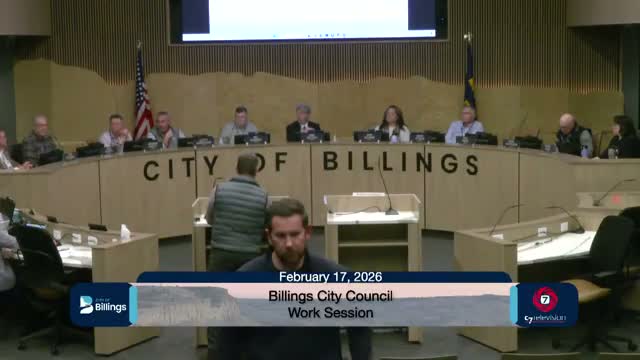
Planning staff briefed the Billings City Council on the Billings 2045 land-use plan work required by the Montana Land Use Planning Act (2023), outlined public engagement to date, and sought council guidance on implementing the law’s housing-incentive options.
Staff said the city must demonstrate capacity and policy measures to accommodate projected growth — staff cited a compounded annual growth estimate that equates to roughly 30,000 additional residents, about 16,000 housing units and nearly 22,000 jobs by 2045 — and explained that the new state framework front-loads public participation and requires a future land-use map to guide administrative approvals.
Under the state law the city must pick at least five of 14 listed housing-incentive actions (items range from allowing duplexes/triplexes as permitted uses where single-family units are allowed to reducing parking or impact fees for ADUs). Staff noted many of the options are already in Billings’ code (for example, duplexes allowed where single-family is permitted and ADUs in place) and recommended studying overlay areas near transit and employment nodes, parking minimum reductions consistent with recent legislation, and possible incentives for infill.
Council members raised process questions: several asked for more time and suggested additional council work sessions (including daytime or lunch meetings) to review the future land-use map and proposed choices in more detail. Staff said neighborhood plans for the West End and The Heights are being folded into the citywide map and promised more targeted work sessions before any adoption. Staff also cautioned that adopting too few of the statutorily allowed incentives could invite further state action.
Staff requested council feedback on the interim planning commission’s recommendations and said they expect to continue public engagement through April and aim to finalize documents for adoption this summer, mindful of state reporting timelines.
Staff said the city must demonstrate capacity and policy measures to accommodate projected growth — staff cited a compounded annual growth estimate that equates to roughly 30,000 additional residents, about 16,000 housing units and nearly 22,000 jobs by 2045 — and explained that the new state framework front-loads public participation and requires a future land-use map to guide administrative approvals.
Under the state law the city must pick at least five of 14 listed housing-incentive actions (items range from allowing duplexes/triplexes as permitted uses where single-family units are allowed to reducing parking or impact fees for ADUs). Staff noted many of the options are already in Billings’ code (for example, duplexes allowed where single-family is permitted and ADUs in place) and recommended studying overlay areas near transit and employment nodes, parking minimum reductions consistent with recent legislation, and possible incentives for infill.
Council members raised process questions: several asked for more time and suggested additional council work sessions (including daytime or lunch meetings) to review the future land-use map and proposed choices in more detail. Staff said neighborhood plans for the West End and The Heights are being folded into the citywide map and promised more targeted work sessions before any adoption. Staff also cautioned that adopting too few of the statutorily allowed incentives could invite further state action.
Staff requested council feedback on the interim planning commission’s recommendations and said they expect to continue public engagement through April and aim to finalize documents for adoption this summer, mindful of state reporting timelines.
Don't Miss a Word: See the Full Meeting!
Go beyond summaries. Unlock every video, transcript, and key insight with a Founder Membership.
✓
Get instant access to full meeting videos
✓
Search and clip any phrase from complete transcripts
✓
Receive AI-powered summaries & custom alerts
✓
Enjoy lifetime, unrestricted access to government data
30-day money-back guarantee
