Panel hears confirmation testimony for two Judicial Conduct Commission appointees; public complainant alleges procedural problems
February 16, 2026 | 2026 Legislature Alaska, Alaska
This article was created by AI summarizing key points discussed. AI makes mistakes, so for full details and context, please refer to the video of the full meeting. Please report any errors so we can fix them. Report an error »
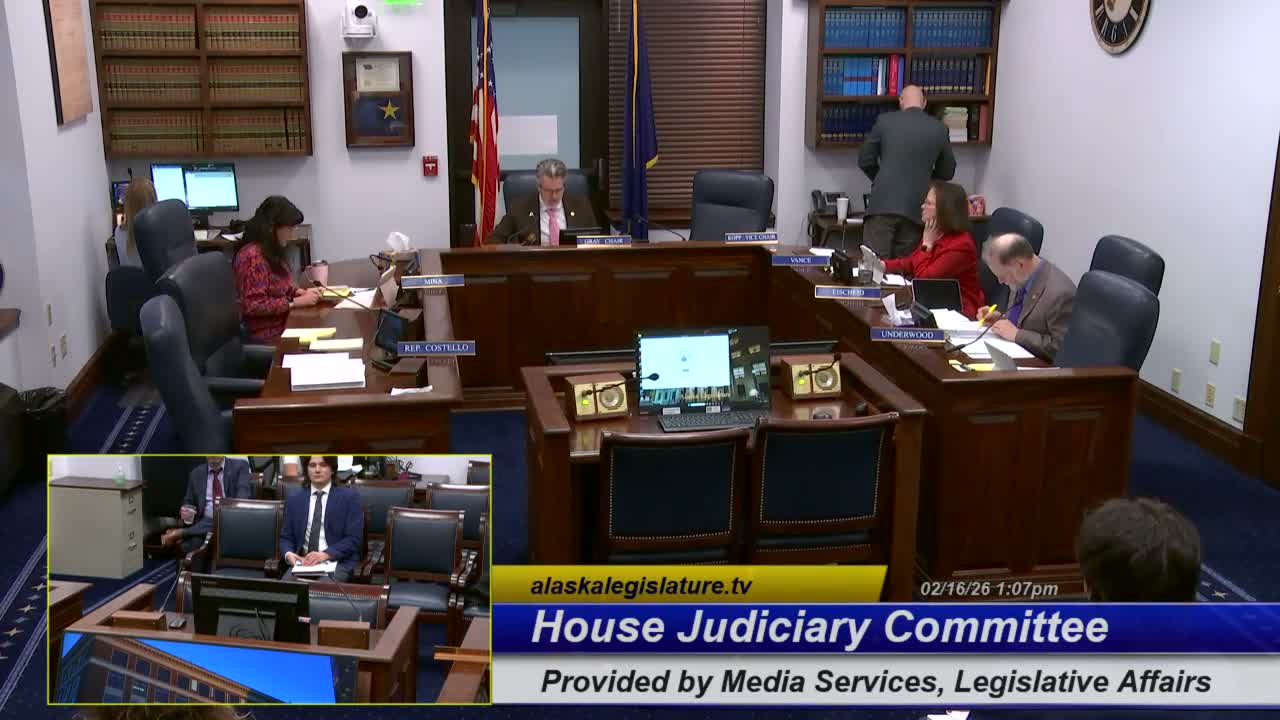
Jane Steiner Moores and Aldine Kilborn appeared Feb. 16 before the Alaska House Judiciary Committee for confirmation hearings and described the Commission on Judicial Conduct’s role and limits, while a member of the public filed sharp accusations against the commission’s handling of complaints.
Moores, an attorney and Juneau resident whom the governor reappointed for a second four‑year term, told the committee she has been a member of the Alaska Bar for more than 35 years and said the commission’s work — enforcing ethical standards and accountability for judges — is “critical to the public trust.” She identified two evolving challenges the commission is seeing: social media and artificial intelligence, and said Alaska has not yet faced the same level of problematic judicial behavior reported in other states.
Moores emphasized that the commission’s function differs from the Judicial Council. “The commission’s role kicks in after judges [are] on the bench,” she said, and added that many complaints the office receives stem from dissatisfaction with judicial rulings rather than provable ethical misconduct; those matters are typically outside the commission’s jurisdiction and instead can be appealed in the courts or addressed by the legislature.
Kilborn, a Fairbanks resident and second‑term public member of the commission, described the investigative process used when complaints are filed: listening to hearing audio, reviewing court records and, when warranted, conducting formal hearings with testimony under oath. Kilborn said confidentiality rules constrain what the commission can disclose during investigations and expressed frustration that many complainants cannot afford appeals and therefore remain dissatisfied with outcomes handled outside the commission’s authority.
During public testimony, Ed Martin Jr. called in and alleged that, at a prior meeting, he was removed from a Zoom meeting before his opportunity to speak and that complaints he filed — against two judges and the director, Marla Greenstein — were summarily dismissed. “My complaint … was summarily dismissed by a vice chair,” Martin said, calling the conduct “self‑dealing” and asserting the dismissals and removal violated the Open Meetings Act. He told the committee he has filed a complaint with U.S. civil‑rights authorities and urged the committee to review materials he previously submitted.
Chair Gray closed public testimony for the two appointees and noted that, in accordance with AS 39.05.080, the committee held a hearing on Jane Moores and Aldine Kilborn; he added that a signature on the committee’s report does not indicate any member’s intent to vote for or against confirmation. The committee took a brief recess to sign paperwork and did not take a confirmation vote during the hearing.
The committee’s next business included a second hearing on HB 213; the session adjourned at 1:40 p.m.
Moores, an attorney and Juneau resident whom the governor reappointed for a second four‑year term, told the committee she has been a member of the Alaska Bar for more than 35 years and said the commission’s work — enforcing ethical standards and accountability for judges — is “critical to the public trust.” She identified two evolving challenges the commission is seeing: social media and artificial intelligence, and said Alaska has not yet faced the same level of problematic judicial behavior reported in other states.
Moores emphasized that the commission’s function differs from the Judicial Council. “The commission’s role kicks in after judges [are] on the bench,” she said, and added that many complaints the office receives stem from dissatisfaction with judicial rulings rather than provable ethical misconduct; those matters are typically outside the commission’s jurisdiction and instead can be appealed in the courts or addressed by the legislature.
Kilborn, a Fairbanks resident and second‑term public member of the commission, described the investigative process used when complaints are filed: listening to hearing audio, reviewing court records and, when warranted, conducting formal hearings with testimony under oath. Kilborn said confidentiality rules constrain what the commission can disclose during investigations and expressed frustration that many complainants cannot afford appeals and therefore remain dissatisfied with outcomes handled outside the commission’s authority.
During public testimony, Ed Martin Jr. called in and alleged that, at a prior meeting, he was removed from a Zoom meeting before his opportunity to speak and that complaints he filed — against two judges and the director, Marla Greenstein — were summarily dismissed. “My complaint … was summarily dismissed by a vice chair,” Martin said, calling the conduct “self‑dealing” and asserting the dismissals and removal violated the Open Meetings Act. He told the committee he has filed a complaint with U.S. civil‑rights authorities and urged the committee to review materials he previously submitted.
Chair Gray closed public testimony for the two appointees and noted that, in accordance with AS 39.05.080, the committee held a hearing on Jane Moores and Aldine Kilborn; he added that a signature on the committee’s report does not indicate any member’s intent to vote for or against confirmation. The committee took a brief recess to sign paperwork and did not take a confirmation vote during the hearing.
The committee’s next business included a second hearing on HB 213; the session adjourned at 1:40 p.m.
Don't Miss a Word: See the Full Meeting!
Go beyond summaries. Unlock every video, transcript, and key insight with a Founder Membership.
✓
Get instant access to full meeting videos
✓
Search and clip any phrase from complete transcripts
✓
Receive AI-powered summaries & custom alerts
✓
Enjoy lifetime, unrestricted access to government data
30-day money-back guarantee
