Committee hears bill to remove $10,000 cap on volunteer firefighter property tax exemption
February 17, 2026 | 2026 Legislature Alaska, Alaska
This article was created by AI summarizing key points discussed. AI makes mistakes, so for full details and context, please refer to the video of the full meeting. Please report any errors so we can fix them. Report an error »
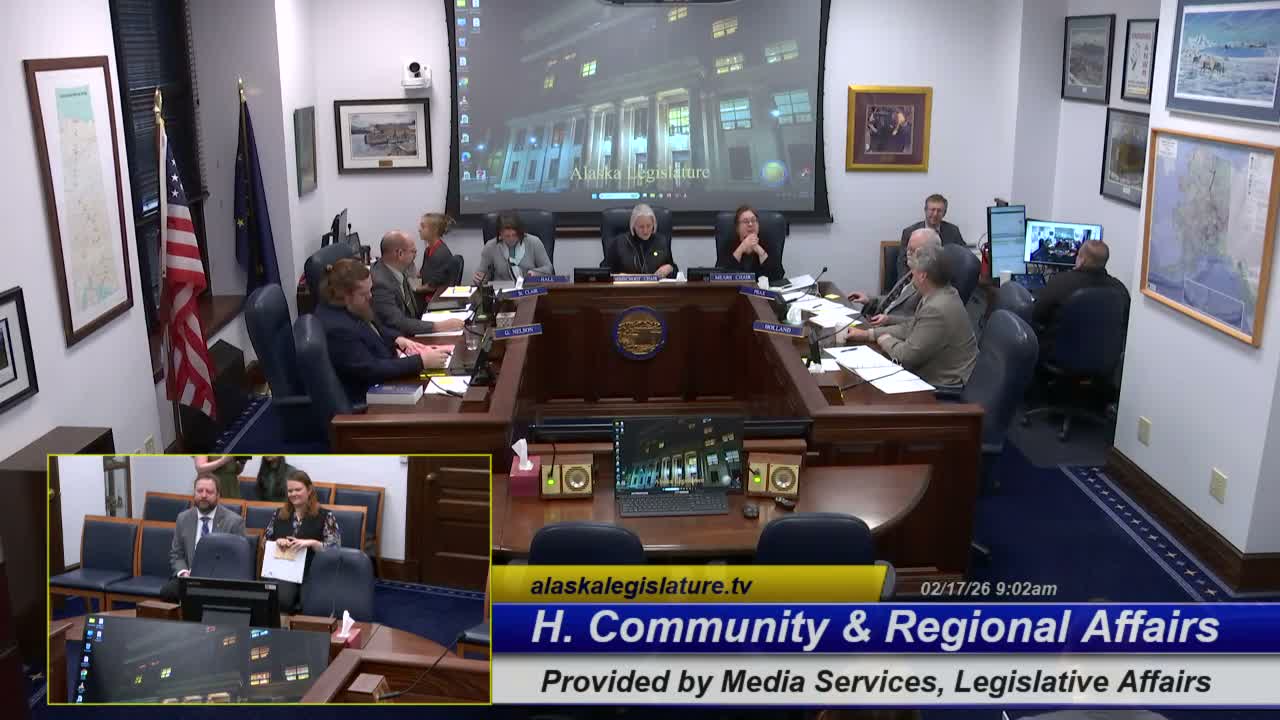
Representative Elam and Kendra Broussard told the committee that HB 286 would delete the statutory $10,000 limit on the optional municipal property tax exemption for qualifying volunteer firefighters and emergency medical providers, and allow municipalities to determine exemption amounts by ordinance. The bill includes an immediate effective date, the sectional analysis said.
Sponsor and witnesses framed the bill as a recruitment and retention tool for rural and volunteer-dependent departments. Chief Roy Browning of Central Emergency Services in Soldotna told the committee his department relies heavily on volunteers and that incentives ‘‘would help us with recruiting and retention.’’ He said his department has about 30 volunteers, roughly 15–17 of whom own property and could claim the exemption.
Committee members pressed for context and raised equity concerns. Representative Kai Holland and others asked why the state originally established a $10,000 cap and whether removing it would shift tax burdens. Dan Nelson, state assessor, and Sandra Muller, director of the Division of Community and Regional Affairs, said they did not have immediate historical justification for the dollar cap and offered to research the origins. Nelson noted that optional exemptions shift tax burdens to taxpayers who do not qualify.
Certification and active service standards were discussed. Chief Browning said the statute requires state-recognized certification and that departments define active members; chiefs validate active-member lists for assessors. Sponsor Elam and former volunteer speakers argued that certifications require significant training and continuing education.
What happens next: The committee set HB 286 aside after questions and testimony; members requested additional research and background on the statutory cap's origins and on equity implications before further action.
Quotes from the hearing
"This would be a reasonable way to recognize the essential public safety role that the volunteers provide." — Chief Roy Browning
"These exemptions and optional exemptions do shift the tax burden to those who do not qualify for those burdens." — Dan Nelson, State Assessor
Ending
The committee took no vote on HB 286 and set the bill aside, asking staff and agencies for further historical and fiscal information.
Sponsor and witnesses framed the bill as a recruitment and retention tool for rural and volunteer-dependent departments. Chief Roy Browning of Central Emergency Services in Soldotna told the committee his department relies heavily on volunteers and that incentives ‘‘would help us with recruiting and retention.’’ He said his department has about 30 volunteers, roughly 15–17 of whom own property and could claim the exemption.
Committee members pressed for context and raised equity concerns. Representative Kai Holland and others asked why the state originally established a $10,000 cap and whether removing it would shift tax burdens. Dan Nelson, state assessor, and Sandra Muller, director of the Division of Community and Regional Affairs, said they did not have immediate historical justification for the dollar cap and offered to research the origins. Nelson noted that optional exemptions shift tax burdens to taxpayers who do not qualify.
Certification and active service standards were discussed. Chief Browning said the statute requires state-recognized certification and that departments define active members; chiefs validate active-member lists for assessors. Sponsor Elam and former volunteer speakers argued that certifications require significant training and continuing education.
What happens next: The committee set HB 286 aside after questions and testimony; members requested additional research and background on the statutory cap's origins and on equity implications before further action.
Quotes from the hearing
"This would be a reasonable way to recognize the essential public safety role that the volunteers provide." — Chief Roy Browning
"These exemptions and optional exemptions do shift the tax burden to those who do not qualify for those burdens." — Dan Nelson, State Assessor
Ending
The committee took no vote on HB 286 and set the bill aside, asking staff and agencies for further historical and fiscal information.
Don't Miss a Word: See the Full Meeting!
Go beyond summaries. Unlock every video, transcript, and key insight with a Founder Membership.
✓
Get instant access to full meeting videos
✓
Search and clip any phrase from complete transcripts
✓
Receive AI-powered summaries & custom alerts
✓
Enjoy lifetime, unrestricted access to government data
30-day money-back guarantee
