Residents urge moratorium on data centers and fracking; commissioners schedule SELC and economic briefings
February 16, 2026 | Lee County, North Carolina
This article was created by AI summarizing key points discussed. AI makes mistakes, so for full details and context, please refer to the video of the full meeting. Please report any errors so we can fix them. Report an error »
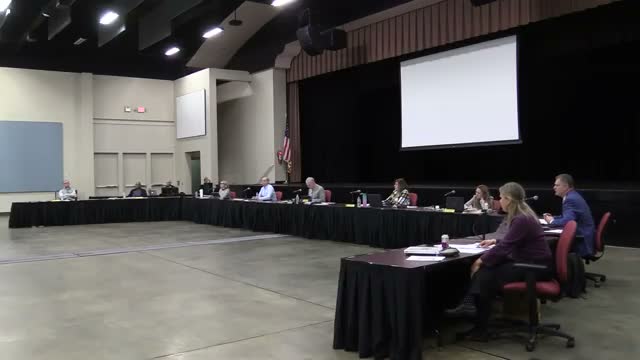
Dozens of residents at Lee County’s Feb. 16 commissioners meeting urged elected officials to pause new approvals for data centers, crypto mining and drilling while the county studies potential environmental and economic impacts.
Speakers repeated a common request: a temporary moratorium to allow time for information and policy options to be presented publicly. Lara Block urged the board to "keep it that way" and specifically asked the county to follow Chatham County’s recent 12-month pause. Randy Nixon said residents have asked for a vote for months and told commissioners, "We don't want these next to our homes and we're not happy about it." Several speakers highlighted water concerns for the Deep River and downstream communities.
Environmental and water-quality advocates raised specific risks. Stephanie Stevens, who identified herself as the Deep River riverkeeper, said the Deep River already faces pollution issues including 1,4-dioxane and PFAS and warned that data center cooling and runoff could worsen those problems. Ashley Daniels, program and organizing director at Toxic Free NC, called on commissioners to adopt a moratorium on fracking, drilling and data centers to protect "residents' drinking water and farmland." Gene Phelps, a software engineer, argued data centers tend to bring few local jobs compared with the land and infrastructure they consume and urged a public discussion of costs and benefits.
The board did not adopt a moratorium at the meeting. Instead, Commissioner Vorbic moved — and the board approved by voice vote — to invite the Southern Environmental Law Center to give a 10-minute briefing at the March 16 meeting and to schedule a separate 10-minute economic-development presentation by Jimmy Randolph so commissioners and the public could hear both perspectives. Commissioners also requested a medics contract update at the March 2 workshop.
Many speakers had asked that the SELC be placed on the agenda; several residents had filed formal requests through the county portal and asked explicitly for public votes rather than private or informal polling. The board’s action schedules information and perspectives for future consideration but does not itself change county development rules.
Next steps: SELC and the economic-development briefing are scheduled for March; staff and commissioners said they expect those presentations to inform whether the board pursues a moratorium or regulatory changes.
Speakers repeated a common request: a temporary moratorium to allow time for information and policy options to be presented publicly. Lara Block urged the board to "keep it that way" and specifically asked the county to follow Chatham County’s recent 12-month pause. Randy Nixon said residents have asked for a vote for months and told commissioners, "We don't want these next to our homes and we're not happy about it." Several speakers highlighted water concerns for the Deep River and downstream communities.
Environmental and water-quality advocates raised specific risks. Stephanie Stevens, who identified herself as the Deep River riverkeeper, said the Deep River already faces pollution issues including 1,4-dioxane and PFAS and warned that data center cooling and runoff could worsen those problems. Ashley Daniels, program and organizing director at Toxic Free NC, called on commissioners to adopt a moratorium on fracking, drilling and data centers to protect "residents' drinking water and farmland." Gene Phelps, a software engineer, argued data centers tend to bring few local jobs compared with the land and infrastructure they consume and urged a public discussion of costs and benefits.
The board did not adopt a moratorium at the meeting. Instead, Commissioner Vorbic moved — and the board approved by voice vote — to invite the Southern Environmental Law Center to give a 10-minute briefing at the March 16 meeting and to schedule a separate 10-minute economic-development presentation by Jimmy Randolph so commissioners and the public could hear both perspectives. Commissioners also requested a medics contract update at the March 2 workshop.
Many speakers had asked that the SELC be placed on the agenda; several residents had filed formal requests through the county portal and asked explicitly for public votes rather than private or informal polling. The board’s action schedules information and perspectives for future consideration but does not itself change county development rules.
Next steps: SELC and the economic-development briefing are scheduled for March; staff and commissioners said they expect those presentations to inform whether the board pursues a moratorium or regulatory changes.
Don't Miss a Word: See the Full Meeting!
Go beyond summaries. Unlock every video, transcript, and key insight with a Founder Membership.
✓
Get instant access to full meeting videos
✓
Search and clip any phrase from complete transcripts
✓
Receive AI-powered summaries & custom alerts
✓
Enjoy lifetime, unrestricted access to government data
30-day money-back guarantee
