Lee County holds public hearing on UDO flood-hazard update and FEMA map panels
February 16, 2026 | Lee County, North Carolina
This article was created by AI summarizing key points discussed. AI makes mistakes, so for full details and context, please refer to the video of the full meeting. Please report any errors so we can fix them. Report an error »
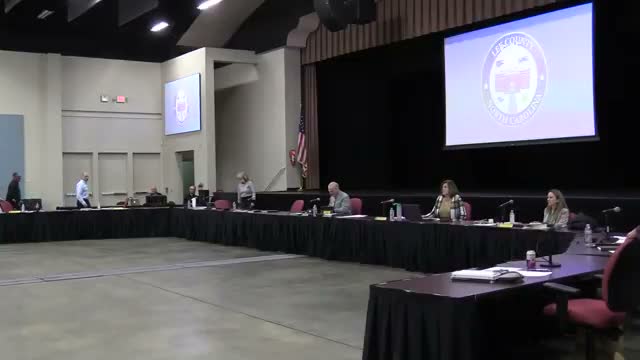
Lee County planning staff held a public hearing Feb. 16 to present a proposed update to the Unified Development Ordinance’s flood-hazard regulations and to brief commissioners on proposed FEMA map-panel updates.
Staff said the proposal replaces Article 13 with the latest model flood damage prevention ordinance provided by the North Carolina Floodplain Mapping Program and updates the FEMA Flood Insurance Rate Map panels for Lee County. According to staff, 22 of 74 panels are proposed for update. "The new FEMA maps for Lee County are not showing any additional structures being placed or mapped within the 100 year floodplain," staff said during the presentation.
A principal technical change staff emphasized is the regulatory elevation for the first finished floor (the regulatory flood protection elevation). Current Lee County practice allows building at the base 100-year flood elevation; the model ordinance suggests raising the minimum to either 2 feet above base flood elevation (minimum recommended) or to 4 feet (FEMA's stronger recommendation). Staff described a middle option of 2 feet as the minimum the county could adopt, with 4 feet being preferred by FEMA.
Staff also proposed requiring plot plans to be certified by a registered land surveyor or professional engineer to improve accuracy and protect property owners, and clarified minor exemptions for accessory structures under $3,000 or under 150 square feet. The presentation explained the review pathway: the county's action will be forwarded to the National Flood Insurance Program planner for review, then to FEMA for approval, after which the governing boards would adopt the ordinance formally.
No formal ordinance adoption or final vote occurred at the meeting. Commissioners asked clarifying questions; staff said they will incorporate board input, provide feedback from NFIP/FEMA review when available, and return for formal adoption if reviews are favorable.
Next steps: planning staff will transmit recommended language to the NFIP planner and FEMA for review and will report findings back to the board before any final adoption vote.
Staff said the proposal replaces Article 13 with the latest model flood damage prevention ordinance provided by the North Carolina Floodplain Mapping Program and updates the FEMA Flood Insurance Rate Map panels for Lee County. According to staff, 22 of 74 panels are proposed for update. "The new FEMA maps for Lee County are not showing any additional structures being placed or mapped within the 100 year floodplain," staff said during the presentation.
A principal technical change staff emphasized is the regulatory elevation for the first finished floor (the regulatory flood protection elevation). Current Lee County practice allows building at the base 100-year flood elevation; the model ordinance suggests raising the minimum to either 2 feet above base flood elevation (minimum recommended) or to 4 feet (FEMA's stronger recommendation). Staff described a middle option of 2 feet as the minimum the county could adopt, with 4 feet being preferred by FEMA.
Staff also proposed requiring plot plans to be certified by a registered land surveyor or professional engineer to improve accuracy and protect property owners, and clarified minor exemptions for accessory structures under $3,000 or under 150 square feet. The presentation explained the review pathway: the county's action will be forwarded to the National Flood Insurance Program planner for review, then to FEMA for approval, after which the governing boards would adopt the ordinance formally.
No formal ordinance adoption or final vote occurred at the meeting. Commissioners asked clarifying questions; staff said they will incorporate board input, provide feedback from NFIP/FEMA review when available, and return for formal adoption if reviews are favorable.
Next steps: planning staff will transmit recommended language to the NFIP planner and FEMA for review and will report findings back to the board before any final adoption vote.
View the Full Meeting & All Its Details
This article offers just a summary. Unlock complete video, transcripts, and insights as a Founder Member.
✓
Watch full, unedited meeting videos
✓
Search every word spoken in unlimited transcripts
✓
AI summaries & real-time alerts (all government levels)
✓
Permanent access to expanding government content
30-day money-back guarantee
