Senate resources committee alters governor's tax bill, raises minimum oil tax to 6% and adds pipeline surcharge
February 17, 2026 | 2026 Legislature Alaska, Alaska
This article was created by AI summarizing key points discussed. AI makes mistakes, so for full details and context, please refer to the video of the full meeting. Please report any errors so we can fix them. Report an error »
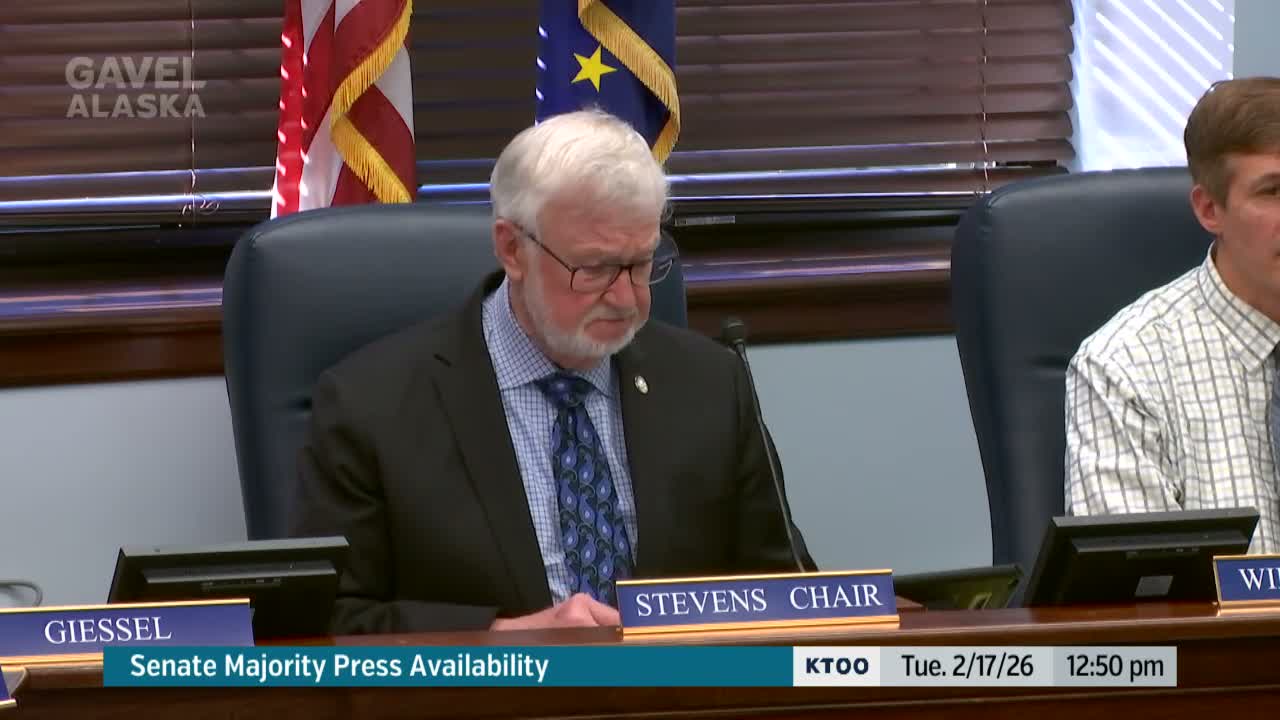
The Alaska Senate Resources Committee on Tuesday described the changes it made to the governor's tax proposal (referred to in committee as bill 227), including several material shifts to how oil and other revenues would be treated.
Senator Giesel, who walked colleagues through the committee substitute, said it removes references to sales tax and contingency or sunset provisions in the governor's draft and raises the minimum tax rate from 4% to 6%. "We agreed with the governor to raise the minimum tax from 4% to 6% ... we did not put a sunset on it, and we additionally hardened the floor," she said, describing the hardened floor as a limitation that prevents deductions or credits from reducing a taxpayer's liability below the 6% minimum.
The substitute also adds a 15¢ per barrel surcharge on oil transported through the pipeline system; Senator Giesel said the committee included legislative intent that the surcharge revenue be used for maintenance of the Dalton Highway. The committee inserted a small education "head" tax with legislative intent that those proceeds go to public school programs and infrastructure. The substitute incorporates an S‑corporation tax structure and adds the online-sales/highly-digitalized tax (Senate Bill 113) into the package. Giesel also described a change to the oil-price "slider," reducing the per-barrel deduction in lower price bands.
Senator Wilkowski, who supported many of the provisions, framed the changes as narrow corrections within a very complex oil‑tax regime. He said closing the S‑corp loophole has been discussed for years and criticized past concessions to a major company. "When Hilcorp first came to Alaska, there were hearings on it ... they fought it now for a decade and it's cost us over $1,000,000,000 that needs to be fixed," Wilkowski said. He also gave specific fiscal context for the Dalton surcharge, saying the 15¢ change would raise about $25,000,000 a year while DOT estimated roughly $450,000,000 in needed Dalton maintenance over six years (about $75,000,000 per year), creating an estimated yearly gap of roughly $50,000,000.
Committee members emphasized the bill remains a work in progress. Senator Giesel said the Legislature has not yet received a revenue estimate from the Department of Revenue for the substitute. "We have not received an estimate from Department of Revenue yet in terms of the amount raised," she said. The resources substitute was expected to move to Senate Finance for further consideration.
What happens next: the committee planned to forward the substitute to the Senate Finance Committee for additional hearings and probable amendments; a Department of Revenue estimate is pending and will be central to scoring the package.
Notes: Revenue projections, fiscal impacts and final implementation details remain subject to change once Senate Finance reviews the substitute and the Department of Revenue issues estimates.
Senator Giesel, who walked colleagues through the committee substitute, said it removes references to sales tax and contingency or sunset provisions in the governor's draft and raises the minimum tax rate from 4% to 6%. "We agreed with the governor to raise the minimum tax from 4% to 6% ... we did not put a sunset on it, and we additionally hardened the floor," she said, describing the hardened floor as a limitation that prevents deductions or credits from reducing a taxpayer's liability below the 6% minimum.
The substitute also adds a 15¢ per barrel surcharge on oil transported through the pipeline system; Senator Giesel said the committee included legislative intent that the surcharge revenue be used for maintenance of the Dalton Highway. The committee inserted a small education "head" tax with legislative intent that those proceeds go to public school programs and infrastructure. The substitute incorporates an S‑corporation tax structure and adds the online-sales/highly-digitalized tax (Senate Bill 113) into the package. Giesel also described a change to the oil-price "slider," reducing the per-barrel deduction in lower price bands.
Senator Wilkowski, who supported many of the provisions, framed the changes as narrow corrections within a very complex oil‑tax regime. He said closing the S‑corp loophole has been discussed for years and criticized past concessions to a major company. "When Hilcorp first came to Alaska, there were hearings on it ... they fought it now for a decade and it's cost us over $1,000,000,000 that needs to be fixed," Wilkowski said. He also gave specific fiscal context for the Dalton surcharge, saying the 15¢ change would raise about $25,000,000 a year while DOT estimated roughly $450,000,000 in needed Dalton maintenance over six years (about $75,000,000 per year), creating an estimated yearly gap of roughly $50,000,000.
Committee members emphasized the bill remains a work in progress. Senator Giesel said the Legislature has not yet received a revenue estimate from the Department of Revenue for the substitute. "We have not received an estimate from Department of Revenue yet in terms of the amount raised," she said. The resources substitute was expected to move to Senate Finance for further consideration.
What happens next: the committee planned to forward the substitute to the Senate Finance Committee for additional hearings and probable amendments; a Department of Revenue estimate is pending and will be central to scoring the package.
Notes: Revenue projections, fiscal impacts and final implementation details remain subject to change once Senate Finance reviews the substitute and the Department of Revenue issues estimates.
Don't Miss a Word: See the Full Meeting!
Go beyond summaries. Unlock every video, transcript, and key insight with a Founder Membership.
✓
Get instant access to full meeting videos
✓
Search and clip any phrase from complete transcripts
✓
Receive AI-powered summaries & custom alerts
✓
Enjoy lifetime, unrestricted access to government data
30-day money-back guarantee
