Law-enforcement gaps at small airports drive DOT costs, officials tell committee
February 17, 2026 | 2026 Legislature Alaska, Alaska
This article was created by AI summarizing key points discussed. AI makes mistakes, so for full details and context, please refer to the video of the full meeting. Please report any errors so we can fix them. Report an error »
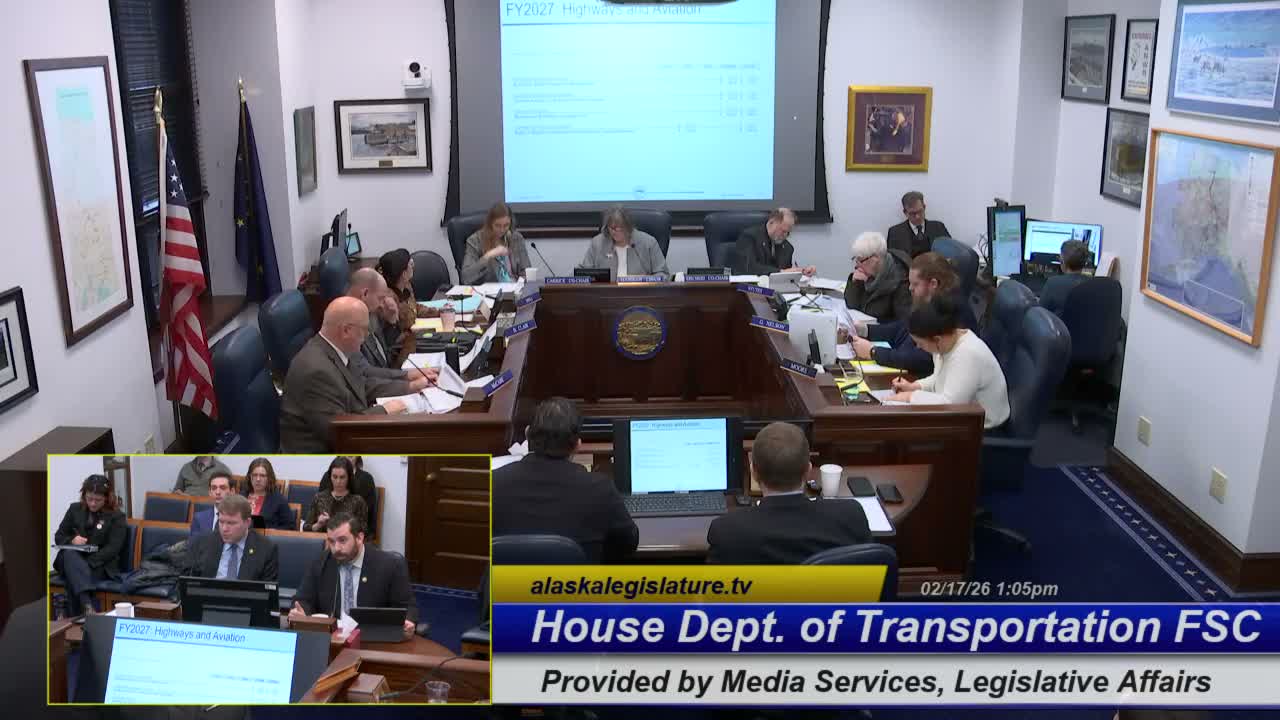
During the Feb. 17 subcommittee hearing, Representative McCabe questioned why DOT would absorb law-enforcement costs for seasonal airports such as Gustavus and Kodiak rather than pass them to airlines or rely on local agencies.
Commissioner Ryan Anderson said TSA requirements can trigger immediate law-enforcement needs when an incident (for example, a detected firearm) occurs at a small airport with no regular on-site law-enforcement presence: "If they do find a firearm, they're not able to secure. They just stop everything. And they have to wait for law enforcement to come and secure that and take care of that situation." Anderson said DOT had relied on a National Park Service agreement in some locations in the past, but "several years ago, they said that their legal advice was that they wouldn't do that anymore," so DOT sometimes hires retired troopers or flies in airport police to meet the response-time standard and keep air service operating.
Pinon listed a line in the DOT request to increase rural aviation airport leasing receipt funds to cover Gustavus law enforcement under FAA/TSA part 139 requirements and described other smaller requests such as Kotzebue Airport power-line replacement and $160,000 for addressing abandoned buildings on leased lots.
Representative McCabe and other members asked whether airlines already pay landing fees and whether local municipalities could provide off-duty officers; DOT confirmed airlines participate (for example, by accommodating transport) but said local agencies are often unable to meet TSA response-time requirements in remote locations.
There was no vote or policy decision at the hearing; committee members asked DOT to continue discussing partnership options and to provide further details in follow-up materials.
Commissioner Ryan Anderson said TSA requirements can trigger immediate law-enforcement needs when an incident (for example, a detected firearm) occurs at a small airport with no regular on-site law-enforcement presence: "If they do find a firearm, they're not able to secure. They just stop everything. And they have to wait for law enforcement to come and secure that and take care of that situation." Anderson said DOT had relied on a National Park Service agreement in some locations in the past, but "several years ago, they said that their legal advice was that they wouldn't do that anymore," so DOT sometimes hires retired troopers or flies in airport police to meet the response-time standard and keep air service operating.
Pinon listed a line in the DOT request to increase rural aviation airport leasing receipt funds to cover Gustavus law enforcement under FAA/TSA part 139 requirements and described other smaller requests such as Kotzebue Airport power-line replacement and $160,000 for addressing abandoned buildings on leased lots.
Representative McCabe and other members asked whether airlines already pay landing fees and whether local municipalities could provide off-duty officers; DOT confirmed airlines participate (for example, by accommodating transport) but said local agencies are often unable to meet TSA response-time requirements in remote locations.
There was no vote or policy decision at the hearing; committee members asked DOT to continue discussing partnership options and to provide further details in follow-up materials.
Don't Miss a Word: See the Full Meeting!
Go beyond summaries. Unlock every video, transcript, and key insight with a Founder Membership.
✓
Get instant access to full meeting videos
✓
Search and clip any phrase from complete transcripts
✓
Receive AI-powered summaries & custom alerts
✓
Enjoy lifetime, unrestricted access to government data
30-day money-back guarantee
