Alaska Children’s Justice Act task force urges tighter ‘reasonable force,’ broader mandatory reporting and new grooming law
February 18, 2026 | 2026 Legislature Alaska, Alaska
This article was created by AI summarizing key points discussed. AI makes mistakes, so for full details and context, please refer to the video of the full meeting. Please report any errors so we can fix them. Report an error »
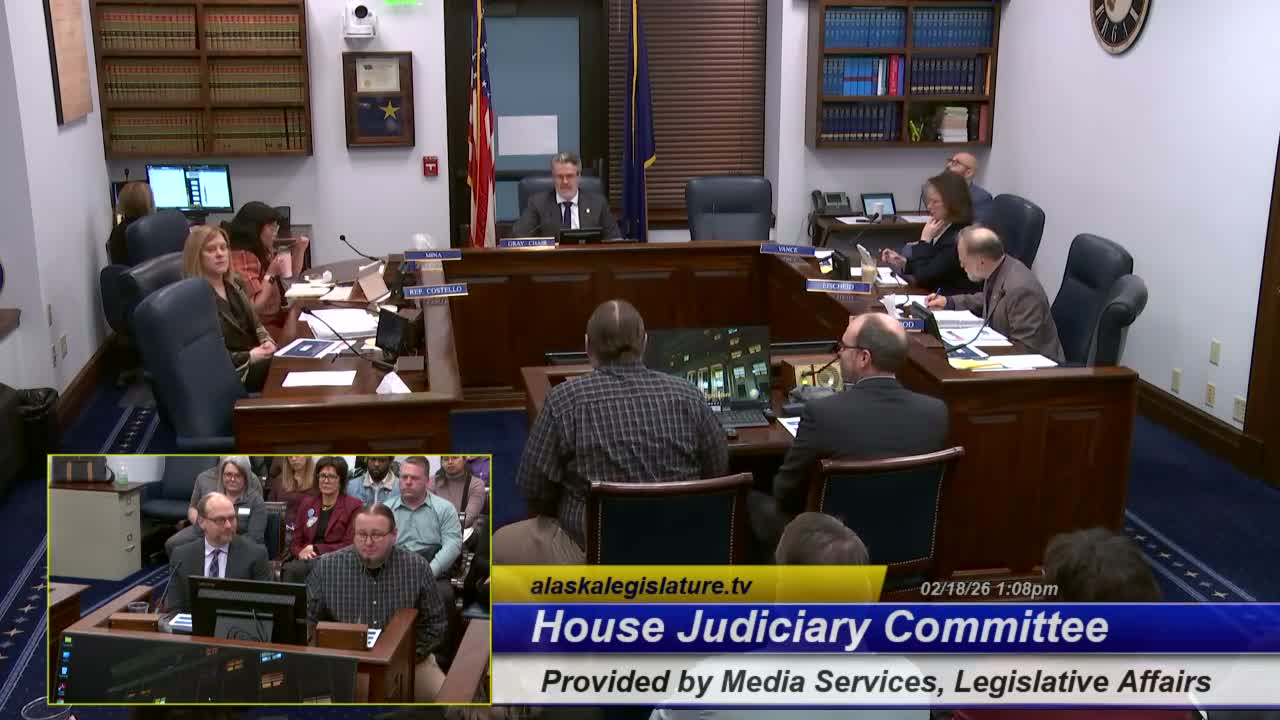
Chair Gray convened an informational hearing on Feb. 18 where the Alaska Children’s Justice Act Task Force outlined several proposed statutory changes aimed at strengthening protections for children.
The task force’s chair, Josh Lowers, described the group as a federally mandated, multidisciplinary body that advises on legislative changes. He said the task force is working with Sen. Tobin’s office on proposals that the task force hopes the Legislature will consider.
Dr. Sean Dugan, medical director of Alaska Cares, presented clinical cases and argued the current statutory definition of "reasonable force"—which allows force described as "reasonably necessary and appropriately non-deadly"—is too permissive. Dugan said the task force’s proposed language would explicitly identify force that "is likely to cause and which does cause bodily harm greater than transient pain," and cited bruising and burns as examples. "You should not hit a baby as a form of discipline," Dugan said during the presentation.
From a law-enforcement perspective, Todd Kearns, vice chair of the task force, said the broad statutory standard often keeps serious injuries at misdemeanor rather than felony levels, which can hinder prosecutions. Kearns said tightening the statutory language would help prosecutors pursue more substantial charges where warranted.
Kearns also recommended expanding mandatory reporter categories to include a wider set of education and direct-contact personnel and certain vendors who have regular contact with children. He argued earlier notification to law enforcement in suspected physical-abuse cases helps preserve evidence and victim statements.
The task force proposed two other changes: revising harassment language that currently references a gendered body part qualifier (to better protect boys) and creating a grooming statute that would criminalize patterns of behavior—such as isolating a child, secret communications and gift-giving—that build probable cause before overt abuse occurs.
Presenters emphasized the role of Child Advocacy Centers (CACs) in reducing trauma and consolidating forensic interviews, medical exams and advocacy. Kearns and Dugan described multidisciplinary CAC teams and a case example in which coordinated services preserved evidence, reduced repeated interviews and supported a prosecution outcome.
Committee members asked clarifying legal questions; presenters said assault laws still apply but that the "reasonable force" language lowers prosecutorial thresholds in many cases. There were no formal votes; presenters invited lawmakers to consult the task force on bill drafting.
The committee will hear additional related testimony in future hearings; presenters thanked the Legislature for recent CAC funding that, they said, kept centers open statewide.
The task force’s chair, Josh Lowers, described the group as a federally mandated, multidisciplinary body that advises on legislative changes. He said the task force is working with Sen. Tobin’s office on proposals that the task force hopes the Legislature will consider.
Dr. Sean Dugan, medical director of Alaska Cares, presented clinical cases and argued the current statutory definition of "reasonable force"—which allows force described as "reasonably necessary and appropriately non-deadly"—is too permissive. Dugan said the task force’s proposed language would explicitly identify force that "is likely to cause and which does cause bodily harm greater than transient pain," and cited bruising and burns as examples. "You should not hit a baby as a form of discipline," Dugan said during the presentation.
From a law-enforcement perspective, Todd Kearns, vice chair of the task force, said the broad statutory standard often keeps serious injuries at misdemeanor rather than felony levels, which can hinder prosecutions. Kearns said tightening the statutory language would help prosecutors pursue more substantial charges where warranted.
Kearns also recommended expanding mandatory reporter categories to include a wider set of education and direct-contact personnel and certain vendors who have regular contact with children. He argued earlier notification to law enforcement in suspected physical-abuse cases helps preserve evidence and victim statements.
The task force proposed two other changes: revising harassment language that currently references a gendered body part qualifier (to better protect boys) and creating a grooming statute that would criminalize patterns of behavior—such as isolating a child, secret communications and gift-giving—that build probable cause before overt abuse occurs.
Presenters emphasized the role of Child Advocacy Centers (CACs) in reducing trauma and consolidating forensic interviews, medical exams and advocacy. Kearns and Dugan described multidisciplinary CAC teams and a case example in which coordinated services preserved evidence, reduced repeated interviews and supported a prosecution outcome.
Committee members asked clarifying legal questions; presenters said assault laws still apply but that the "reasonable force" language lowers prosecutorial thresholds in many cases. There were no formal votes; presenters invited lawmakers to consult the task force on bill drafting.
The committee will hear additional related testimony in future hearings; presenters thanked the Legislature for recent CAC funding that, they said, kept centers open statewide.
Don't Miss a Word: See the Full Meeting!
Go beyond summaries. Unlock every video, transcript, and key insight with a Founder Membership.
✓
Get instant access to full meeting videos
✓
Search and clip any phrase from complete transcripts
✓
Receive AI-powered summaries & custom alerts
✓
Enjoy lifetime, unrestricted access to government data
30-day money-back guarantee
