Motion Picture Association backs Alaska bill’s shift to customer-based ‘market sourcing,’ proposes amendment
February 18, 2026 | 2026 Legislature Alaska, Alaska
This article was created by AI summarizing key points discussed. AI makes mistakes, so for full details and context, please refer to the video of the full meeting. Please report any errors so we can fix them. Report an error »
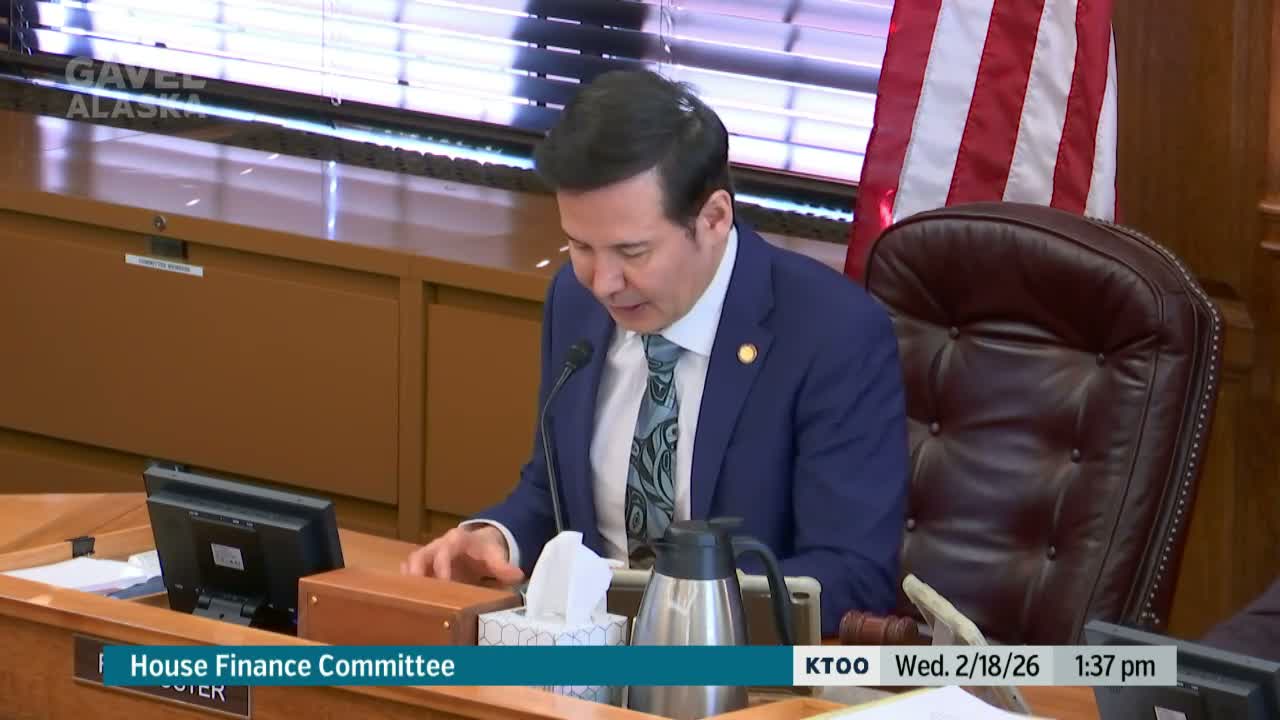
The Alaska House Finance Committee on Feb. 18 heard public testimony on House Bill 280, the "highly digitized business" bill, including a proposed amendment from the Motion Picture Association to base apportionment on customer location rather than cost‑of‑performance.
Melissa Ptak, vice president for state government affairs, Western Region, Motion Picture Association, told the committee the MPA supports HB 280’s move to market‑based sourcing and has provided amendment language in a memo. "Our proposed amendment language is in the memo," she said, and noted the association would place the language on "page 9 line 28." Ptak said the amendment would attribute income to Alaska when the customer is in the state and that the change would bring Alaska into alignment with more than 30 states that use market sourcing principles for digital businesses and media.
Brian O'Leary, outside tax counsel for the Motion Picture Association, told lawmakers the proposal is a technical implementation of market sourcing for media and entertainment. "There are 14 states... that have transitioned to market based sourcing," O'Leary said, explaining that revenue from direct‑to‑consumer subscriptions would be attributed 100% to the subscriber’s location, while wholesale licensing revenues are attributed to the buyer’s commercial domicile.
Lawmakers pressed witnesses on how advertising revenue and free‑to‑view broadcast ads would be treated. Representative Allard asked whether consumers would see higher streaming prices; Ptak replied, "This is not a pass through kind of tax. This is an income tax to the company." O'Leary said advertising tied to a wholesale sale would be attributed to the commercial domicile of the advertiser or distributor, while subscription revenue would be attributed to the subscriber’s state.
Representatives also raised administrative concerns about how the state would collect and audit revenue under the commercial‑domicile approach. The chair said staff would ask the Department of Revenue to review the MPA memo and provide an analysis of collection and administrative feasibility before the committee considers carrying the amendment.
Rachel Posey of Anchorage called in to voice support, saying, "I think this is a common sense amendment that will bring Alaska tax codes into alignment with most of the rest of the country and we are in desperate need of revenue especially for things like public education." The committee closed public testimony on HB 280 and will consider the Department of Revenue’s analysis in a future meeting.
The committee did not take any formal votes on HB 280 during this session. Staff will follow up with the Department of Revenue for a technical assessment of the proposed amendment.
Melissa Ptak, vice president for state government affairs, Western Region, Motion Picture Association, told the committee the MPA supports HB 280’s move to market‑based sourcing and has provided amendment language in a memo. "Our proposed amendment language is in the memo," she said, and noted the association would place the language on "page 9 line 28." Ptak said the amendment would attribute income to Alaska when the customer is in the state and that the change would bring Alaska into alignment with more than 30 states that use market sourcing principles for digital businesses and media.
Brian O'Leary, outside tax counsel for the Motion Picture Association, told lawmakers the proposal is a technical implementation of market sourcing for media and entertainment. "There are 14 states... that have transitioned to market based sourcing," O'Leary said, explaining that revenue from direct‑to‑consumer subscriptions would be attributed 100% to the subscriber’s location, while wholesale licensing revenues are attributed to the buyer’s commercial domicile.
Lawmakers pressed witnesses on how advertising revenue and free‑to‑view broadcast ads would be treated. Representative Allard asked whether consumers would see higher streaming prices; Ptak replied, "This is not a pass through kind of tax. This is an income tax to the company." O'Leary said advertising tied to a wholesale sale would be attributed to the commercial domicile of the advertiser or distributor, while subscription revenue would be attributed to the subscriber’s state.
Representatives also raised administrative concerns about how the state would collect and audit revenue under the commercial‑domicile approach. The chair said staff would ask the Department of Revenue to review the MPA memo and provide an analysis of collection and administrative feasibility before the committee considers carrying the amendment.
Rachel Posey of Anchorage called in to voice support, saying, "I think this is a common sense amendment that will bring Alaska tax codes into alignment with most of the rest of the country and we are in desperate need of revenue especially for things like public education." The committee closed public testimony on HB 280 and will consider the Department of Revenue’s analysis in a future meeting.
The committee did not take any formal votes on HB 280 during this session. Staff will follow up with the Department of Revenue for a technical assessment of the proposed amendment.
Don't Miss a Word: See the Full Meeting!
Go beyond summaries. Unlock every video, transcript, and key insight with a Founder Membership.
✓
Get instant access to full meeting videos
✓
Search and clip any phrase from complete transcripts
✓
Receive AI-powered summaries & custom alerts
✓
Enjoy lifetime, unrestricted access to government data
30-day money-back guarantee
