Cleveland council presses law department for contract timelines as small grants sit undone
February 19, 2026 | Cleveland, Cuyahoga County, Ohio
This article was created by AI summarizing key points discussed. AI makes mistakes, so for full details and context, please refer to the video of the full meeting. Please report any errors so we can fix them. Report an error »
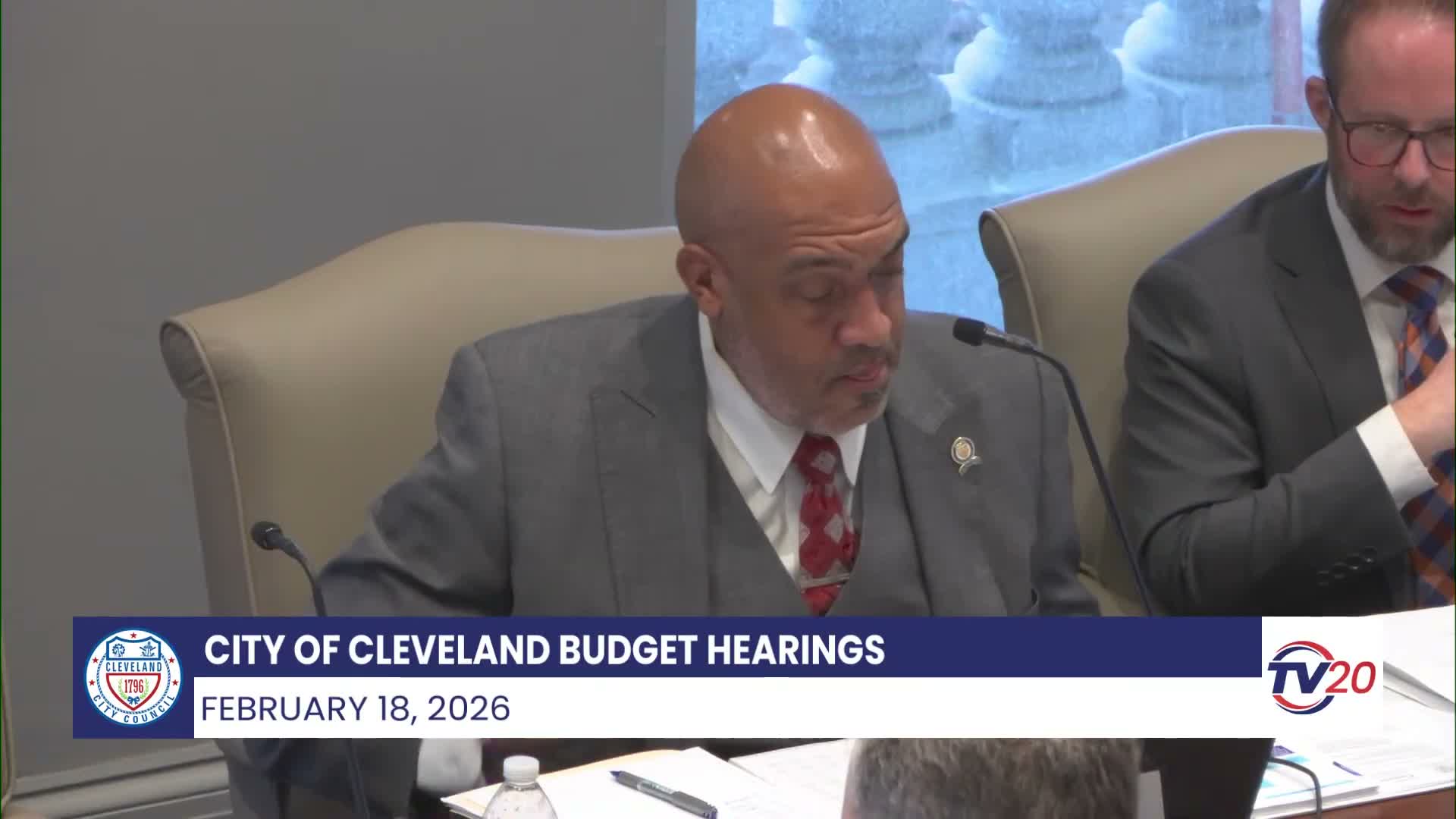
Law Director Mark Griffin faced repeated, sometimes heated questions from Cleveland City Council members on Feb. 26 about why routine contracts take months or years to finish and who is responsible for delays.
Griffin told the Committee on Finance, Diversity, Equity and Inclusion that his office drafted about 756 contracts, reviewed roughly 1,058 documents for legal form and processed 438 legislative requests in 2025. "Our average turnaround time from submittal to final execution is 45 days," he said. He also credited the adoption of DocuSign and new case-management tools — Matrix on the litigation side and iManage for document search — for recent improvements.
Council members disputed that progress is sufficient. "This is absolutely absurd," Councilwoman House Jones said, urging a public, step-by-step process that lists who is responsible at each stage and standard timelines for each contract type. Several members cited routine awards under $15,000 that have been held up for years.
The council sought a granular breakdown of the 176 council-related contracts Griffin said were executed in 2025 (casino, capital repair and NEF funds), and asked the law department to categorize last year’s contracts and propose a standard flowchart for typical contract classes within 30 days. Griffin agreed to provide contract categories and said he would circulate direct phone numbers for section chiefs.
Council members also pressed for clarity about where contracts stall: council staff, the originating division, finance certification, or law review. Griffin pushed back on blanket claims that items were "stuck in law," saying delays sometimes stem from incomplete submissions or federal grant requirements such as proof of insurance and income verification. "If something's required by federal regulation, it can slow us down," he said.
The committee singled out one high-profile delay: a $1 million council allocation to United Way passed Jan. 27, 2025. Finance staff and Griffin said the contract had been returned to the division to correct its funding source and that they expected certification and execution "by the middle of next week." Council members asked for a definitive chain of custody — who will shepherd each contract from intake to disbursement — to avoid repeated finger-pointing.
Next steps: the law department agreed to provide the requested contract categories, an internal contact list and a written summary of policies and systems used to move contracts within 30 days.
Griffin told the Committee on Finance, Diversity, Equity and Inclusion that his office drafted about 756 contracts, reviewed roughly 1,058 documents for legal form and processed 438 legislative requests in 2025. "Our average turnaround time from submittal to final execution is 45 days," he said. He also credited the adoption of DocuSign and new case-management tools — Matrix on the litigation side and iManage for document search — for recent improvements.
Council members disputed that progress is sufficient. "This is absolutely absurd," Councilwoman House Jones said, urging a public, step-by-step process that lists who is responsible at each stage and standard timelines for each contract type. Several members cited routine awards under $15,000 that have been held up for years.
The council sought a granular breakdown of the 176 council-related contracts Griffin said were executed in 2025 (casino, capital repair and NEF funds), and asked the law department to categorize last year’s contracts and propose a standard flowchart for typical contract classes within 30 days. Griffin agreed to provide contract categories and said he would circulate direct phone numbers for section chiefs.
Council members also pressed for clarity about where contracts stall: council staff, the originating division, finance certification, or law review. Griffin pushed back on blanket claims that items were "stuck in law," saying delays sometimes stem from incomplete submissions or federal grant requirements such as proof of insurance and income verification. "If something's required by federal regulation, it can slow us down," he said.
The committee singled out one high-profile delay: a $1 million council allocation to United Way passed Jan. 27, 2025. Finance staff and Griffin said the contract had been returned to the division to correct its funding source and that they expected certification and execution "by the middle of next week." Council members asked for a definitive chain of custody — who will shepherd each contract from intake to disbursement — to avoid repeated finger-pointing.
Next steps: the law department agreed to provide the requested contract categories, an internal contact list and a written summary of policies and systems used to move contracts within 30 days.
Don't Miss a Word: See the Full Meeting!
Go beyond summaries. Unlock every video, transcript, and key insight with a Founder Membership.
✓
Get instant access to full meeting videos
✓
Search and clip any phrase from complete transcripts
✓
Receive AI-powered summaries & custom alerts
✓
Enjoy lifetime, unrestricted access to government data
30-day money-back guarantee
