Cleveland officials say 432 housing-court prosecutions last year as council seeks receivership funding
February 19, 2026 | Cleveland, Cuyahoga County, Ohio
This article was created by AI summarizing key points discussed. AI makes mistakes, so for full details and context, please refer to the video of the full meeting. Please report any errors so we can fix them. Report an error »
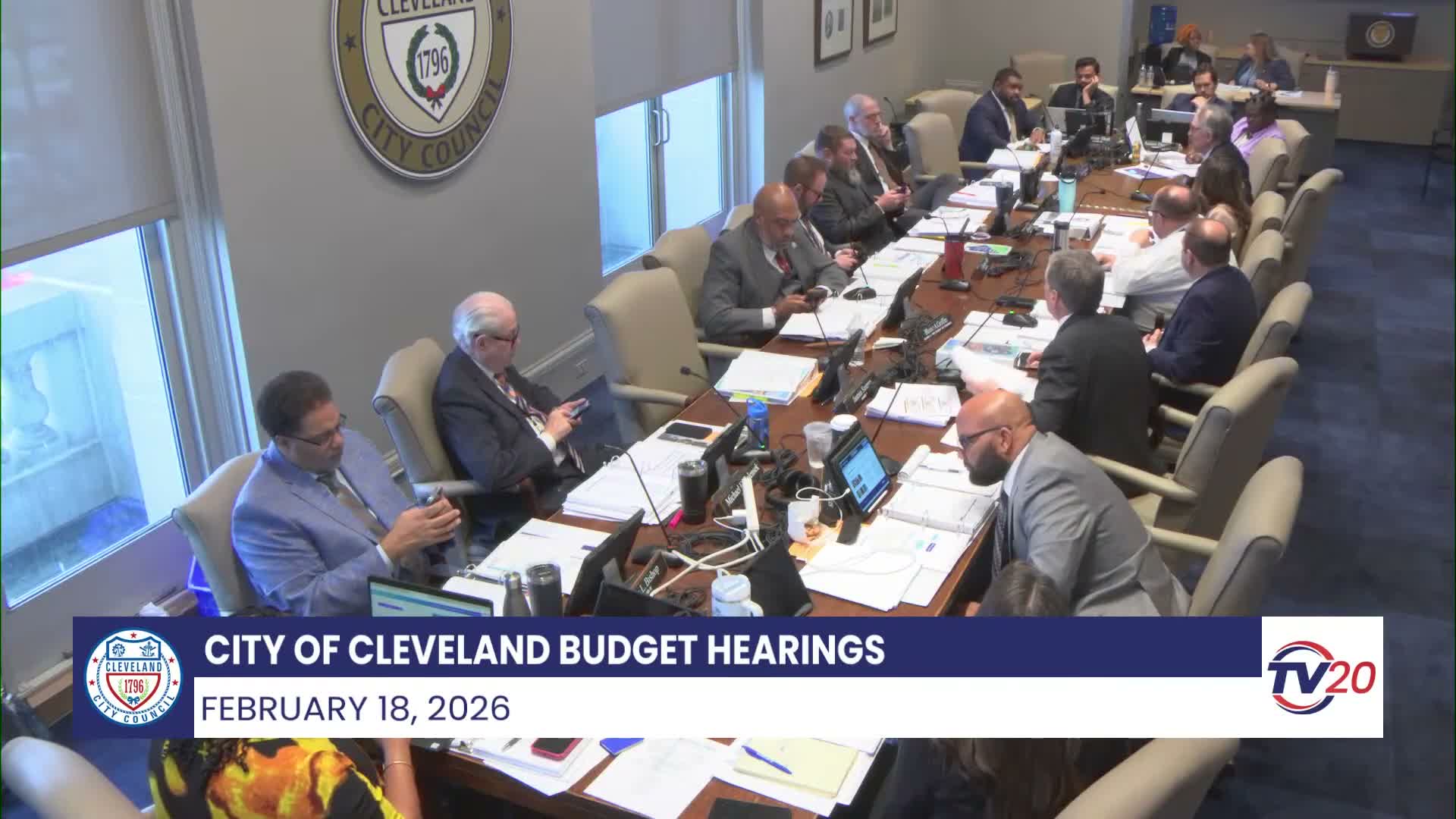
City officials told council on Feb. 26 that housing and code enforcement remain a central challenge and that the law department is using a mix of civil tickets, violation notices and criminal prosecutions to pursue noncompliant owners.
Dave Roberts, chief of code enforcement, said the department handled 432 criminal complaints in housing court in 2025 relating to failure to comply with building and housing orders. "That's our bread and butter," he said, describing the first-degree misdemeanors that most frequently reach housing court. He added that while the department issues many civil infractions ("like parking tickets"), criminal prosecution is used when conditions or repeated noncompliance justify escalation.
Law Director Mark Griffin said seven prosecutors are assigned to housing and code enforcement and defended the department’s emphasis on pursuing investor-owned absentee landlords rather than penalizing low-income residents. "We don't want to criminalize poverty," he said, adding that the office pursues receivership and other remedies against large, out-of-state owners when appropriate.
Council members pushed for clearer data and policy triggers: council requested a multi-year breakdown of violations, the percentage of civil tickets that escalated to criminal cases, and a list of landlords with repeated violations. Several members urged establishing or funding a receivership program so the city could fund repairs up-front and recover costs via liens. "We need an aggressive law department with regard to absentee landlords," one council member said.
Officials noted practical limits: receivership requires upfront financing and carries risk in neighborhoods where property values are low and cost recovery is uncertain. Roberts and Griffin said the department has used receivership in a handful of high-profile cases and has obtained substantial penalties in some matters, but that scaling the tool requires funding or pilot programs.
Next steps: committee staff will work with law and building and housing to provide requested data across 2022–2025, explore a receivership pilot fund, and return with policy options and cost estimates.
Dave Roberts, chief of code enforcement, said the department handled 432 criminal complaints in housing court in 2025 relating to failure to comply with building and housing orders. "That's our bread and butter," he said, describing the first-degree misdemeanors that most frequently reach housing court. He added that while the department issues many civil infractions ("like parking tickets"), criminal prosecution is used when conditions or repeated noncompliance justify escalation.
Law Director Mark Griffin said seven prosecutors are assigned to housing and code enforcement and defended the department’s emphasis on pursuing investor-owned absentee landlords rather than penalizing low-income residents. "We don't want to criminalize poverty," he said, adding that the office pursues receivership and other remedies against large, out-of-state owners when appropriate.
Council members pushed for clearer data and policy triggers: council requested a multi-year breakdown of violations, the percentage of civil tickets that escalated to criminal cases, and a list of landlords with repeated violations. Several members urged establishing or funding a receivership program so the city could fund repairs up-front and recover costs via liens. "We need an aggressive law department with regard to absentee landlords," one council member said.
Officials noted practical limits: receivership requires upfront financing and carries risk in neighborhoods where property values are low and cost recovery is uncertain. Roberts and Griffin said the department has used receivership in a handful of high-profile cases and has obtained substantial penalties in some matters, but that scaling the tool requires funding or pilot programs.
Next steps: committee staff will work with law and building and housing to provide requested data across 2022–2025, explore a receivership pilot fund, and return with policy options and cost estimates.
View the Full Meeting & All Its Details
This article offers just a summary. Unlock complete video, transcripts, and insights as a Founder Member.
✓
Watch full, unedited meeting videos
✓
Search every word spoken in unlimited transcripts
✓
AI summaries & real-time alerts (all government levels)
✓
Permanent access to expanding government content
30-day money-back guarantee
