County staff pitch tourism zone to attract hotels and restaurants; public hearing, planning commission review next
February 18, 2026 | Halifax County, Virginia
This article was created by AI summarizing key points discussed. AI makes mistakes, so for full details and context, please refer to the video of the full meeting. Please report any errors so we can fix them. Report an error »
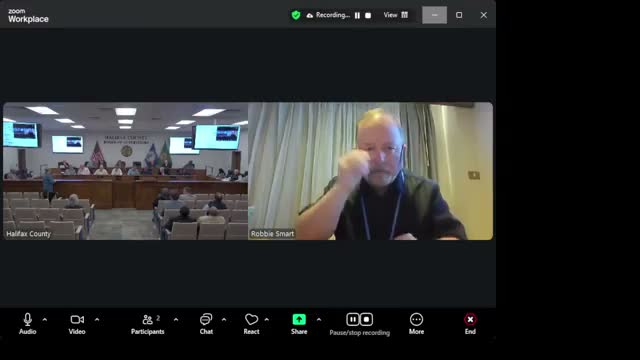
County staff presented a proposal to create a tourism zone in Halifax County at the Feb. 17 joint meeting, saying the zoning tool would be used to attract hotels, sit-down restaurants, outfitters and other tourism-based businesses.
A presenter explained that tourism zones were created by the General Assembly in 2006 and that, since then, dozens of jurisdictions have adopted similar designations. "The tourism zones were created by the general assembly in 2006," the presenter said, adding the county would use the tool to incentivize development the market is not otherwise supporting.
Under the proposal described to commissioners, existing tourism businesses that invest $250,000 or more would qualify for incentives and new businesses would qualify at $500,000. The presenter said qualifying projects would need to create five full-time positions paid at prevailing wages. Incentives discussed mirror enterprise-zone benefits, including sliding-scale BPOL (business license) tax rebates, rebates on furniture, fixtures and equipment, and a phased return on investment (100%, 80%, 60%, 40%, 20%).
Staff also described how the tourism zone could unlock state gap-financing for hotel development. "Part of this is the state will pay one third of that gap financing," the presenter said, and the locality would use 1% of sales tax revenue from the zone to help pay part of the gap financing while the company would provide the remaining portion.
Commissioners asked whether the county would fund the full-time positions (staff said those positions must be created by the business, not the county), whether the proposal requires a zoning map change (staff described it as an overlay incentive rather than a rezoning), and what the approval path would be. Staff said language has been drafted, and the process will include a public hearing, a planning commission vote and then action by the board of supervisors.
No final vote was taken on the tourism zone at this meeting; staff said they will return with drafted ordinance language and a public hearing for community input.
A presenter explained that tourism zones were created by the General Assembly in 2006 and that, since then, dozens of jurisdictions have adopted similar designations. "The tourism zones were created by the general assembly in 2006," the presenter said, adding the county would use the tool to incentivize development the market is not otherwise supporting.
Under the proposal described to commissioners, existing tourism businesses that invest $250,000 or more would qualify for incentives and new businesses would qualify at $500,000. The presenter said qualifying projects would need to create five full-time positions paid at prevailing wages. Incentives discussed mirror enterprise-zone benefits, including sliding-scale BPOL (business license) tax rebates, rebates on furniture, fixtures and equipment, and a phased return on investment (100%, 80%, 60%, 40%, 20%).
Staff also described how the tourism zone could unlock state gap-financing for hotel development. "Part of this is the state will pay one third of that gap financing," the presenter said, and the locality would use 1% of sales tax revenue from the zone to help pay part of the gap financing while the company would provide the remaining portion.
Commissioners asked whether the county would fund the full-time positions (staff said those positions must be created by the business, not the county), whether the proposal requires a zoning map change (staff described it as an overlay incentive rather than a rezoning), and what the approval path would be. Staff said language has been drafted, and the process will include a public hearing, a planning commission vote and then action by the board of supervisors.
No final vote was taken on the tourism zone at this meeting; staff said they will return with drafted ordinance language and a public hearing for community input.
Don't Miss a Word: See the Full Meeting!
Go beyond summaries. Unlock every video, transcript, and key insight with a Founder Membership.
✓
Get instant access to full meeting videos
✓
Search and clip any phrase from complete transcripts
✓
Receive AI-powered summaries & custom alerts
✓
Enjoy lifetime, unrestricted access to government data
30-day money-back guarantee
