Special magistrate finds piles at 1470 A Road violate Loxahatchee Groves floodplain rules; compliance ordered by May 18
February 18, 2026 | Town of Loxahatchee Groves, Palm Beach County, Florida
This article was created by AI summarizing key points discussed. AI makes mistakes, so for full details and context, please refer to the video of the full meeting. Please report any errors so we can fix them. Report an error »
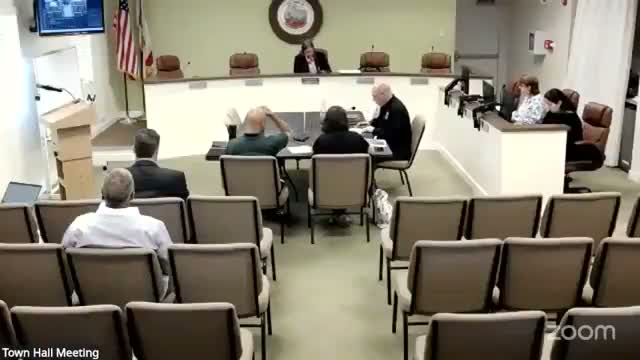
A special magistrate has found that the piles of organic material stored at 1470 A Road in the Town of Loxahatchee Groves violated the town's floodplain development rules and ordered the respondents to obtain the required permits or remove the material by 2026-05-18.
Special Magistrate Andy Barnard said the town had presented photographs (dated 12/19/2025 and 02/17/2026) and videos showing substantial accumulations of wood shavings, straw and manure on the Garcia property. The magistrate concluded those piles constituted "temporary or permanent storage of materials" and therefore fit the town code's definition of development in a special flood hazard area (FEMA Zone AE). He ordered compliance with the listed code sections by 05/18/2026 or an appearance at a fine-assessment hearing on 05/20/2026. Administrative costs of $409.66 were assessed; fines up to $250 per day may be imposed at the later hearing if the violation continues.
Why it matters: Town officers testified that piles and windrows at the site exceeded sizes described in the respondents' own soil-regeneration report and that some materials lie within federally mapped floodplain areas. The town argued those facts raise the risk of increased flood damage or leachate reaching neighbors and public rights-of-way unless the operation obtains the required floodplain development permit and demonstrates appropriate runoff and leachate controls.
What the record shows: Code enforcement officers John Suarez and Deanna Thomas said they documented mounds of material across the property, with photographs showing piles they estimated at roughly 10–20 feet in places. The town offered seven short videos taken on 02/17/2026; the magistrate admitted the videos into evidence over defense objections. Suarez and Thomas testified they observed material within approximately 200 feet of a neighboring lake and that potable wells may be within 500 feet of occupied areas — an issue raised by the Department of Health during its review.
Respondents' position: Operator Paulo Santana and counsel Preston J. Fields told the magistrate the property is being used as a source-separated organic processing site (a blending/soil-regeneration operation). Santana testified the incoming loads are mostly wood shavings and straw and that actual manure content is, in his estimate, about 5–12% of a load. He said the business had submitted registration/status reports to state agencies, that the Florida Department of Health conducted a walk-through on 09/11/2025 with no immediate objection, and that subsequent reviews raised pile-height and setback issues the company is addressing. Santana said the company has been removing material and has spent substantial sums on trucking and removal, testifying, "we have spent, like, dollars 89,000 in trucks, moving." Counsel Fields argued the activity is an agricultural/farm product processing use and raised statutory preemption claims under Florida law; he also said similar storage/placement on other properties has not been cited and urged consistent enforcement.
Town's position: Town attorney Jeff Kurtz said the property is at least partially within FEMA Zone AE (a special flood hazard area) and that the town's Article 1.75 governs filling, grading and storage of materials in flood hazard areas. Kurtz argued the observed storage and topographic disturbance fall squarely within the town's definition of development and therefore require local floodplain development approval; he urged removal or permitting and recovery of the town's administrative costs.
Magistrate's findings and next steps: Magistrate Barnard found the photographs, videos and testimony sufficient to establish that the placement and storage of material altered the property in a way that triggers the town's floodplain/fill regulations. His written order (to be issued post-hearing) will require compliance with the enumerated code sections and assesses $409.66 in administrative costs payable within 30 days of the order. If respondents do not secure the required permit(s) or remove the material by 2026-05-18, the magistrate set a fine-assessment hearing for 2026-05-20; fines up to $250 per day may be imposed for each day the violation continues after that hearing.
The hearing record shows ongoing interactions with state regulators: DOH inspections and DEP review of a registration application remain unresolved in the administrative record submitted here. The magistrate noted respondents may present progress or state-agency actions at the fine-assessment hearing in May before fines would be imposed.
Special Magistrate Andy Barnard said the town had presented photographs (dated 12/19/2025 and 02/17/2026) and videos showing substantial accumulations of wood shavings, straw and manure on the Garcia property. The magistrate concluded those piles constituted "temporary or permanent storage of materials" and therefore fit the town code's definition of development in a special flood hazard area (FEMA Zone AE). He ordered compliance with the listed code sections by 05/18/2026 or an appearance at a fine-assessment hearing on 05/20/2026. Administrative costs of $409.66 were assessed; fines up to $250 per day may be imposed at the later hearing if the violation continues.
Why it matters: Town officers testified that piles and windrows at the site exceeded sizes described in the respondents' own soil-regeneration report and that some materials lie within federally mapped floodplain areas. The town argued those facts raise the risk of increased flood damage or leachate reaching neighbors and public rights-of-way unless the operation obtains the required floodplain development permit and demonstrates appropriate runoff and leachate controls.
What the record shows: Code enforcement officers John Suarez and Deanna Thomas said they documented mounds of material across the property, with photographs showing piles they estimated at roughly 10–20 feet in places. The town offered seven short videos taken on 02/17/2026; the magistrate admitted the videos into evidence over defense objections. Suarez and Thomas testified they observed material within approximately 200 feet of a neighboring lake and that potable wells may be within 500 feet of occupied areas — an issue raised by the Department of Health during its review.
Respondents' position: Operator Paulo Santana and counsel Preston J. Fields told the magistrate the property is being used as a source-separated organic processing site (a blending/soil-regeneration operation). Santana testified the incoming loads are mostly wood shavings and straw and that actual manure content is, in his estimate, about 5–12% of a load. He said the business had submitted registration/status reports to state agencies, that the Florida Department of Health conducted a walk-through on 09/11/2025 with no immediate objection, and that subsequent reviews raised pile-height and setback issues the company is addressing. Santana said the company has been removing material and has spent substantial sums on trucking and removal, testifying, "we have spent, like, dollars 89,000 in trucks, moving." Counsel Fields argued the activity is an agricultural/farm product processing use and raised statutory preemption claims under Florida law; he also said similar storage/placement on other properties has not been cited and urged consistent enforcement.
Town's position: Town attorney Jeff Kurtz said the property is at least partially within FEMA Zone AE (a special flood hazard area) and that the town's Article 1.75 governs filling, grading and storage of materials in flood hazard areas. Kurtz argued the observed storage and topographic disturbance fall squarely within the town's definition of development and therefore require local floodplain development approval; he urged removal or permitting and recovery of the town's administrative costs.
Magistrate's findings and next steps: Magistrate Barnard found the photographs, videos and testimony sufficient to establish that the placement and storage of material altered the property in a way that triggers the town's floodplain/fill regulations. His written order (to be issued post-hearing) will require compliance with the enumerated code sections and assesses $409.66 in administrative costs payable within 30 days of the order. If respondents do not secure the required permit(s) or remove the material by 2026-05-18, the magistrate set a fine-assessment hearing for 2026-05-20; fines up to $250 per day may be imposed for each day the violation continues after that hearing.
The hearing record shows ongoing interactions with state regulators: DOH inspections and DEP review of a registration application remain unresolved in the administrative record submitted here. The magistrate noted respondents may present progress or state-agency actions at the fine-assessment hearing in May before fines would be imposed.
View the Full Meeting & All Its Details
This article offers just a summary. Unlock complete video, transcripts, and insights as a Founder Member.
✓
Watch full, unedited meeting videos
✓
Search every word spoken in unlimited transcripts
✓
AI summaries & real-time alerts (all government levels)
✓
Permanent access to expanding government content
30-day money-back guarantee
