Bay City commission pauses on three public-safety resolutions after hours of public comment and referrals for revision
February 18, 2026 | Bay City, Bay County, Michigan
This article was created by AI summarizing key points discussed. AI makes mistakes, so for full details and context, please refer to the video of the full meeting. Please report any errors so we can fix them. Report an error »
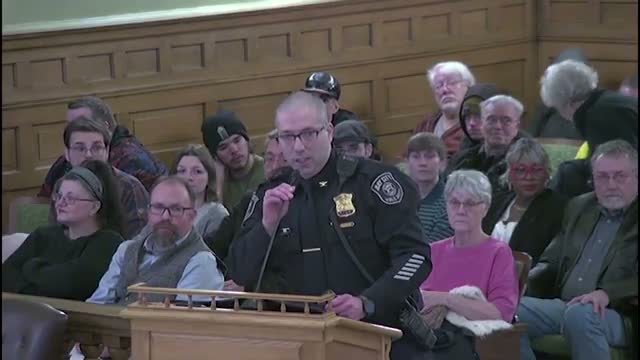
Bay City’s Feb. 16 commission meeting turned into an extended policy debate over three proposed public-safety resolutions addressing immigration detainer requests, face coverings by outside federal agents, and the use of local resources for federal immigration enforcement.
Director Raul, head of the Department of Public Safety, spent the first half of the evening walking commissioners through the department’s mission, accreditation, and community programs, including a quick-response overdose-followup team and the 'Hope Not Handcuffs' initiative. He repeatedly told the Commission that Bay City’s public-safety policies are comprehensive and that the department does not honor administrative immigration detainers. "We don't detain people on immigration detainers," the director said, adding the department focuses on enforcing laws the city is required to enforce and avoiding unnecessary liability.
Commissioners and the public then spent hours debating whether city resolutions should codify existing practices or create new rules that risk attracting state or federal funding scrutiny. Opponents, including Mayor Gerard and several commissioners, warned that passing formal local limits on cooperation with federal agencies could trigger retaliation and loss of grant or legislative support. Supporters—including many members of the public and Commissioner Runberg—argued that explicit local rules are needed to protect constitutional rights and public trust, especially because immigrant victims sometimes decline to report crimes when they fear immigration enforcement.
The public-comment period drew a large, sharply divided crowd. Speakers in favor of the resolutions recounted local and national cases they said demonstrate ICE overreach and urged the Commission to take a moral stand to protect residents. Other residents warned the resolutions would invite federal or state funding cuts and urged the Commission to focus on infrastructure and budget priorities. Several speakers cited national high-profile cases by name in the course of testimony; others urged the Commission to act for reasons of community safety and trust.
On procedural votes, the Commission moved and then referred each resolution for revision rather than adopting final language. Resolution 1—prohibiting honoring ICE administrative detainers without judicial warrants—was moved and then referred back to the sponsoring commissioner for rewording and alignment with department policies and collective-bargaining constraints. Resolution 2 (opposition to face coverings by outside federal officers and transparency/accountability language) and Resolution 3 (local priorities / limiting use of city resources for federal immigration enforcement) were likewise moved and then referred for further review; in two cases the sponsoring commissioner accepted the referral and signaled intentions to offer targeted amendments to align the language with departmental practice and union agreements.
City Manager staff distributed a legal opinion packet and said the city would circulate it to commissioners; Director Raul and union representatives asked to be engaged in any redrafting to ensure operational feasibility and compliance with collective-bargaining agreements. The Commission did not adopt any of the resolutions at the Feb. 16 meeting; staff and sponsoring commissioners will return with revised language.
What’s next: Each of the three resolutions will be revised in collaboration with the Department of Public Safety, the city attorney and collective-bargaining representatives, then returned to the Commission for another public meeting and vote.
Director Raul, head of the Department of Public Safety, spent the first half of the evening walking commissioners through the department’s mission, accreditation, and community programs, including a quick-response overdose-followup team and the 'Hope Not Handcuffs' initiative. He repeatedly told the Commission that Bay City’s public-safety policies are comprehensive and that the department does not honor administrative immigration detainers. "We don't detain people on immigration detainers," the director said, adding the department focuses on enforcing laws the city is required to enforce and avoiding unnecessary liability.
Commissioners and the public then spent hours debating whether city resolutions should codify existing practices or create new rules that risk attracting state or federal funding scrutiny. Opponents, including Mayor Gerard and several commissioners, warned that passing formal local limits on cooperation with federal agencies could trigger retaliation and loss of grant or legislative support. Supporters—including many members of the public and Commissioner Runberg—argued that explicit local rules are needed to protect constitutional rights and public trust, especially because immigrant victims sometimes decline to report crimes when they fear immigration enforcement.
The public-comment period drew a large, sharply divided crowd. Speakers in favor of the resolutions recounted local and national cases they said demonstrate ICE overreach and urged the Commission to take a moral stand to protect residents. Other residents warned the resolutions would invite federal or state funding cuts and urged the Commission to focus on infrastructure and budget priorities. Several speakers cited national high-profile cases by name in the course of testimony; others urged the Commission to act for reasons of community safety and trust.
On procedural votes, the Commission moved and then referred each resolution for revision rather than adopting final language. Resolution 1—prohibiting honoring ICE administrative detainers without judicial warrants—was moved and then referred back to the sponsoring commissioner for rewording and alignment with department policies and collective-bargaining constraints. Resolution 2 (opposition to face coverings by outside federal officers and transparency/accountability language) and Resolution 3 (local priorities / limiting use of city resources for federal immigration enforcement) were likewise moved and then referred for further review; in two cases the sponsoring commissioner accepted the referral and signaled intentions to offer targeted amendments to align the language with departmental practice and union agreements.
City Manager staff distributed a legal opinion packet and said the city would circulate it to commissioners; Director Raul and union representatives asked to be engaged in any redrafting to ensure operational feasibility and compliance with collective-bargaining agreements. The Commission did not adopt any of the resolutions at the Feb. 16 meeting; staff and sponsoring commissioners will return with revised language.
What’s next: Each of the three resolutions will be revised in collaboration with the Department of Public Safety, the city attorney and collective-bargaining representatives, then returned to the Commission for another public meeting and vote.
Don't Miss a Word: See the Full Meeting!
Go beyond summaries. Unlock every video, transcript, and key insight with a Founder Membership.
✓
Get instant access to full meeting videos
✓
Search and clip any phrase from complete transcripts
✓
Receive AI-powered summaries & custom alerts
✓
Enjoy lifetime, unrestricted access to government data
30-day money-back guarantee
