Commission Receives Palos Verdes Peninsula Hazard Mitigation Plan Update; Council to Consider Adoption Feb. 23
February 17, 2026 | Rolling Hills Estates, Los Angeles County, California
This article was created by AI summarizing key points discussed. AI makes mistakes, so for full details and context, please refer to the video of the full meeting. Please report any errors so we can fix them. Report an error »
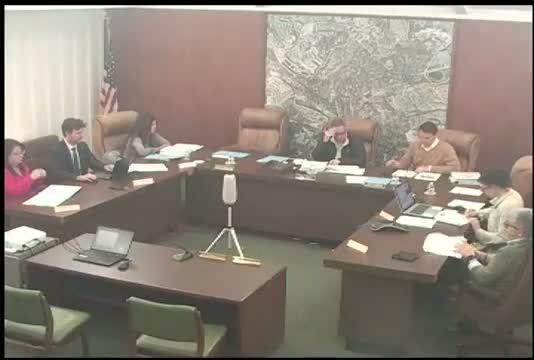
The Rolling Hills Estates Planning Commission on Feb. 17 received and filed the Palos Verdes Peninsula Multi‑Jurisdictional Hazard Mitigation Plan update and heard a detailed presentation from the plan consultant.
Samantha Crew, management analyst and emergency service coordinator for the city, told commissioners the city’s prior plan was adopted in 2019 and that federal guidance requires plans be updated every five years. She said the Peninsula jurisdictions initiated a joint planning effort in May 2025 to pool technical resources and that the City of Rolling Hills Estates served as lead agency; the plan was largely funded by a Cal OES hazard mitigation grant. "The plan was released last Thursday, February 12, and is scheduled to be presented to the city council for adoption by resolution at the next council meeting February 23," Crew said.
Megan Brotherton, lead hazard mitigation planner from Black & Veatch, summarized an eight‑phase planning process and the hazard risk assessment. Brotherton said the effort focused on natural hazards and mitigation actions and noted that the updated CAL FIRE maps "show that almost the entire city limits of Rolling Hills are in a very high fire severity zone," underlining wildfire mitigation actions among the priorities. She outlined sample actions such as ensuring backup power for critical facilities and land‑use review in landslide hazard areas, and explained grant incentives tied to integrating the plan into general plan safety elements and to federal/state match rules.
Brotherton explained FEMA typically provides 75% federal share with a 25% local match and that California programs (California Disaster Assistance Act and incentives for integrated plans) can substantially reduce the local share for public assistance projects. Commissioners asked whether hazard rankings changed since 2019 and staff replied the hazard rankings were largely unchanged but mitigation items were consolidated for clarity. Staff also reported one public comment asking whether an ARC storm scenario was used for flood modeling and answered that FEMA‑mapped flood hazard modeling was used instead.
The public comment period remains open through Feb. 25 and the plan will be presented to the City Council for potential adoption on Feb. 23. Commissioners voted by consensus to receive and file the plan so council can consider it with any input the commission provided.
Samantha Crew, management analyst and emergency service coordinator for the city, told commissioners the city’s prior plan was adopted in 2019 and that federal guidance requires plans be updated every five years. She said the Peninsula jurisdictions initiated a joint planning effort in May 2025 to pool technical resources and that the City of Rolling Hills Estates served as lead agency; the plan was largely funded by a Cal OES hazard mitigation grant. "The plan was released last Thursday, February 12, and is scheduled to be presented to the city council for adoption by resolution at the next council meeting February 23," Crew said.
Megan Brotherton, lead hazard mitigation planner from Black & Veatch, summarized an eight‑phase planning process and the hazard risk assessment. Brotherton said the effort focused on natural hazards and mitigation actions and noted that the updated CAL FIRE maps "show that almost the entire city limits of Rolling Hills are in a very high fire severity zone," underlining wildfire mitigation actions among the priorities. She outlined sample actions such as ensuring backup power for critical facilities and land‑use review in landslide hazard areas, and explained grant incentives tied to integrating the plan into general plan safety elements and to federal/state match rules.
Brotherton explained FEMA typically provides 75% federal share with a 25% local match and that California programs (California Disaster Assistance Act and incentives for integrated plans) can substantially reduce the local share for public assistance projects. Commissioners asked whether hazard rankings changed since 2019 and staff replied the hazard rankings were largely unchanged but mitigation items were consolidated for clarity. Staff also reported one public comment asking whether an ARC storm scenario was used for flood modeling and answered that FEMA‑mapped flood hazard modeling was used instead.
The public comment period remains open through Feb. 25 and the plan will be presented to the City Council for potential adoption on Feb. 23. Commissioners voted by consensus to receive and file the plan so council can consider it with any input the commission provided.
Don't Miss a Word: See the Full Meeting!
Go beyond summaries. Unlock every video, transcript, and key insight with a Founder Membership.
✓
Get instant access to full meeting videos
✓
Search and clip any phrase from complete transcripts
✓
Receive AI-powered summaries & custom alerts
✓
Enjoy lifetime, unrestricted access to government data
30-day money-back guarantee
