Haywood County holds public hearing on full-code recodification; staff seeks authorization to finalize printing and raises some civil penalties
February 17, 2026 | Haywood County, North Carolina
This article was created by AI summarizing key points discussed. AI makes mistakes, so for full details and context, please refer to the video of the full meeting. Please report any errors so we can fix them. Report an error »
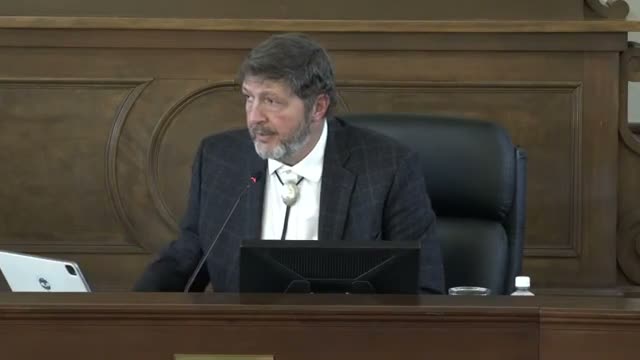
Haywood County commissioners on Feb. 16 received public comment and staff briefings on a proposed recodification of the county’s full code of ordinances, a project completed with external review and formatting by American Legal Publishing.
Clerk Amy Stevens said the draft redlines have been public since Jan. 21 and that American Legal’s work focuses mostly on formatting, consistent numbering and cross-references; the board is being asked to authorize publication and return the final, printed code for formal adoption. Stevens also said most content edits were completed internally by department heads and legal staff.
Garen Bradish, assistant county manager for recovery and resiliency, outlined several content changes the board will review: adding a household-hazardous-waste definition in Chapter 50 (solid waste); removing an outdated appendix in Chapter 99 (tobacco use restrictions); correcting a missed measurement in Chapter 115 (wireless telecommunications); deleting an obsolete section in Chapter 116 (adult entertainment establishments); and more substantial amendments in Chapter 150 (building regulations) that staff said would be returned for a formal adoption vote so those changes can take effect immediately upon publication.
Bradish emphasized enforcement-related edits that raise civil penalties in multiple chapters. He said off-premise sign civil penalties will increase from $50 per day to $500 per day, and the county is also proposing a $500-per-day penalty (with each continuing day treated as a separate offense) for certain public-health and solid-waste nuisance violations and for repeat construction without required permits. Bradish said the change is intended to prompt compliance with permitting and inspection requirements, while staff will continue to work with first-time or inadvertent violators.
County counsel explained the legal background: the state has raised the statutory per‑day maximum penalty (historically $50) to $500, and the county is updating its ordinances and enforcement tools under that statutory authority to address repeat and willful violators. Counsel cited recent inspection activity and an example of an unpermitted house that collapsed as context for strengthening enforcement.
During the public-hearing portion limited to ordinance comments, Nate Roberto urged the board to clarify courthouse‑courtyard rules after he said he was arrested last year for chalking; he said prosecutors and a judge found no applicable statute and the charge was dismissed, and he asked the county either to ban chalking explicitly or to protect it in the code to avoid inconsistent enforcement. Vicky Hyatt urged the county to revisit its high-impact development ordinance (Chapter 160) to add agriculture districts as a protected category, reconsider noise rules across industries, require public hearings for certain high-impact permits, and address nondisclosure agreements used by some developers. Several residents raised concerns about a proposed multi‑story senior-housing project, citing traffic, runoff and flooding risks.
Board members said the county will authorize American Legal to finalize and print the updated code and will return the final adopting ordinance for approval; Chapter 150 will be specifically presented for formal adoption when the printed draft returns. The chair asked staff to review the courtyard-chalking questions and to clarify jurisdictional limits when matters also fall under town planning.
Next steps: the board will consider the formal adopting ordinance after American Legal returns the printed and legal-reviewed code; Chapter 150 updates will be requested for formal adoption to take effect immediately upon that return.
Clerk Amy Stevens said the draft redlines have been public since Jan. 21 and that American Legal’s work focuses mostly on formatting, consistent numbering and cross-references; the board is being asked to authorize publication and return the final, printed code for formal adoption. Stevens also said most content edits were completed internally by department heads and legal staff.
Garen Bradish, assistant county manager for recovery and resiliency, outlined several content changes the board will review: adding a household-hazardous-waste definition in Chapter 50 (solid waste); removing an outdated appendix in Chapter 99 (tobacco use restrictions); correcting a missed measurement in Chapter 115 (wireless telecommunications); deleting an obsolete section in Chapter 116 (adult entertainment establishments); and more substantial amendments in Chapter 150 (building regulations) that staff said would be returned for a formal adoption vote so those changes can take effect immediately upon publication.
Bradish emphasized enforcement-related edits that raise civil penalties in multiple chapters. He said off-premise sign civil penalties will increase from $50 per day to $500 per day, and the county is also proposing a $500-per-day penalty (with each continuing day treated as a separate offense) for certain public-health and solid-waste nuisance violations and for repeat construction without required permits. Bradish said the change is intended to prompt compliance with permitting and inspection requirements, while staff will continue to work with first-time or inadvertent violators.
County counsel explained the legal background: the state has raised the statutory per‑day maximum penalty (historically $50) to $500, and the county is updating its ordinances and enforcement tools under that statutory authority to address repeat and willful violators. Counsel cited recent inspection activity and an example of an unpermitted house that collapsed as context for strengthening enforcement.
During the public-hearing portion limited to ordinance comments, Nate Roberto urged the board to clarify courthouse‑courtyard rules after he said he was arrested last year for chalking; he said prosecutors and a judge found no applicable statute and the charge was dismissed, and he asked the county either to ban chalking explicitly or to protect it in the code to avoid inconsistent enforcement. Vicky Hyatt urged the county to revisit its high-impact development ordinance (Chapter 160) to add agriculture districts as a protected category, reconsider noise rules across industries, require public hearings for certain high-impact permits, and address nondisclosure agreements used by some developers. Several residents raised concerns about a proposed multi‑story senior-housing project, citing traffic, runoff and flooding risks.
Board members said the county will authorize American Legal to finalize and print the updated code and will return the final adopting ordinance for approval; Chapter 150 will be specifically presented for formal adoption when the printed draft returns. The chair asked staff to review the courtyard-chalking questions and to clarify jurisdictional limits when matters also fall under town planning.
Next steps: the board will consider the formal adopting ordinance after American Legal returns the printed and legal-reviewed code; Chapter 150 updates will be requested for formal adoption to take effect immediately upon that return.
View the Full Meeting & All Its Details
This article offers just a summary. Unlock complete video, transcripts, and insights as a Founder Member.
✓
Watch full, unedited meeting videos
✓
Search every word spoken in unlimited transcripts
✓
AI summaries & real-time alerts (all government levels)
✓
Permanent access to expanding government content
30-day money-back guarantee
