Aurora staff present recommendations for CDBG, HOME, HOME-ARP, opioid and Quality of Life grants; some items moved to consent or unfinished
February 18, 2026 | Aurora, DuPage County, Illinois
This article was created by AI summarizing key points discussed. AI makes mistakes, so for full details and context, please refer to the video of the full meeting. Please report any errors so we can fix them. Report an error »
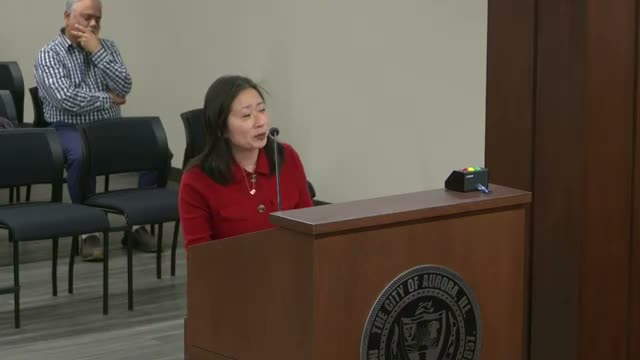
City redevelopment and community services staff reviewed the city's 2026 grant-cycle recommendations in detail Feb. 17, describing available funding sources, program caps and the evaluation process used to score 85 applications.
Overview and sources: Amy Monroe, redevelopment coordinator, said the city's six grant programs draw on multiple sources: Community Development Block Grant (CDBG) and HOME funds from HUD, HOME-ARP (American Rescue Plan set-aside), a state opioid settlement allocation, the Affordable Housing Solutions Fund (from city policy set-aside) and the city's gaming-tax-funded Quality of Life grants. Monroe told council the combined pool for the six programs totals just over $6,000,000 in available funds for distribution.
Key recommendations and figures: Staff presented the following major allocations and recommendations (staff figures from presentation): CDBG estimated annual allocation ~$1,200,000 with recommended programming of about $1.4M when carryover is included; HOME funds availability roughly $1.6M (including city estimate of $525,000); recommended HOME award for Habitat for Humanity to add three units ($560,000); opioid use disorder grants recommended totaling $203,000 (state settlement funds) targeted to outreach, education and access to treatment for Aurora residents; Affordable Housing Solutions Fund recommendations $550,000 for infill housing and related activities; Quality of Life grants recommended at $863,000 (city gaming tax).
Selection process and safeguards: Staff described review criteria (agency capacity, project readiness, impact, cost reasonableness, past performance), a multi-staff review process, block grant working committee consideration and mayor's office review. Chris Regona (Community Services director) and Amy Monroe explained federal regulatory limits (e.g., CDBG public service cap 15%, program administration 20%) shaped allocations and some project placement decisions. Staff also noted recusals and that some aldermen temporarily excused themselves from discussion where conflicts existed.
Council questions and discussion: Council members asked for grant-by-ward allocation data, more detail on the block-grant working committee membership, and justification for funding changes year-over-year for specific nonprofits (for example, museum awards were increased to $50,000 each but staff said one applicant asked for 40k and another 60k; staff said they set a $50k cap to balance awards across many applicants). Staff agreed to provide additional documentation, application scoring details on request and to consider executive-salary criteria in future funding rounds.
Outcomes at this meeting: Several items were placed on the consent agenda (e.g., many contract awards, Ward budgets, committee-recommended resolutions). Council left key grant approvals on unfinished business where recusals applied and where additional follow-up was requested; staff said they will return with redevelopment agreements, project-level underwriting, and specific site plans when required.
Ending: Council asked staff to provide more granular documentation for aldermen (marketing/advertising shown to new homeowners, legal language on HOA turnover for Lincoln Prairie, scoring sheets for grant awards) and affirmed the goal of spreading limited funding across as many effective community organizations as possible.
Overview and sources: Amy Monroe, redevelopment coordinator, said the city's six grant programs draw on multiple sources: Community Development Block Grant (CDBG) and HOME funds from HUD, HOME-ARP (American Rescue Plan set-aside), a state opioid settlement allocation, the Affordable Housing Solutions Fund (from city policy set-aside) and the city's gaming-tax-funded Quality of Life grants. Monroe told council the combined pool for the six programs totals just over $6,000,000 in available funds for distribution.
Key recommendations and figures: Staff presented the following major allocations and recommendations (staff figures from presentation): CDBG estimated annual allocation ~$1,200,000 with recommended programming of about $1.4M when carryover is included; HOME funds availability roughly $1.6M (including city estimate of $525,000); recommended HOME award for Habitat for Humanity to add three units ($560,000); opioid use disorder grants recommended totaling $203,000 (state settlement funds) targeted to outreach, education and access to treatment for Aurora residents; Affordable Housing Solutions Fund recommendations $550,000 for infill housing and related activities; Quality of Life grants recommended at $863,000 (city gaming tax).
Selection process and safeguards: Staff described review criteria (agency capacity, project readiness, impact, cost reasonableness, past performance), a multi-staff review process, block grant working committee consideration and mayor's office review. Chris Regona (Community Services director) and Amy Monroe explained federal regulatory limits (e.g., CDBG public service cap 15%, program administration 20%) shaped allocations and some project placement decisions. Staff also noted recusals and that some aldermen temporarily excused themselves from discussion where conflicts existed.
Council questions and discussion: Council members asked for grant-by-ward allocation data, more detail on the block-grant working committee membership, and justification for funding changes year-over-year for specific nonprofits (for example, museum awards were increased to $50,000 each but staff said one applicant asked for 40k and another 60k; staff said they set a $50k cap to balance awards across many applicants). Staff agreed to provide additional documentation, application scoring details on request and to consider executive-salary criteria in future funding rounds.
Outcomes at this meeting: Several items were placed on the consent agenda (e.g., many contract awards, Ward budgets, committee-recommended resolutions). Council left key grant approvals on unfinished business where recusals applied and where additional follow-up was requested; staff said they will return with redevelopment agreements, project-level underwriting, and specific site plans when required.
Ending: Council asked staff to provide more granular documentation for aldermen (marketing/advertising shown to new homeowners, legal language on HOA turnover for Lincoln Prairie, scoring sheets for grant awards) and affirmed the goal of spreading limited funding across as many effective community organizations as possible.
Don't Miss a Word: See the Full Meeting!
Go beyond summaries. Unlock every video, transcript, and key insight with a Founder Membership.
✓
Get instant access to full meeting videos
✓
Search and clip any phrase from complete transcripts
✓
Receive AI-powered summaries & custom alerts
✓
Enjoy lifetime, unrestricted access to government data
30-day money-back guarantee
